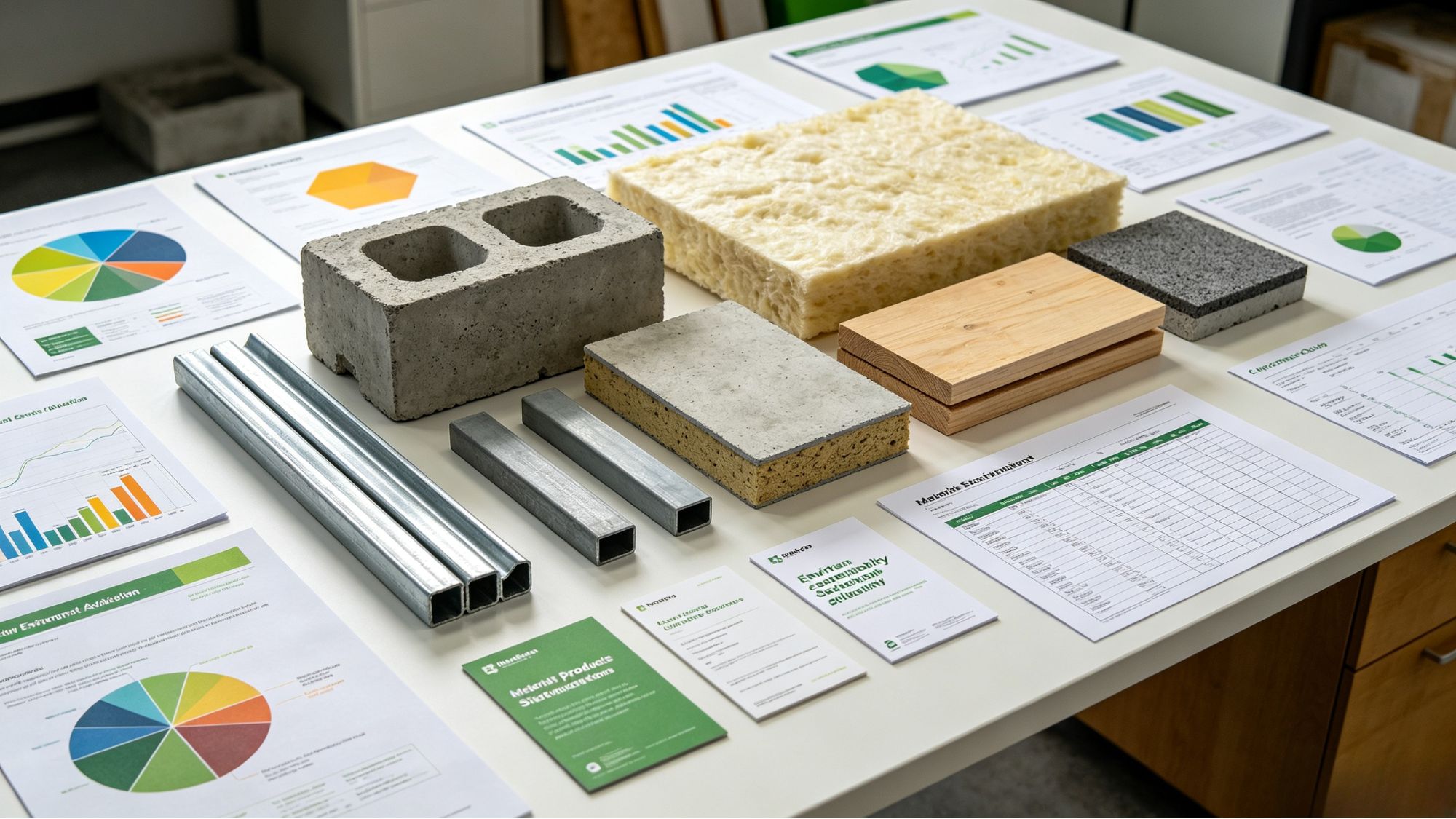
Selecting building materials has traditionally focused on factors such as cost, durability, strength, and appearance. However, as the construction industry places greater emphasis on reducing embodied carbon and improving environmental performance, designers and project teams need more detailed information about the ecological impact of the products they choose.
An Environmental Product Declaration (EPD) provides a standardized way to communicate this information. Similar to a nutrition label for food products, an EPD summarizes the environmental impacts associated with a building material throughout a defined portion of its life cycle.
From structural steel and concrete to insulation and interior finishes, EPDs help architects, engineers, and developers compare products using consistent environmental data rather than relying only on general sustainability claims.
An EPD is a third-party verified document that reports the environmental performance of a specific product based on Life Cycle Assessment (LCA) methods.
Unlike marketing statements such as “eco-friendly” or “low impact,” an EPD does not simply describe a product as sustainable. Instead, it provides measured data about environmental indicators, allowing professionals to evaluate different materials more objectively.
For example, two concrete products may appear identical in terms of strength and application, but their environmental profiles can differ significantly depending on:
The energy sources used during manufacturing;
The amount of recycled content included;
Transportation distances;
Production efficiency;
Raw material sourcing.
EPDs provide the data needed to understand these differences.
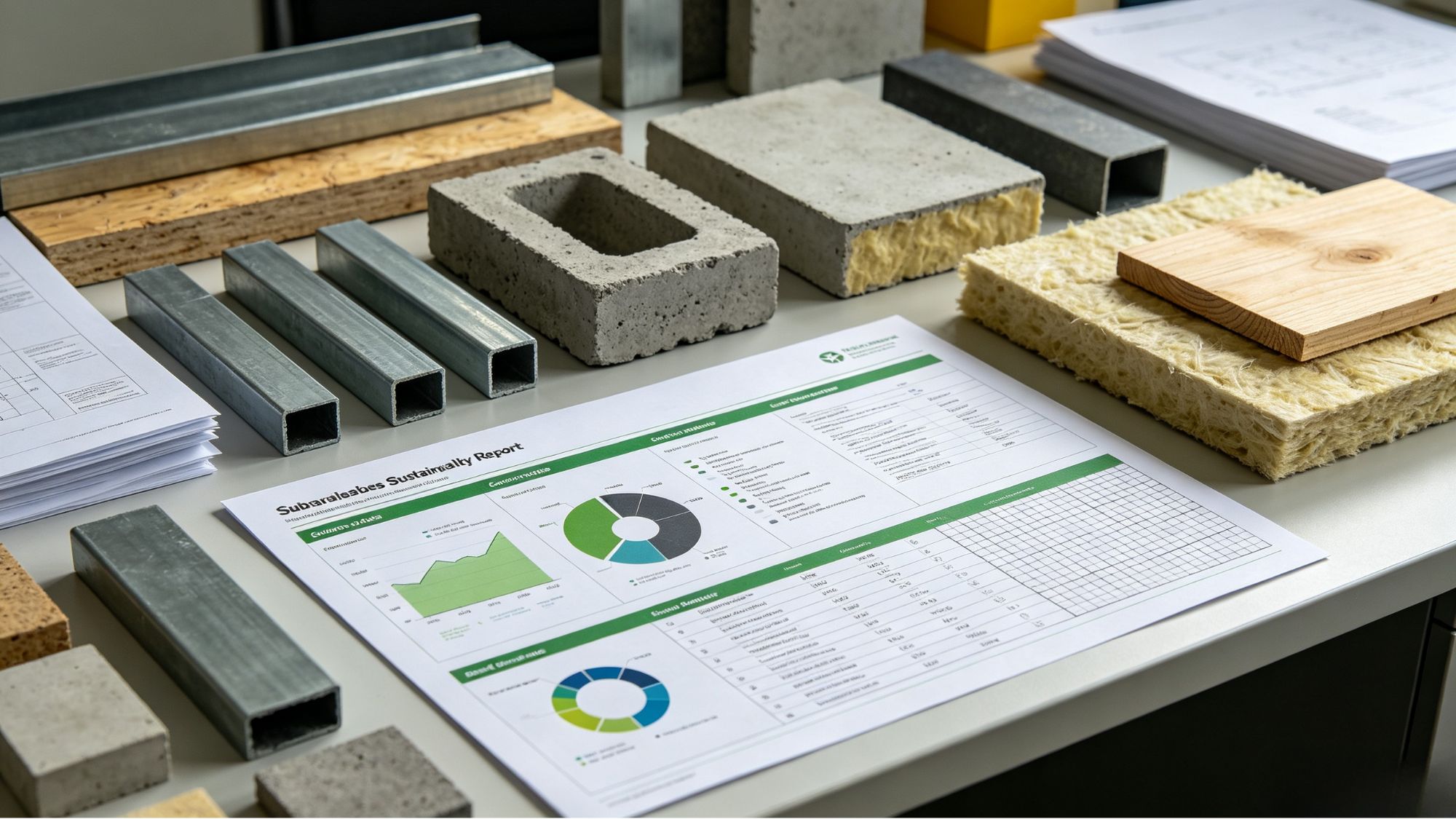
To make environmental comparisons meaningful, products must be evaluated using consistent calculation methods. This is where Product Category Rules (PCRs) become essential.
PCRs define the requirements used when creating EPDs for specific categories of products.
For example:
Structural steel manufacturers follow rules designed for comparing steel products.
Insulation manufacturers follow different rules that account for thermal performance and service life.
Flooring products may use evaluation methods focused on manufacturing impacts and indoor environmental considerations.
Without PCRs, manufacturers could measure environmental performance using different boundaries and assumptions, making comparisons unreliable.
PCRs ensure that similar products are evaluated using similar criteria.
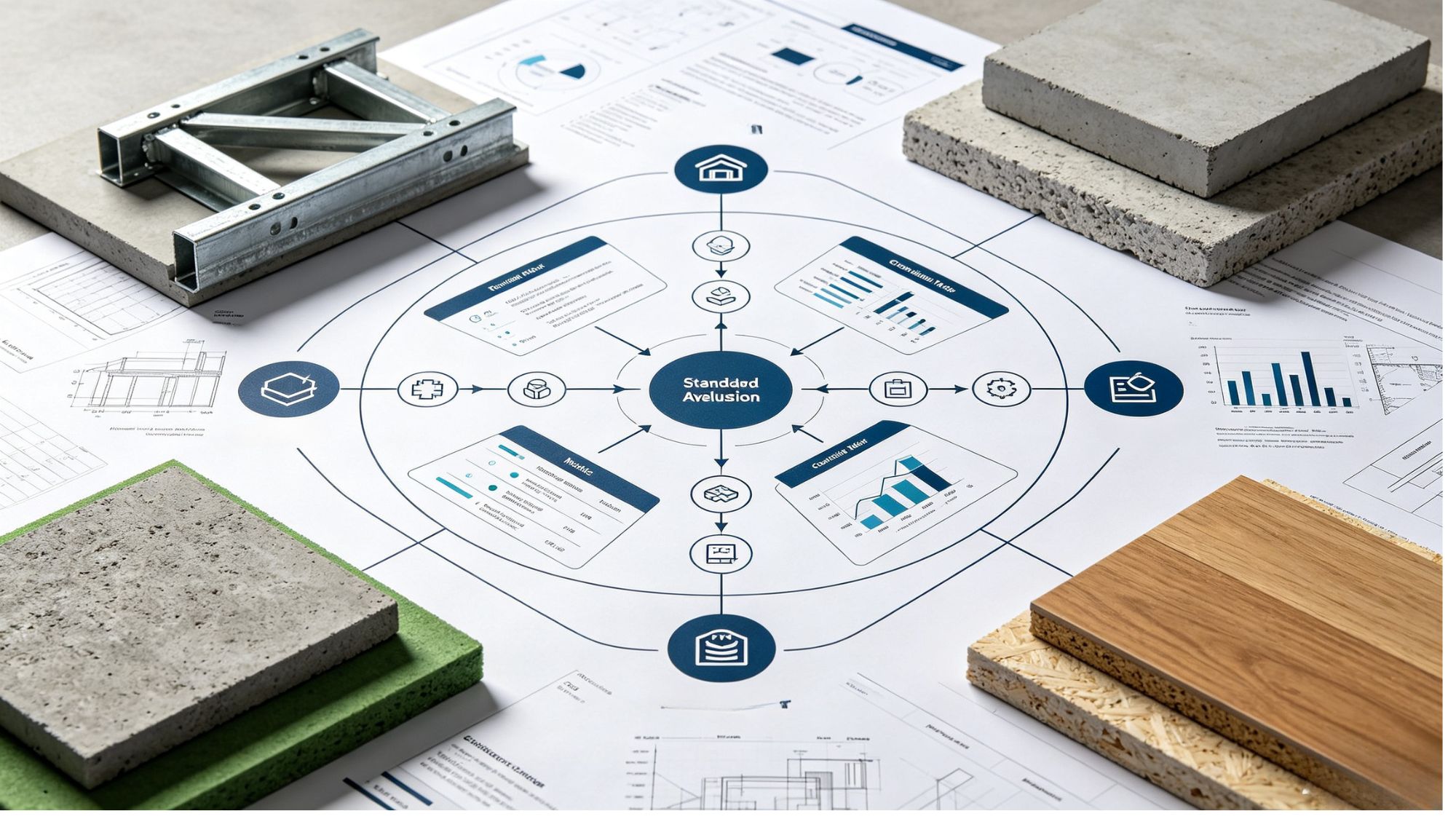
Although carbon emissions receive significant attention, EPDs usually report multiple environmental indicators. These measurements provide a broader picture of how a product affects natural systems.
Global Warming Potential is one of the most commonly referenced indicators in an EPD.
Measured in kilograms of carbon dioxide equivalent (kg CO₂e), GWP combines the climate impact of different greenhouse gases into a single value.
This includes emissions from:
Extracting raw materials;
Manufacturing processes;
Energy consumption;
Transportation activities.
For many construction projects, GWP is a key factor when comparing materials with similar technical performance.
Beyond carbon emissions, EPDs may include several other indicators:
Ozone Depletion Potential (ODP): Measures substances that contribute to damage of the stratospheric ozone layer.
Acidification Potential: Evaluates emissions that can affect soil and water chemistry through compounds such as sulfur and nitrogen oxides.
Eutrophication Potential: Measures nutrient pollution that can contribute to excessive algae growth and ecosystem disruption.
Primary Energy Demand: Tracks the total energy resources required during production.
These indicators allow project teams to consider environmental impacts beyond climate change alone.
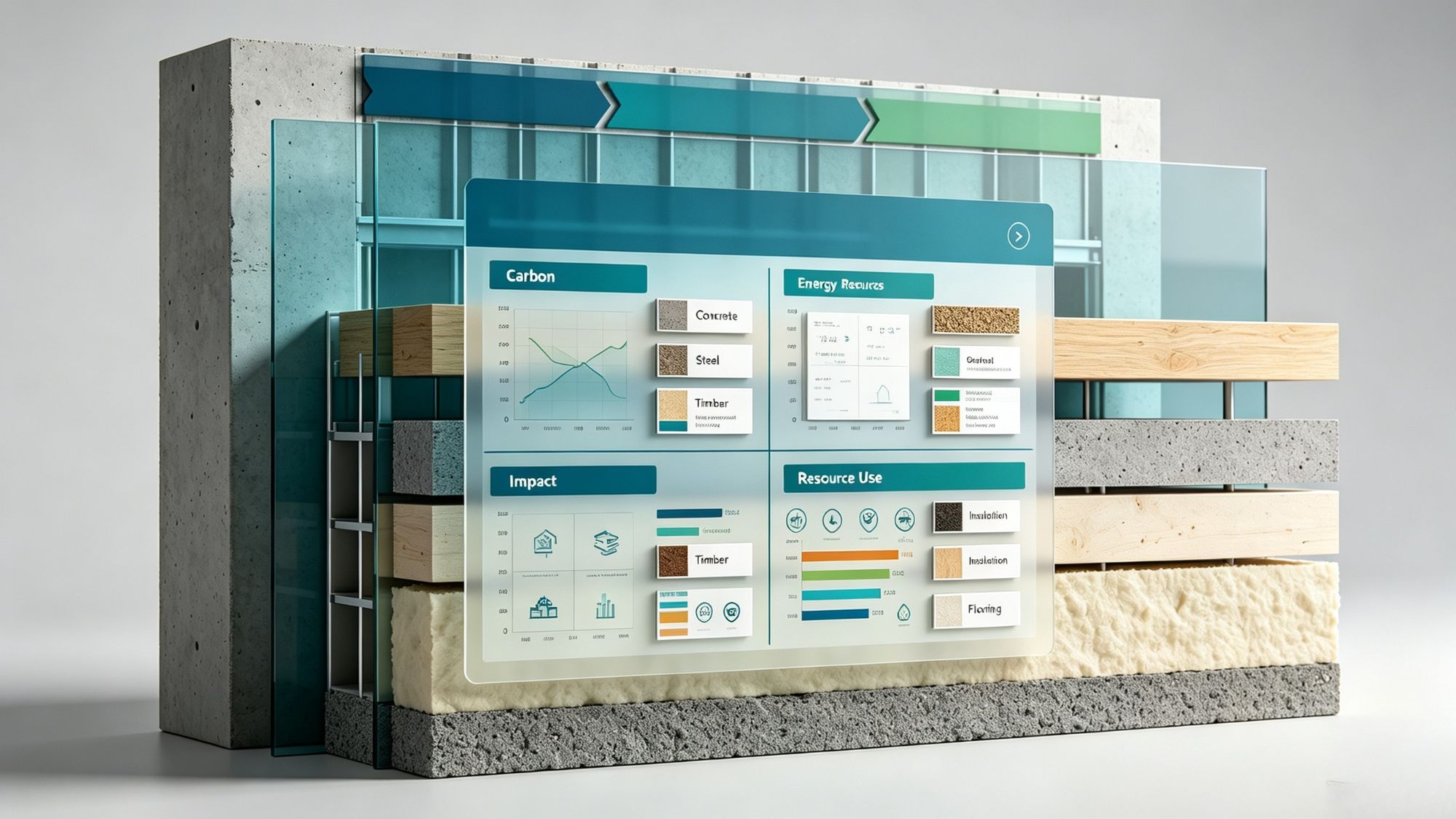
One of the most important aspects of reading an EPD is understanding which stages of a product’s life cycle are included.
Different EPDs may cover different stages, ranging from manufacturing only to the complete life cycle of a product.
Many EPDs use a cradle-to-gate boundary.
This includes:
Raw material extraction;
Transportation of materials to the factory;
Manufacturing processes.
The assessment ends when the finished product leaves the manufacturing facility.
Cradle-to-gate EPDs are useful for comparing manufacturing impacts, but they do not include later stages such as installation, maintenance, or disposal.
More comprehensive assessments may include additional stages:
Transportation to the construction site;
Installation impacts;
Maintenance requirements;
End-of-life recycling or disposal.
For some products, these later stages can significantly influence total environmental performance.
For example, an insulation product may require more energy to manufacture but reduce building heating and cooling demand over decades of use. A complete life-cycle assessment can capture this long-term benefit.
One of the most common mistakes when reading EPDs is comparing products only by weight or total quantity.
Different materials perform different functions, so environmental data must be evaluated using an appropriate functional unit.
For example:
Structural materials may be compared based on their ability to support a specific load or building function.
Insulation products may be evaluated based on thermal resistance over a defined area.
Flooring materials may be compared based on performance over a specific service period.
A lightweight material is not automatically better simply because it contains less material. The important question is how much environmental impact is required to achieve the same building performance.
EPDs are increasingly used during the material selection process, especially in projects pursuing lower-carbon construction strategies.
A design team comparing two materials may consider:
Which product has lower embodied carbon;
Whether manufacturing uses renewable energy;
How much recycled content is included;
Whether the material can be reused or recycled at the end of its life.
For example, when selecting between different structural materials, an architect may use EPD data alongside cost, strength, and durability information to determine which option provides the best overall balance.
Although EPDs provide valuable transparency, they are not a complete measurement of sustainability by themselves.
Manufacturing location can significantly influence environmental results.
A product manufactured in a region powered mainly by renewable electricity may have a different carbon profile from the same product produced in a region dependent on fossil fuels.
Manufacturing processes, energy systems, and supply chains change over time. Because of this, EPDs are typically reviewed and updated periodically to maintain accuracy.
Using outdated information may lead to inaccurate comparisons.
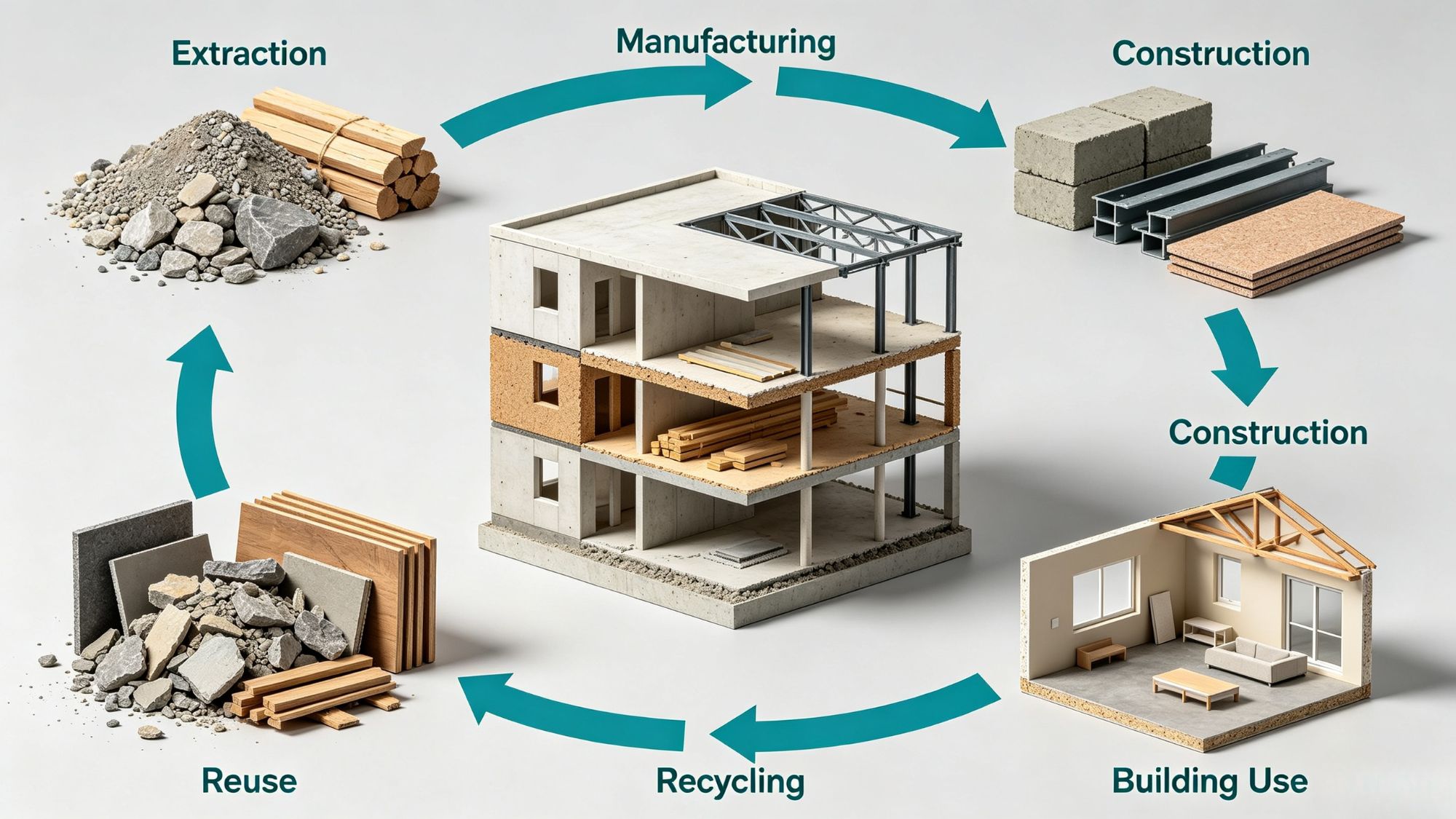
Environmental Product Declarations provide a standardized language for understanding the environmental impacts of building materials. By combining life-cycle assessment methods, product-specific rules, and verified environmental data, EPDs allow architects, engineers, and builders to make more informed material decisions.
Rather than relying on broad sustainability claims, project teams can use EPDs to examine measurable factors such as carbon emissions, energy consumption, and resource impacts. As the construction industry continues moving toward lower-carbon practices, the ability to accurately interpret environmental product data will become an increasingly important part of modern building design.
