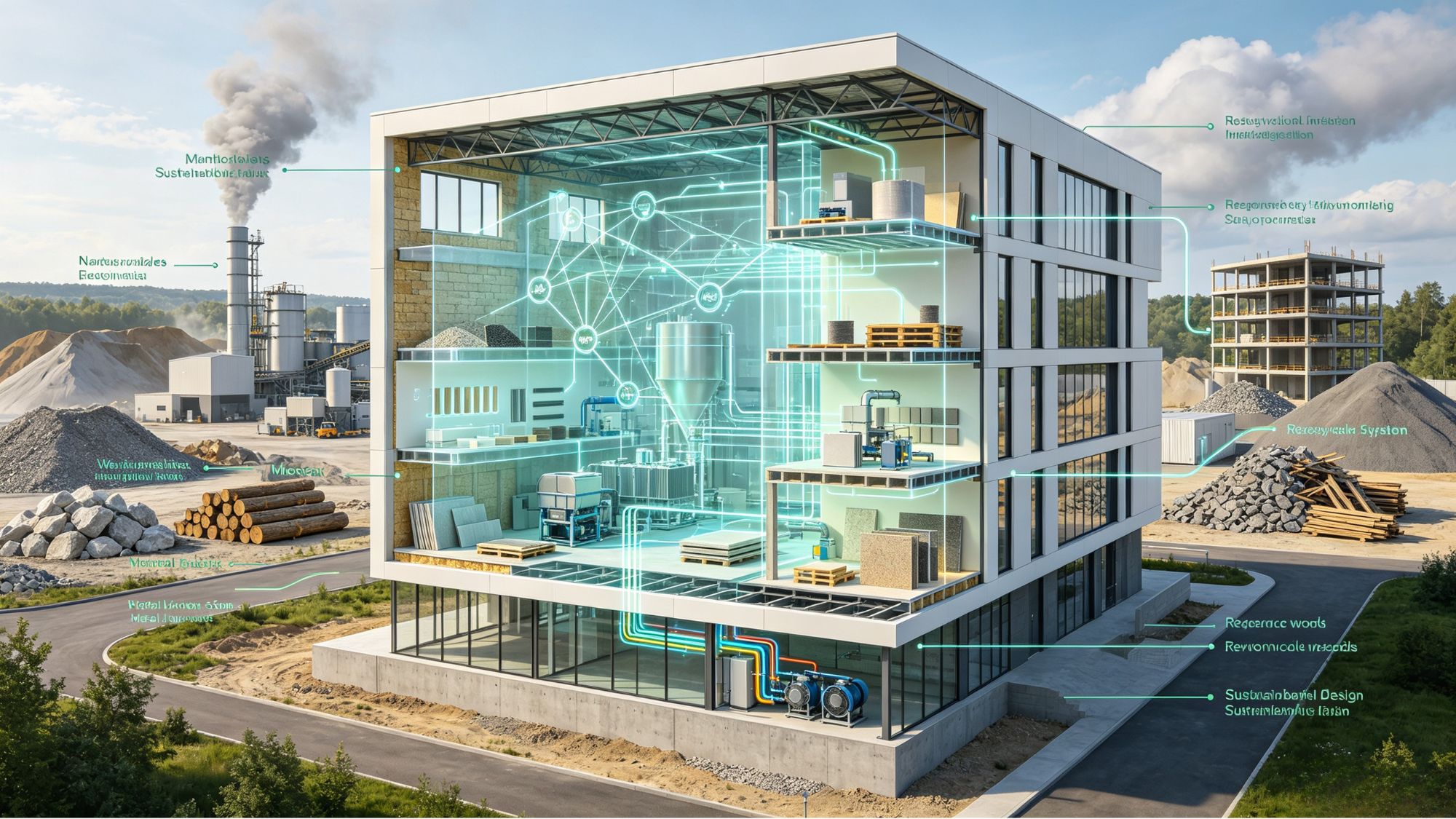
Material selection plays a critical role in construction, manufacturing, and product development. For decades, decisions were primarily based on factors such as structural performance, availability, and upfront cost. However, as industries face increasing pressure to reduce environmental impacts and improve supply chain resilience, evaluating materials requires a much broader approach.
A material’s performance cannot be judged only by its strength or price. The resources required for extraction, the stability of its supply chain, the energy consumed during manufacturing, and its ability to be recycled all influence its long-term sustainability.
Modern engineers and environmental specialists use a combination of resource analysis, scarcity evaluation, and life-cycle assessment methods to understand these factors. These tools provide a more complete picture of how material choices affect both industrial systems and environmental outcomes.
One of the first steps in evaluating materials is understanding how many resources are required throughout their production journey. Material Flow Analysis (MFA) provides a structured method for tracking the movement of materials from extraction to processing, manufacturing, use, and disposal.
Unlike simple measurements based on the final weight of a product, MFA examines the hidden resource demand behind each material.
The visible amount of material used in a finished product often represents only a portion of the total resources involved.
For example:
Mining iron ore requires removing large amounts of surrounding rock before usable metal can be produced.
Cement production depends on extracting limestone and other minerals before they are transformed into construction materials.
Timber products rely on forest resources, land management, and transportation networks.
To capture these hidden inputs, researchers use indicators such as Total Material Requirement (TMR). This metric estimates the total amount of natural material extracted or disturbed during production, including unused materials generated during mining and processing.
However, TMR should not be interpreted as a direct measurement of environmental damage. It primarily describes physical resource demand, while ecological impacts depend on additional factors such as extraction methods, energy sources, and waste management practices.
Material assessments often separate resources into two broad groups:
Abiotic resources: Non-living materials such as metals, minerals, stone, and fossil-based resources.
Biotic resources: Biological materials such as timber, agricultural fibers, and other renewable resources.
These categories involve different sustainability challenges.
For example, metals may require intensive extraction but can often be recycled repeatedly. Renewable materials may reduce dependence on geological resources but require responsible land management to prevent ecosystem degradation.
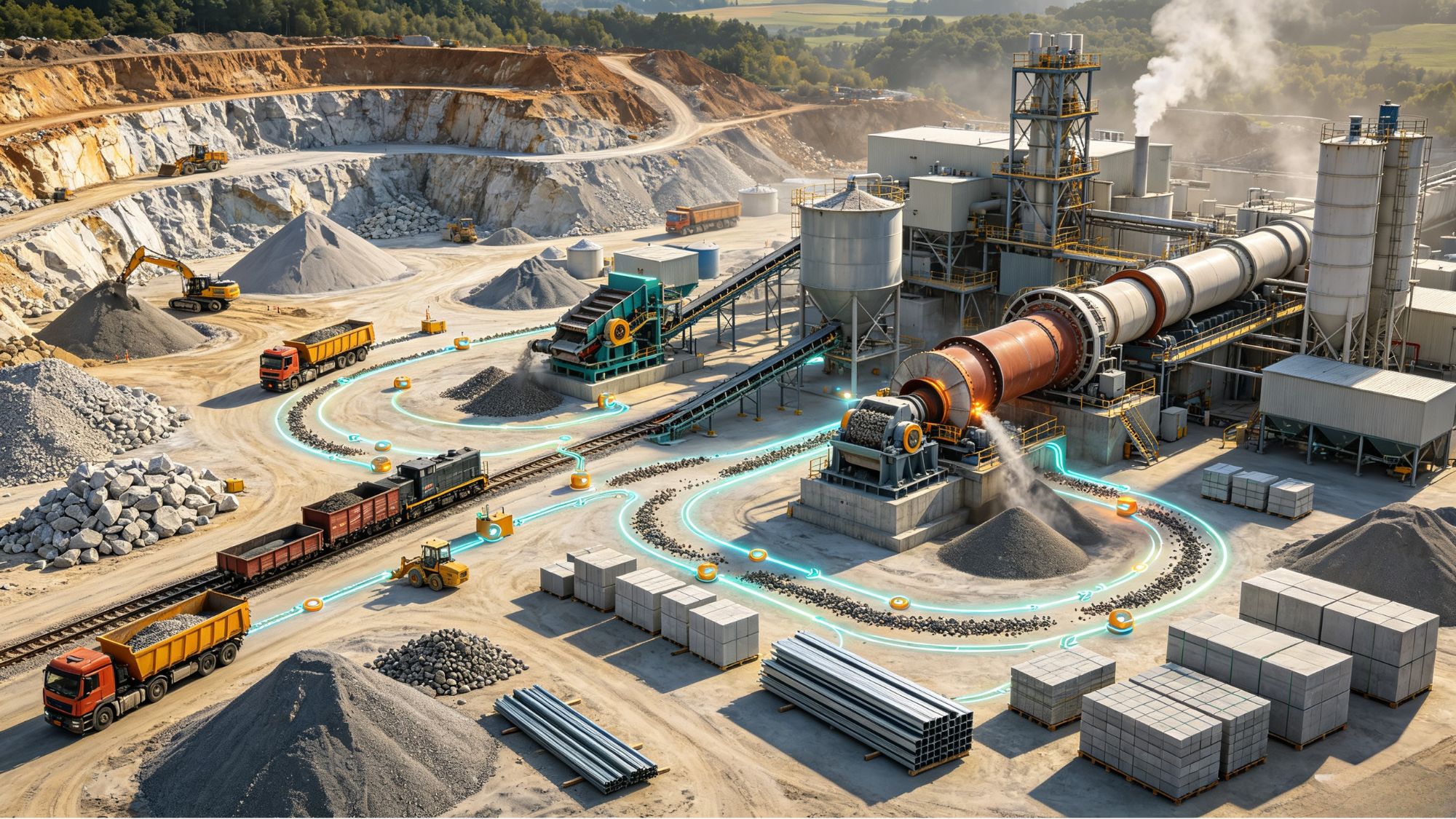
Resource consumption alone does not determine whether a material is sustainable. A material may be widely used yet remain relatively secure, while another may be consumed in small quantities but face significant supply risks.
Scarcity evaluation considers not only geological availability but also economic, technological, and geopolitical factors.
Many modern technologies depend on materials classified as critical raw materials, including minerals used in electronics, batteries, renewable energy systems, and advanced manufacturing.
Evaluations typically consider:
The availability of economically recoverable reserves;
The difficulty and cost of extraction;
The concentration of production among a limited number of suppliers.
A resource with sufficient global reserves can still create supply challenges if production is controlled by only a few regions.
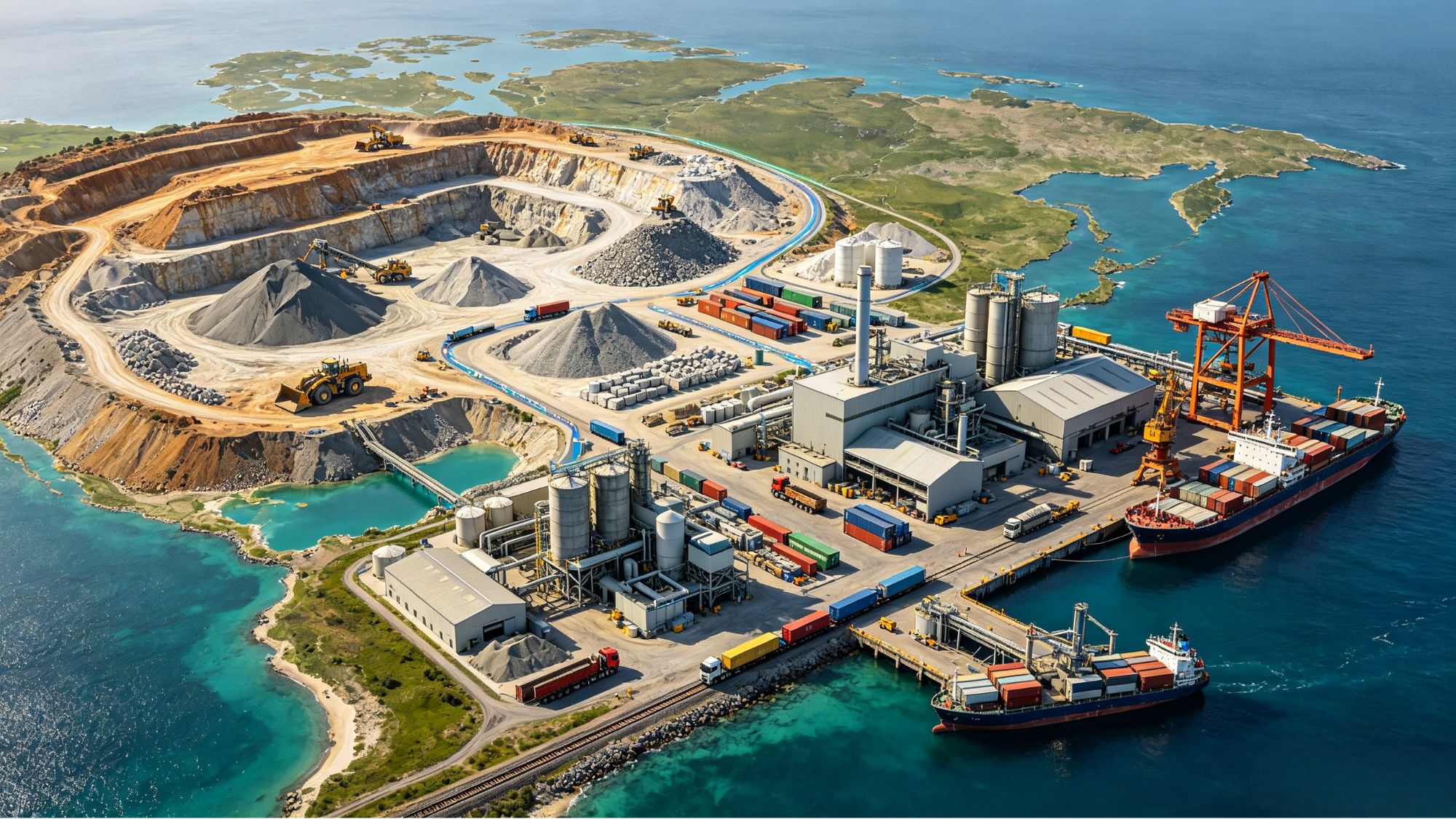
One commonly used economic indicator is the Herfindahl-Hirschman Index (HHI). Originally developed to analyze market concentration, HHI can also help evaluate supply-chain vulnerability.
When global production of a material is concentrated among a small number of producers, the risk of disruption increases due to factors such as trade restrictions, political instability, or transportation challenges.
This is particularly important for industries developing technologies that depend on specialized minerals.
Material selection often involves balancing multiple advantages and limitations rather than choosing a single “sustainable” option.
Concrete relies on abundant raw materials and remains one of the most widely used construction materials worldwide. Its challenges are mainly associated with cement production, which requires significant energy input and releases carbon dioxide during chemical processing.
Aluminum production requires substantial energy when produced from raw bauxite ore. However, aluminum has strong recycling potential, and recycled aluminum production requires significantly less energy compared with primary production.
Timber can provide renewable material advantages and store carbon during its service life. However, sustainability depends heavily on responsible forestry practices, ecosystem protection, and supply chain management.
These examples demonstrate why material decisions cannot rely on a single indicator. A complete evaluation must consider resource demand, environmental impact, durability, and end-of-life options together.
While resource analysis examines material inputs, Life Cycle Assessment (LCA) evaluates the environmental consequences associated with every stage of a material’s existence.
A typical LCA examines:
Raw material extraction;
Industrial processing;
Transportation;
Product or building use;
Recycling or disposal.
This approach helps identify where the largest environmental impacts occur throughout a material’s life cycle.
After collecting life-cycle inventory data, analysts evaluate materials using several environmental indicators.
One of the most widely recognized indicators is global warming potential, commonly measured in kilograms of carbon dioxide equivalent (kg CO₂e).
This metric accounts for greenhouse gas emissions generated through:
Fuel consumption during extraction;
Industrial manufacturing;
Transportation activities;
Waste processing.
For example, cement production produces emissions not only from energy consumption but also from the chemical reaction that converts limestone into clinker.
Industrial processes can release pollutants that affect ecosystems.
Acidification evaluates emissions that contribute to changes in soil and water chemistry.
Eutrophication measures the impact of excessive nutrient pollution, which can disrupt freshwater and marine ecosystems.
Some industrial processes release substances that may affect ecosystems and human health.
Environmental assessments examine potential impacts from:
Heavy metal emissions;
Chemical byproducts;
Industrial waste streams.
Together, these indicators provide a broader understanding of environmental performance beyond carbon emissions alone.
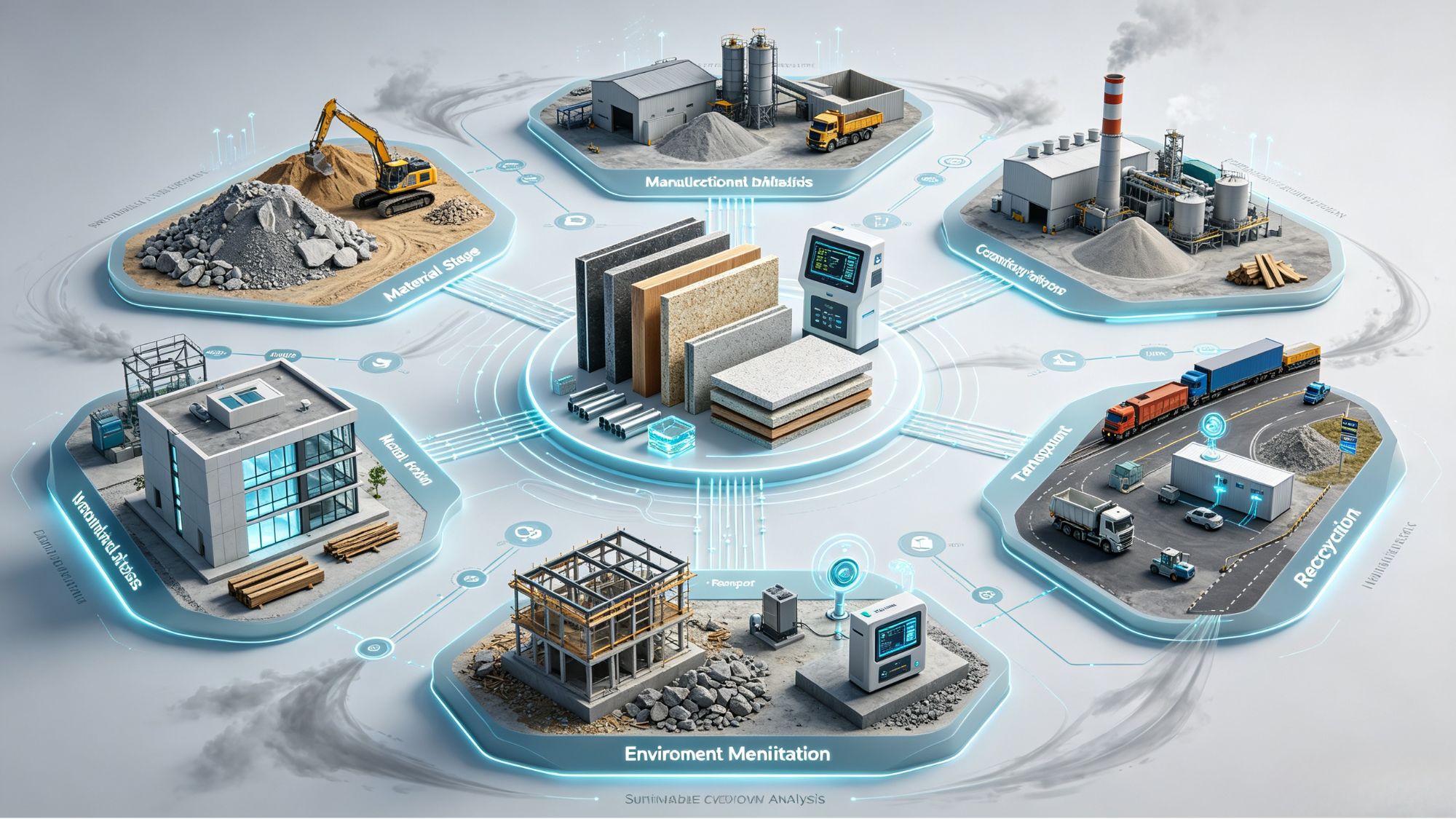
One of the biggest challenges in material evaluation is comparing different types of environmental impacts.
A material may perform well in one category but poorly in another.
For example:
A low-carbon material may rely on scarce minerals.
A highly recyclable material may require energy-intensive manufacturing.
A renewable material may require careful ecosystem management.
Because of these trade-offs, LCA practitioners often use normalization and weighting methods to compare multiple impact categories.
However, weighting decisions can involve subjective considerations because different regions and industries may prioritize different environmental concerns.
These evaluation methods are increasingly influencing decisions in architecture, infrastructure, and manufacturing.
Engineers can compare alternative materials based on their complete environmental profiles rather than relying only on traditional performance requirements.
A material with high resource demand or supply-chain risk may be replaced with an alternative that provides similar functionality with fewer long-term impacts.
Material evaluation also supports circular economy principles by encouraging reuse, recycling, and recovery.
Designing products and buildings for easier disassembly allows valuable materials to remain in circulation instead of becoming waste.
Metals such as aluminum and steel demonstrate the benefits of circular approaches because recycling can reduce dependence on new extraction while lowering energy requirements.
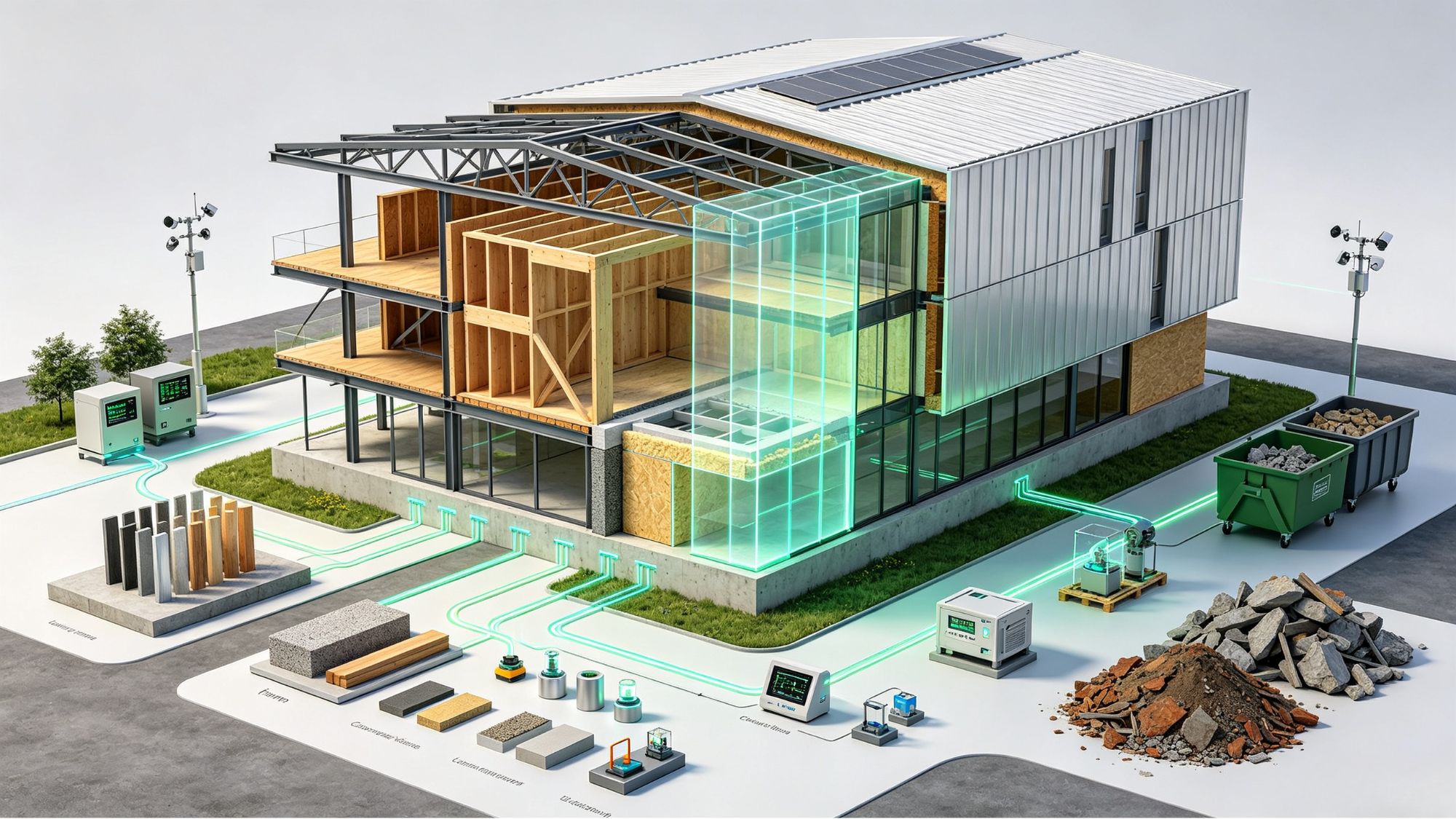
Evaluating materials through resource consumption, scarcity, and environmental impact metrics provides a more complete framework for sustainable design. Modern material selection is no longer determined only by cost, availability, or technical performance.
By combining Material Flow Analysis, supply-chain risk evaluation, and Life Cycle Assessment, engineers can better understand the hidden consequences behind material choices.
As industries move toward more resilient and sustainable systems, evaluating the complete life cycle of materials will become increasingly important in designing buildings, products, and infrastructure with lower environmental impact.
