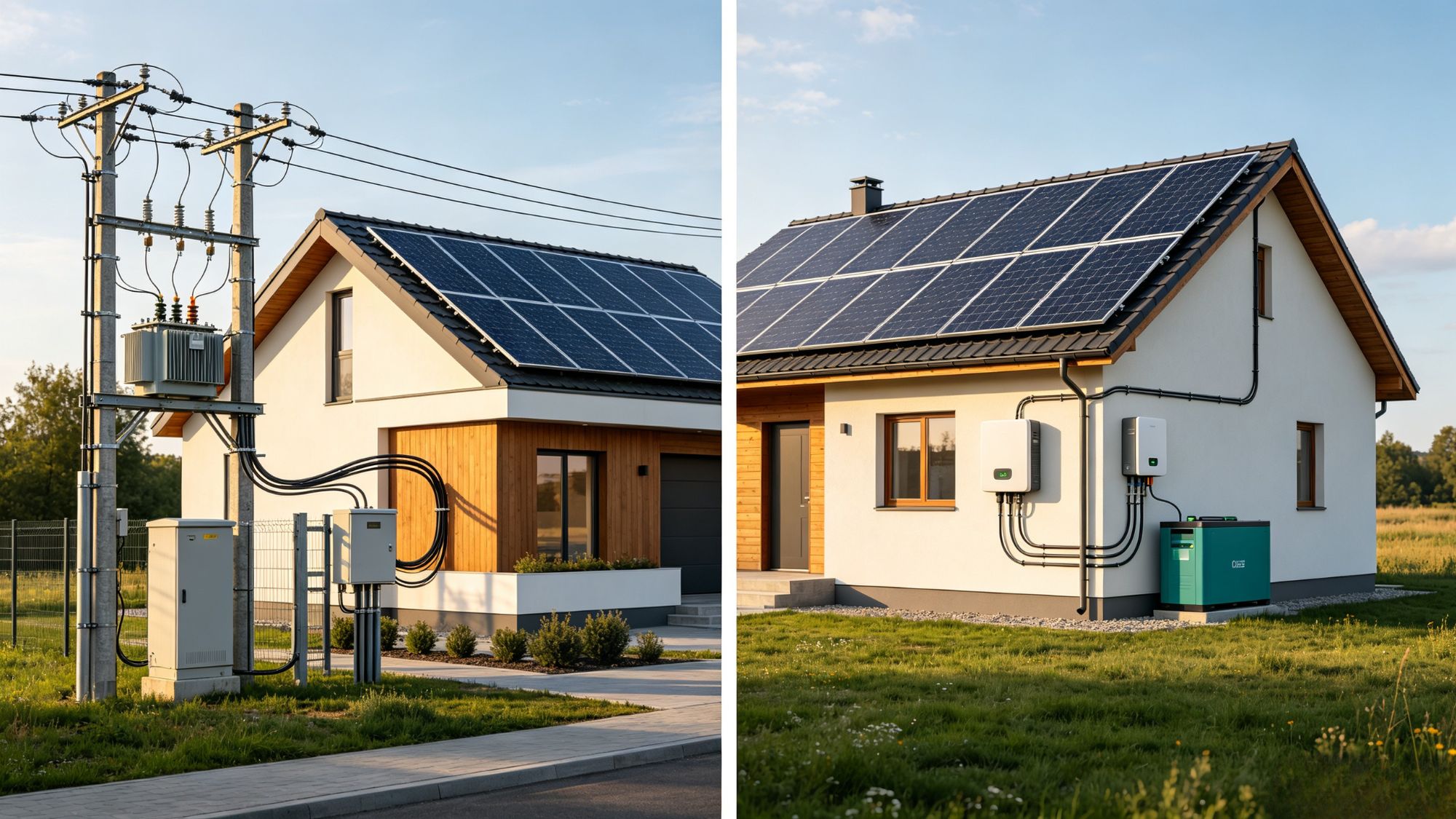
As residential solar systems become more common, homeowners face an important design decision: should their electricity system remain connected to the local utility grid, or should it operate independently as a self-contained power source?
Both approaches rely on similar technologies, including photovoltaic panels, inverters, and electrical protection equipment. However, the way these components are designed and managed is fundamentally different. A grid-connected system can rely on the utility network to balance supply and demand, while an off-grid system must independently generate, store, and regulate enough electricity to support household needs.
This difference influences everything from battery requirements and inverter specifications to safety systems and long-term reliability.
The primary difference between grid-connected and stand-alone residential power systems is how they interact with external electrical infrastructure.
A grid-connected solar system operates alongside the local utility network. Instead of functioning as an isolated power source, it works as part of a larger electrical ecosystem.
During periods of strong sunlight, solar panels may produce more electricity than the household immediately consumes. Where local regulations allow, excess electricity can be exported to the grid and potentially credited through programs such as net metering.
When solar production falls below household demand—such as at night, during storms, or on heavily cloudy days—the home can draw electricity from the utility network.
Because the grid provides an external balancing resource, many grid-connected systems can operate effectively without large battery storage installations. This simplifies system design and often reduces upfront equipment requirements.
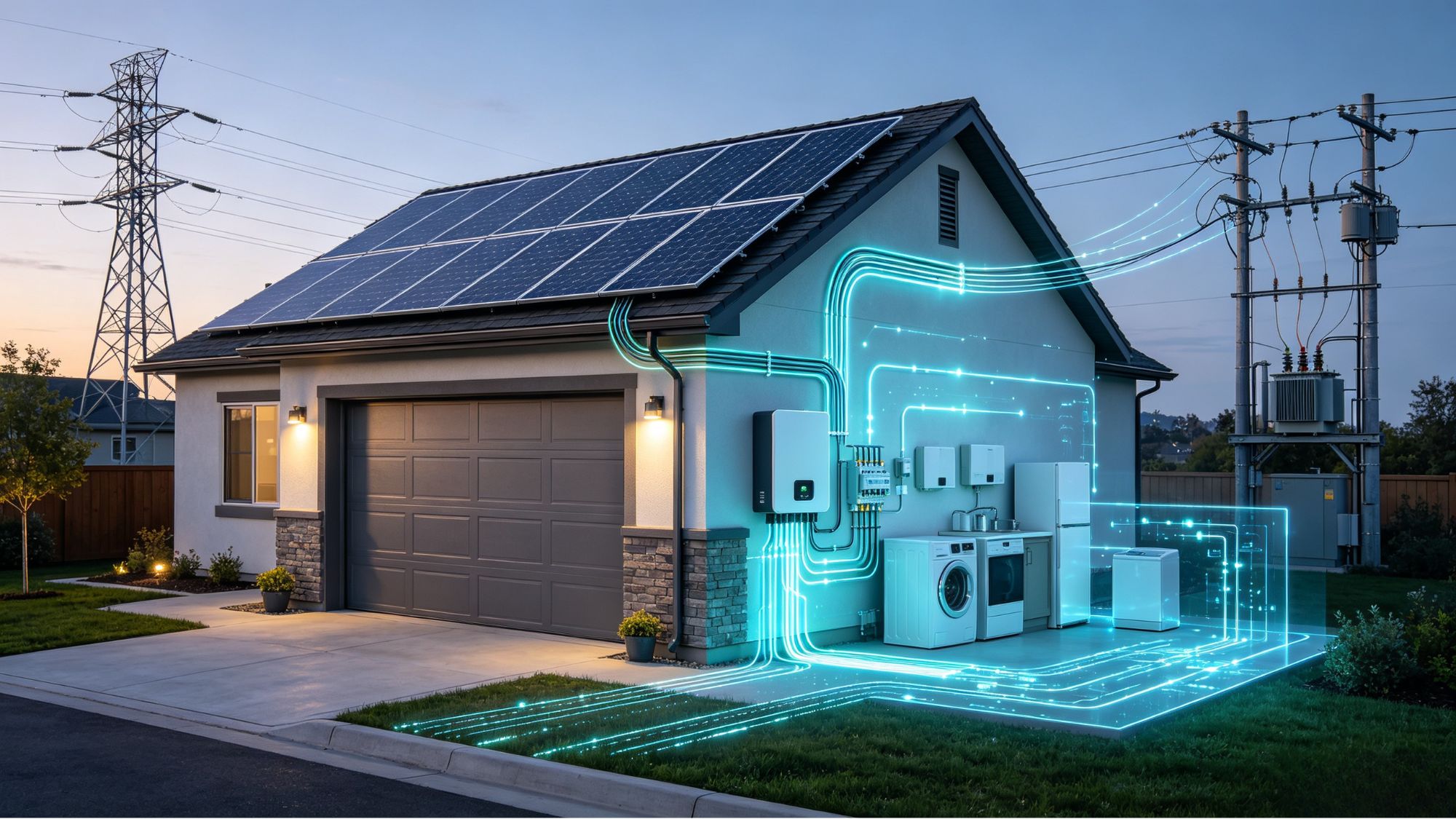
An off-grid residential system operates without support from a utility connection. Instead, it must function as an independent energy network capable of managing generation, storage, and consumption internally.
Since there is no external grid available to absorb excess production or provide backup electricity, off-grid systems require careful planning around:
Solar generation capacity
Battery storage size
Household energy consumption patterns
Weather variability
Every unit of electricity used by the home must come from locally generated power or previously stored energy. This makes energy management a central part of the system design.
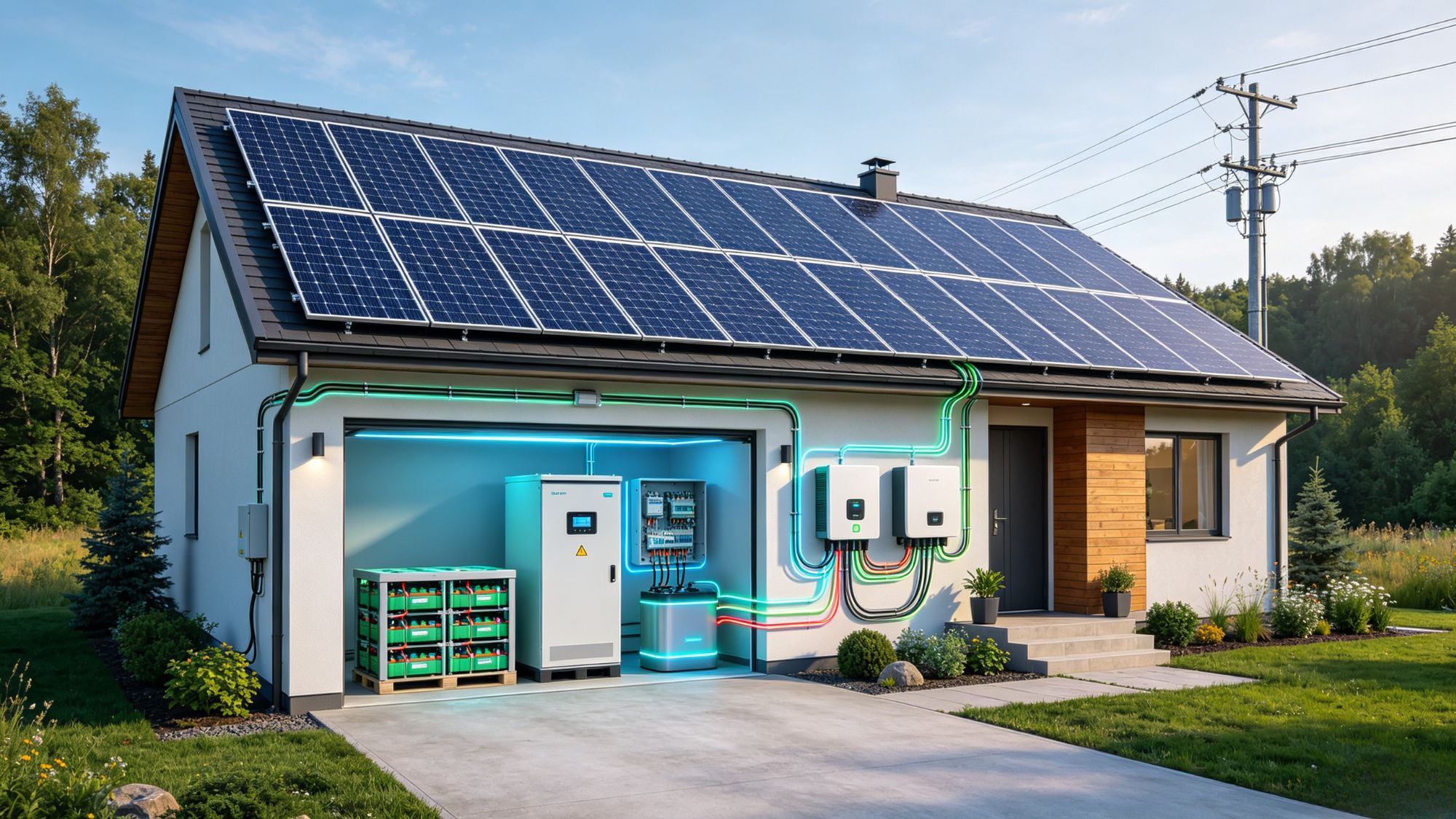
One of the most important differences between the two architectures is how they respond to electrical failures.
Grid-connected solar systems must include protection mechanisms that prevent them from continuing to supply electricity to a damaged utility network.
When a power outage occurs, solar inverters are designed to automatically disconnect from the grid. This safety feature, commonly known as anti-islanding protection, helps prevent electricity from flowing back into utility lines that technicians may be repairing.
As a result, a standard grid-connected solar system usually cannot provide household backup power during an outage unless it is combined with additional equipment such as battery storage and a transfer system.
Off-grid systems do not interact with utility infrastructure, so they must create and maintain their own electrical reference.
The inverter becomes responsible for regulating:
Voltage stability
Frequency control
Power quality
Unlike grid-connected systems that rely on the utility network to maintain electrical stability, off-grid systems must manage these functions internally while responding to changing household loads.
This requires more advanced energy management and careful system configuration.
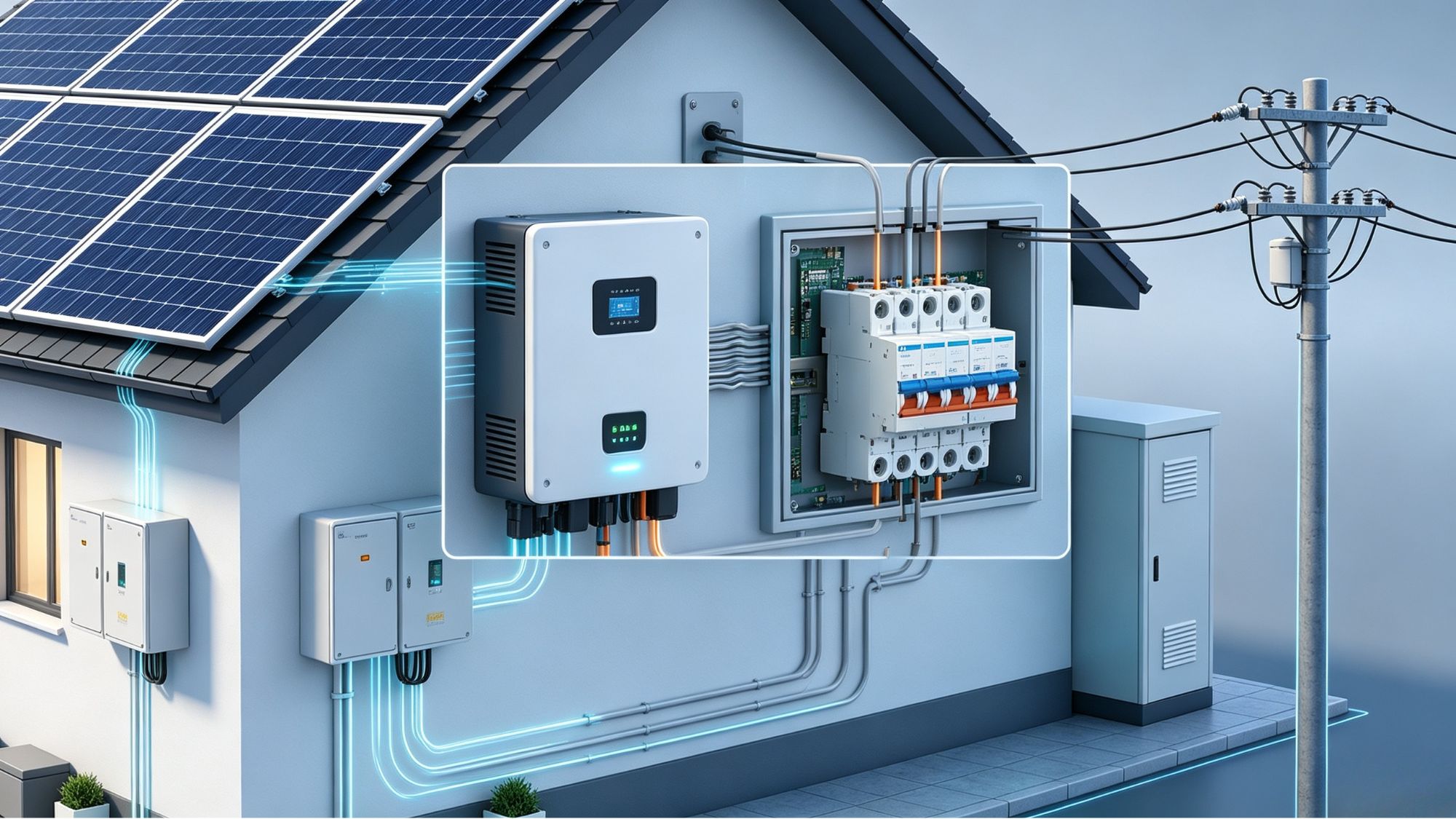
The difference between relying on the grid and operating independently becomes especially clear when selecting system components.
Grid-connected homes can depend on the utility network when electricity demand temporarily rises. For example, appliances with high startup requirements, such as air conditioners or pumps, can draw additional power directly from the grid.
Off-grid systems do not have this external support. Their inverters must be designed to handle short periods of increased demand while maintaining stable household electricity.
This means system designers must consider not only average energy consumption but also peak loads and startup surges from major appliances.
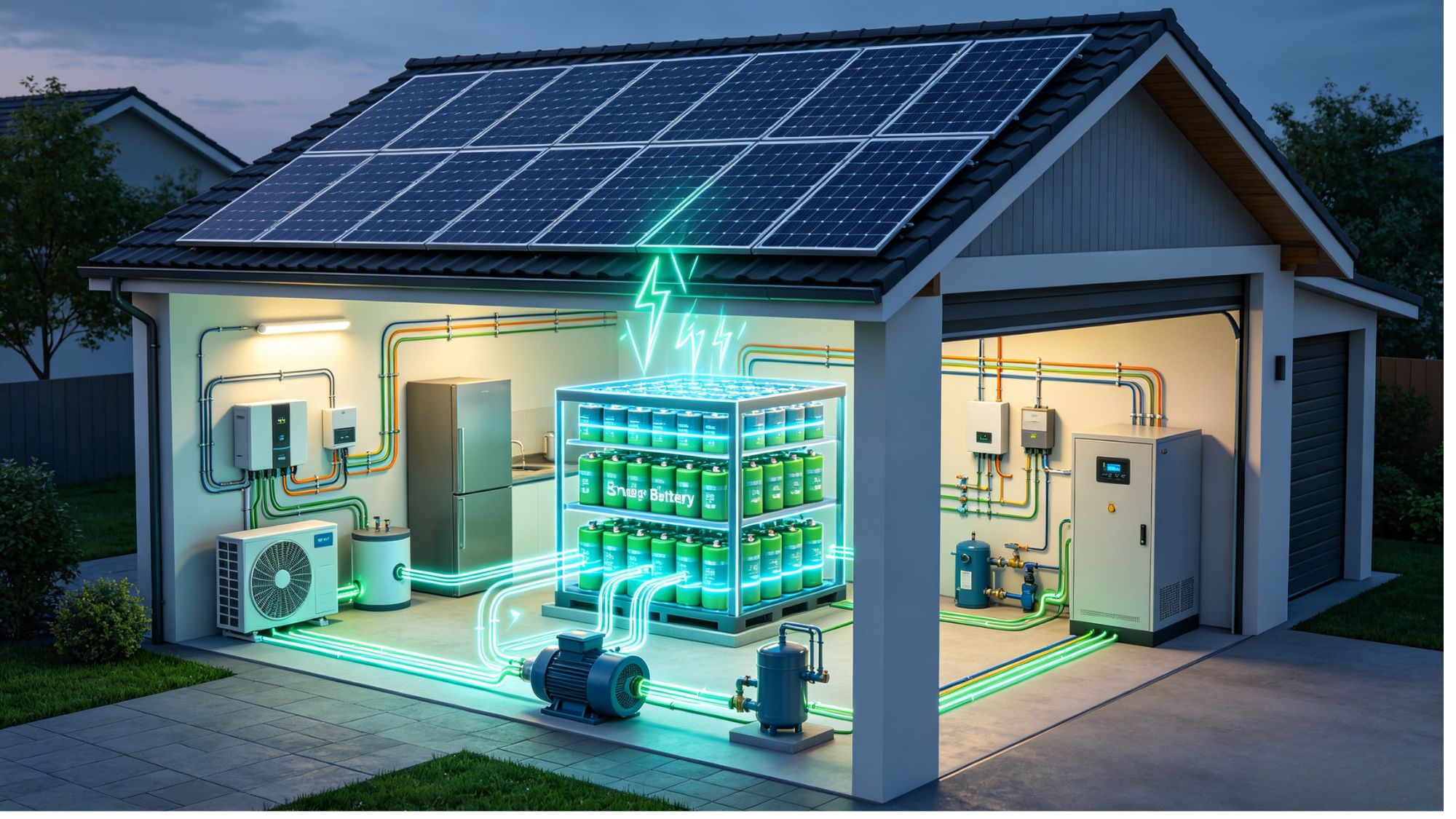
Battery sizing is one of the biggest differences between the two system types.
A grid-connected system may use batteries mainly for backup power or energy management purposes. However, an off-grid system depends heavily on battery storage to maintain electricity availability when solar generation is limited.
Designers typically evaluate factors such as:
Historical weather patterns
Seasonal solar variation
Household consumption habits
Required backup duration
The goal is to ensure that stored energy can support essential loads during extended periods of low solar production.
The long-term operation of these systems also differs.
Grid-connected systems generally have simpler energy management because the utility network provides additional flexibility. If solar production changes unexpectedly, the grid can compensate immediately.
Off-grid systems require closer monitoring because battery condition, weather changes, and consumption behavior directly affect available electricity.
Many off-grid homeowners use energy monitoring systems to track:
Battery charge levels
Solar generation
Daily consumption
System efficiency
This allows users to adjust electricity usage and maintain reliable operation.
Neither architecture is universally suitable for every home. The right choice depends on location, energy goals, and available infrastructure.
Grid-connected systems are often suitable for homes that already have reliable utility access and want to reduce dependence on purchased electricity while maintaining grid support.
Off-grid systems are more appropriate for locations where utility connections are unavailable, expensive, or undesirable, but they require more careful engineering and energy management.
The decision ultimately depends on whether the priority is integration with existing infrastructure or complete energy independence.
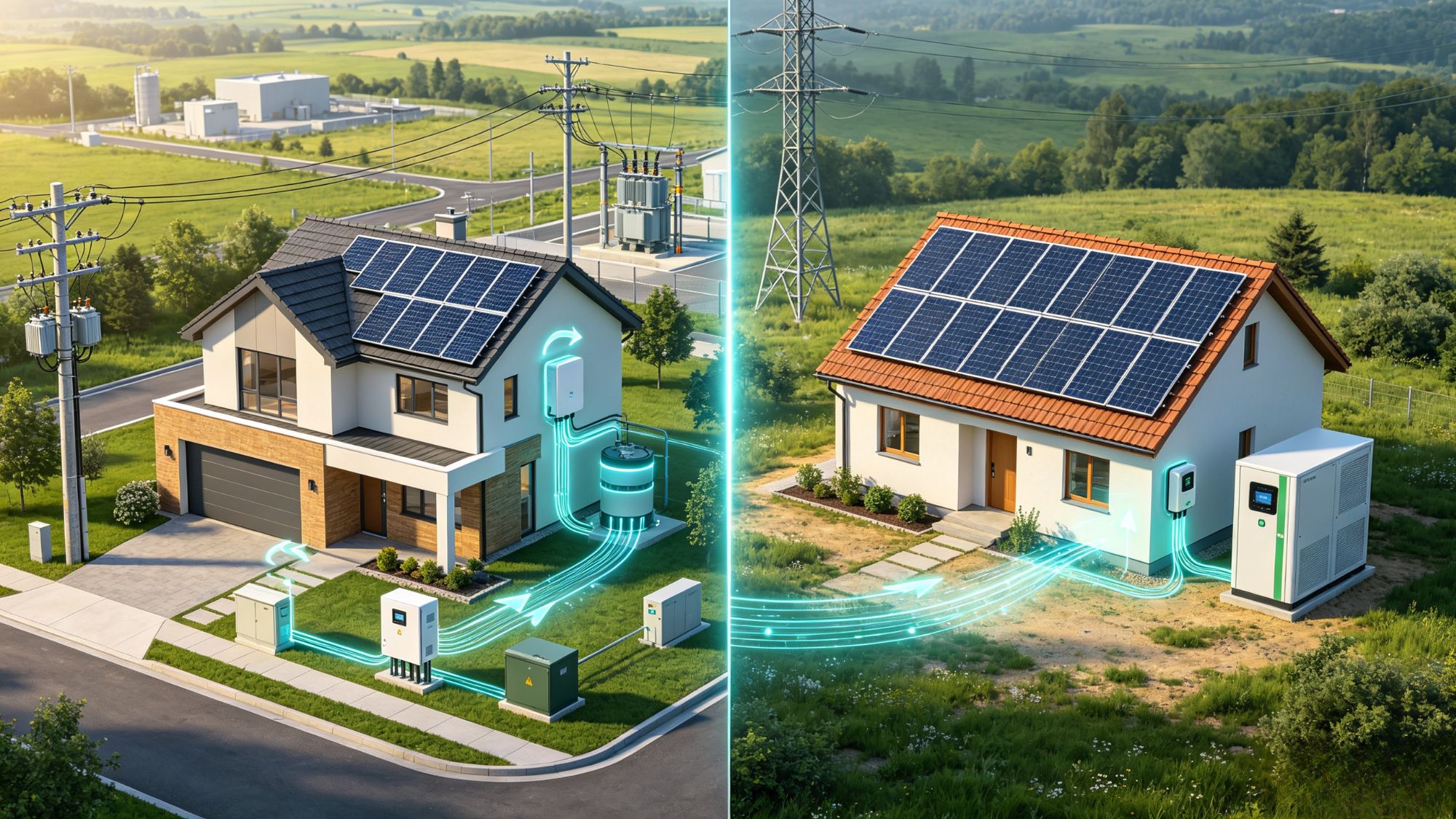
Grid-connected and off-grid residential power systems use similar generation technologies but follow very different engineering principles.
Grid-connected systems take advantage of the utility network as an external balancing resource, allowing simpler designs and greater flexibility. Off-grid systems must independently manage generation, storage, and electrical stability, requiring more detailed planning and larger energy reserves.
Understanding these differences helps explain why residential solar systems are designed in different ways and why electrical architecture plays such an important role in long-term performance and reliability.
