Modern homes are designed to be more energy efficient than ever before. Improved insulation, better windows, and continuous air barriers help reduce unwanted heat loss and prevent uncontrolled outdoor air from entering the building. These improvements make homes more comfortable and less expensive to operate, but they also change the way indoor air quality must be managed.
Older houses often received fresh air through natural leakage around windows, doors, framing gaps, and other building imperfections. Although this uncontrolled air movement reduced the need for mechanical ventilation, it also introduced outdoor pollutants, increased heating and cooling loads, and made indoor conditions less predictable. High-performance homes operate differently: they limit random air leakage and rely on intentional ventilation systems to provide the right amount of outdoor air while controlling energy losses.
Daily household activities continuously affect indoor air conditions. Cooking, bathing, cleaning, occupants breathing, and emissions from furniture or building materials can contribute to increased humidity, carbon dioxide levels, odors, and other indoor pollutants. A well-designed ventilation strategy does not mean allowing a home to “breathe” through uncontrolled leaks. Instead, it means deliberately managing how stale air leaves, how fresh air enters, and how energy is recovered during that exchange.
Understanding air changes per hour, exhaust ventilation, and heat or energy recovery ventilators helps explain how modern homes maintain indoor air quality without sacrificing efficiency.
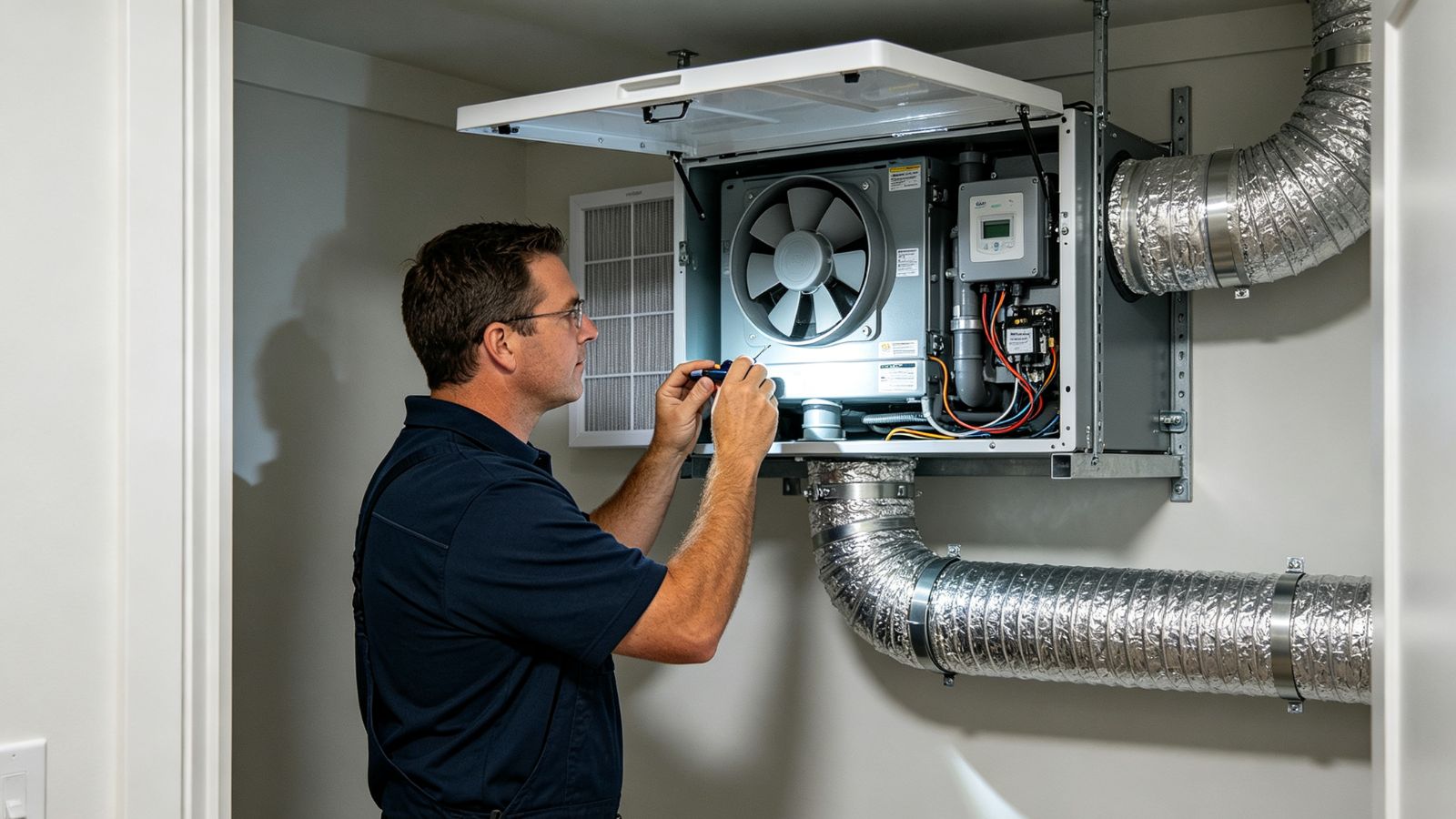
Air changes per hour (ACH) is one of the most common ways building professionals describe air movement within a home. The measurement represents how much air exchange occurs compared with the total volume of indoor air over a given period. However, ACH can describe different conditions depending on how it is measured, and this distinction is important when evaluating modern buildings.
A blower door test, for example, measures air leakage by creating a standardized pressure difference between the inside and outside of a building. Results are commonly reported as ACH50, meaning air changes per hour at 50 Pascals of pressure, rather than the actual air exchange occurring during normal occupancy. A tight building envelope may have a very low ACH50 value while still requiring mechanical ventilation to maintain appropriate indoor air quality.
In older homes, natural infiltration through cracks and gaps often provided a significant amount of air exchange, although the actual rate varied widely depending on construction quality, climate, wind exposure, and building age. Modern energy-efficient homes reduce this uncontrolled air movement, which improves thermal performance but makes planned ventilation more important.
Organizations such as ASHRAE recognize that residential buildings require intentional ventilation strategies to maintain acceptable indoor air quality. ASHRAE Standard 62.2 establishes requirements for residential ventilation, including whole-building ventilation, local exhaust, and source control approaches. The goal is not to maximize air exchange but to provide sufficient outdoor air while avoiding unnecessary energy waste.
The simplest mechanical ventilation approach is localized exhaust, sometimes called spot ventilation. These systems are designed to remove contaminants where they are created rather than allowing moisture and pollutants to spread throughout the home.
Bathroom exhaust fans are a common example. Showers and bathing activities release significant amounts of moisture into indoor air, and removing that moisture near the source helps reduce the likelihood of excessive humidity accumulation. Without adequate exhaust, humid air can migrate into cooler surfaces where condensation may occur, potentially contributing to moisture-related building problems over time.
Kitchen ventilation serves a similar purpose but has additional considerations. Cooking activities can generate airborne particles, odors, grease, and combustion-related pollutants. A properly installed ducted range hood that exhausts outdoors is generally more effective at removing these contaminants than recirculating systems that only filter air through internal media.
However, localized exhaust alone does not provide a complete ventilation solution for many modern airtight homes. Exhaust fans remove indoor air, but they do not directly control where replacement air enters. In a tightly sealed building, strong exhaust can create negative pressure conditions that may affect airflow patterns and, under certain circumstances, influence combustion appliances that rely on indoor air for proper operation.
For this reason, exhaust ventilation works best when it is considered as part of a broader ventilation strategy that includes controlled outdoor air supply.
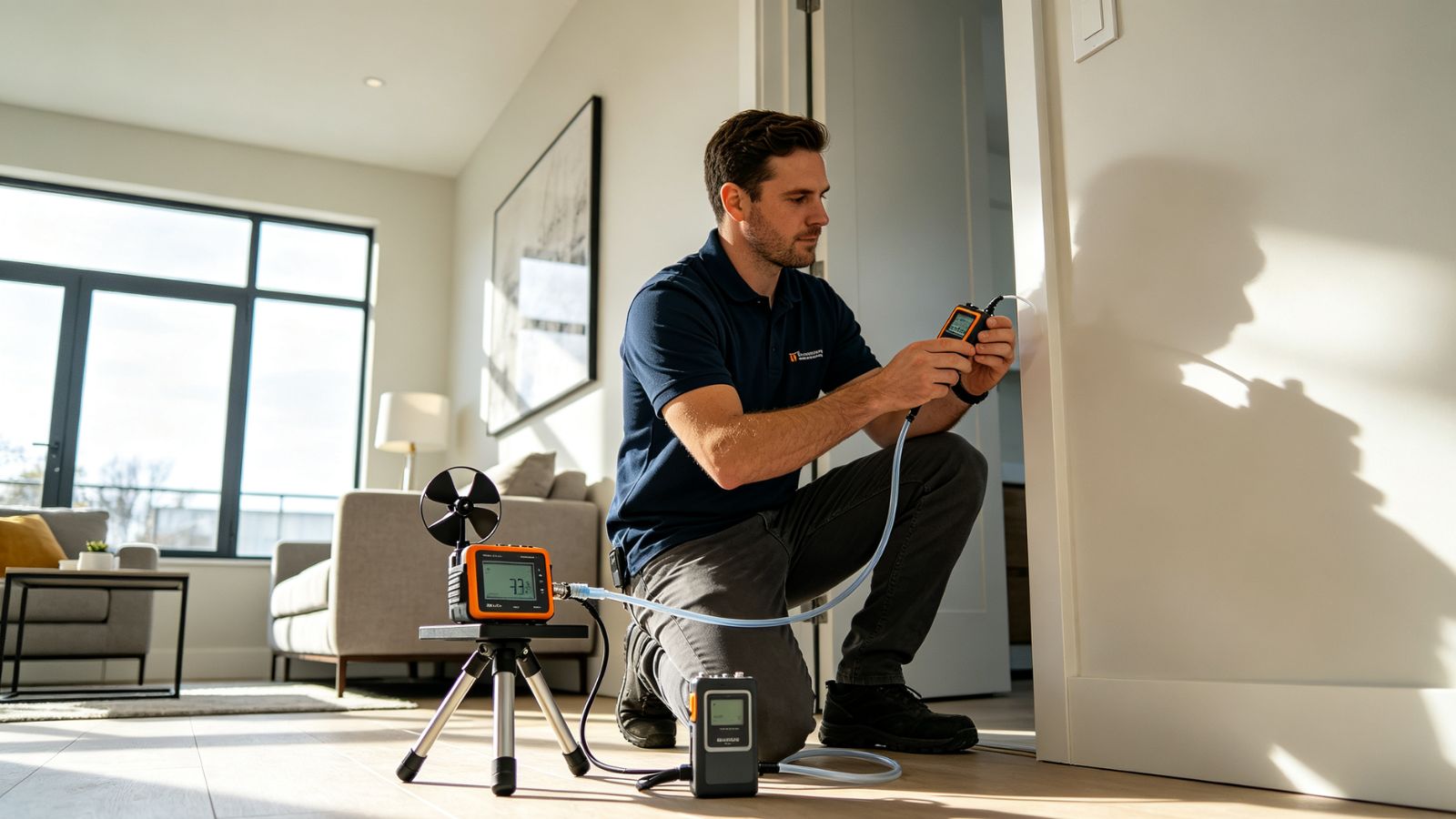
As building envelopes become tighter, many homes require whole-house mechanical ventilation systems that provide fresh outdoor air while exhausting stale indoor air. Balanced ventilation systems accomplish this by using separate supply and exhaust fans that move approximately equal amounts of air, helping maintain neutral pressure conditions within the home.
The challenge with simple ventilation is energy loss. If heated or cooled indoor air is continuously exhausted outdoors and replaced with untreated outdoor air, the HVAC system must work harder to restore indoor temperature and humidity conditions. Heat recovery ventilators (HRVs) and energy recovery ventilators (ERVs) address this problem by transferring energy between outgoing and incoming air streams without mixing the two air supplies.
HRVs transfer sensible heat, meaning they exchange temperature energy between air streams. During cold weather, warm indoor air leaving the home can preheat incoming outdoor air before it enters occupied spaces. During warmer periods, the same process can help reduce cooling demand by transferring some heat away from incoming air.
ERVs perform a similar function but can also transfer moisture between air streams. This makes them particularly useful in climates where humidity control is a major concern. During humid summer conditions, an ERV can reduce the moisture load introduced by incoming ventilation air. In dry winter climates, it may help limit excessive indoor moisture loss by transferring some humidity from outgoing air back into incoming air.
HRVs and ERVs are not simply better or worse versions of each other. The appropriate choice depends on climate, building design, indoor humidity conditions, and ventilation goals. A system that performs well in a cold northern climate may not be the ideal choice for a hot and humid region.
One of the most common misconceptions about modern energy-efficient homes is that improved airtightness creates poor indoor air quality. The reality is more nuanced. Airtight construction reduces uncontrolled air movement, but it also requires intentional systems to manage fresh air exchange.
A leaky home does not necessarily have better ventilation. Outdoor air entering through random gaps may bring in moisture, outdoor pollutants, and temperature extremes without providing consistent airflow. Mechanical ventilation allows homeowners and designers to control when air enters, where it enters, and how much energy is lost during the exchange.
Ventilation design also depends on controlling other factors that influence indoor air quality. Source control, filtration, moisture management, and proper exhaust all work together. For example, removing pollutants directly from a kitchen or bathroom is often more effective than relying only on increasing whole-house ventilation rates.
The best-performing homes treat ventilation as part of an integrated building system. Air sealing, insulation, HVAC design, and ventilation equipment must work together rather than being considered separate components.
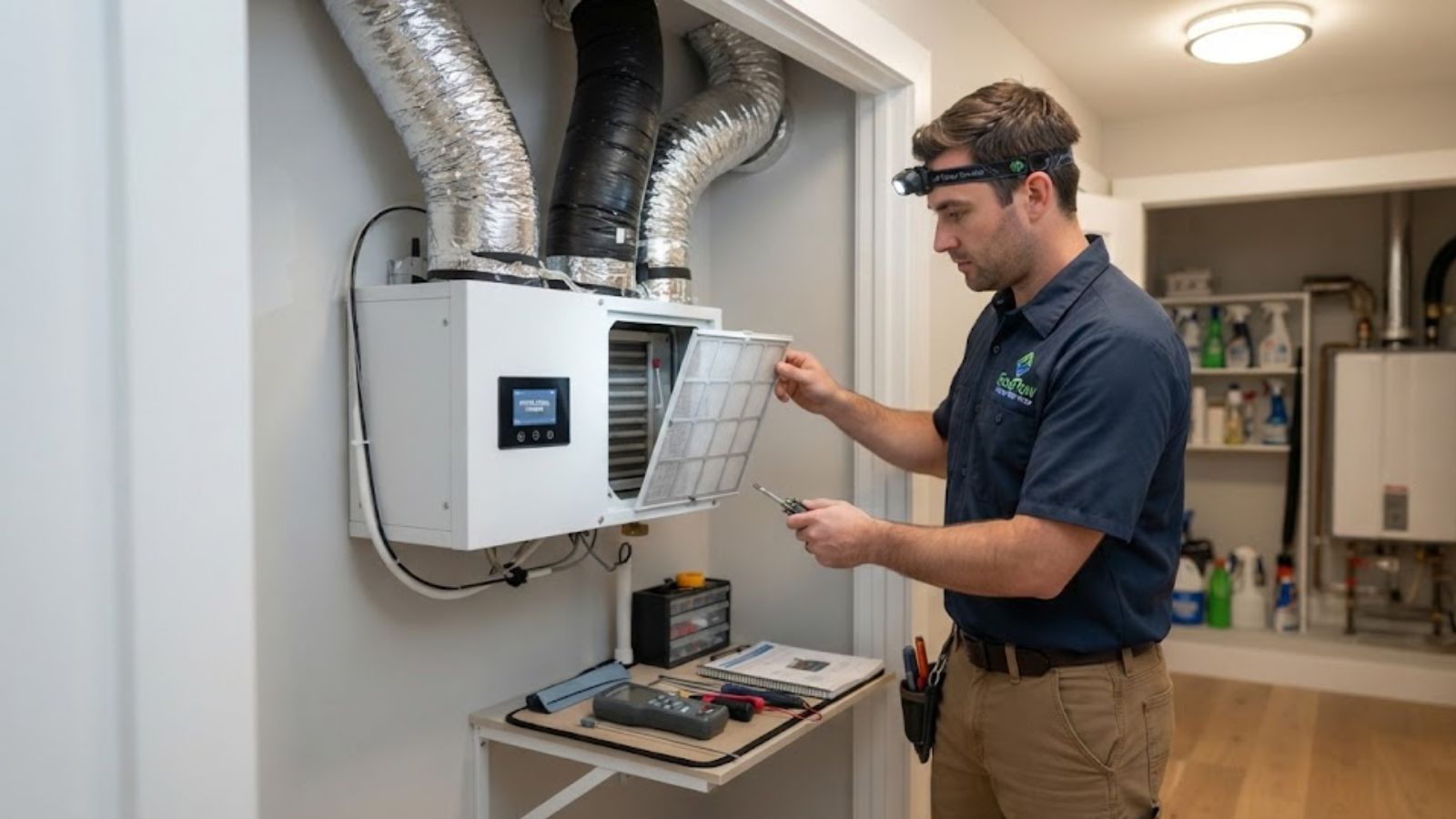
Climate plays a major role in determining how a home should exchange air. A ventilation system must manage not only fresh air requirements but also the temperature and moisture characteristics of incoming outdoor air.
In cold northern climates, maintaining indoor comfort during winter is often the primary challenge. HRVs are frequently considered because their main function is recovering heat from outgoing air while introducing fresh outdoor air. In regions where indoor dryness becomes a concern, ERVs may also be considered depending on the building design and humidity goals.
In hot and humid climates, moisture management becomes more important. Bringing untreated outdoor air into an air-conditioned home can increase cooling loads and humidity levels. ERVs are often evaluated in these environments because they can transfer both heat and moisture, reducing the impact of ventilation air on indoor humidity.
Mixed climates require a balanced approach because homes experience both heating and cooling conditions throughout the year. The best solution depends on the specific building envelope, occupancy patterns, HVAC system, and local requirements.
Rather than selecting ventilation equipment based only on climate labels, designers evaluate the entire building system, including air tightness, insulation levels, moisture control, and expected indoor conditions.
Effective residential ventilation is not about maximizing outdoor air or eliminating all air movement. It is about creating controlled airflow that supports comfortable indoor conditions while protecting energy efficiency.
A complete ventilation strategy typically combines local exhaust for moisture and pollutant sources with whole-house mechanical ventilation for consistent fresh air delivery. Balanced systems such as HRVs and ERVs add another layer of efficiency by recovering energy that would otherwise be lost during air exchange.
As homes continue to become more energy efficient, ventilation will play an increasingly important role in residential design. A well-sealed building envelope reduces unnecessary energy loss, but it must be paired with carefully designed airflow management. When air sealing, HVAC equipment, exhaust systems, and recovery ventilators work together, homeowners can achieve both lower energy consumption and more consistent indoor environmental quality.
Modern homes do not need uncontrolled drafts to maintain fresh air. They need intentional ventilation systems designed around how people live, how buildings perform, and how air moves through the structure.
