For most households, water consumption appears as a single number on a monthly utility bill. That number shows how much water entered the property during a billing period, but it rarely explains what created that demand. A higher reading may come from longer showers, additional laundry cycles, seasonal irrigation, inefficient fixtures, changes in occupancy, or a plumbing issue that develops without obvious warning.
Fixture-level flow measurements provide a more detailed way to understand residential water use. Instead of only recording total water consumption, these systems examine how water moves through individual fixtures, plumbing branches, or specific areas within a building. The purpose is not simply to collect more information, but to connect consumption patterns with the activities, equipment conditions, and maintenance issues that create them.
A traditional water meter answers one important question: How much water was used? Fixture-level monitoring addresses a different question: How was that water used? This distinction matters because two homes with similar monthly consumption may have completely different reasons behind their water demand.
Higher consumption does not always indicate wasteful behavior. The cause may be an aging toilet, inefficient irrigation, seasonal changes, increased occupancy, or a plumbing problem that is difficult to detect without additional information. Understanding the source of demand is often the first step toward making practical improvements.
The challenge in residential water management has never been only measuring volume. The more difficult task is understanding the conditions that create that volume. Fixture-level measurement helps close this gap by connecting water consumption with real household and building activity.
Traditional household water meters are designed to measure overall consumption. They are effective for billing and general monitoring, but they usually cannot identify which fixture or activity caused a specific change in usage. A higher bill may indicate increased demand, but it does not reveal whether the change came from additional showers, appliance use, irrigation, or an unnoticed leak.
Fixture-level measurement adds another layer of detail by examining how water moves through a property. Depending on the system design, sensors may be installed directly on individual fixtures, placed on plumbing branches, or combined with whole-home monitoring equipment that analyzes flow events from a central location.
There are generally two approaches to understanding fixture-level water use. Some systems rely on direct measurement from sensors installed near specific fixtures or plumbing sections. These systems can provide more direct information about individual sources. Other systems analyze whole-home flow patterns and estimate likely sources by comparing changes in flow rate, duration, timing, and repeated behavior with known usage characteristics.
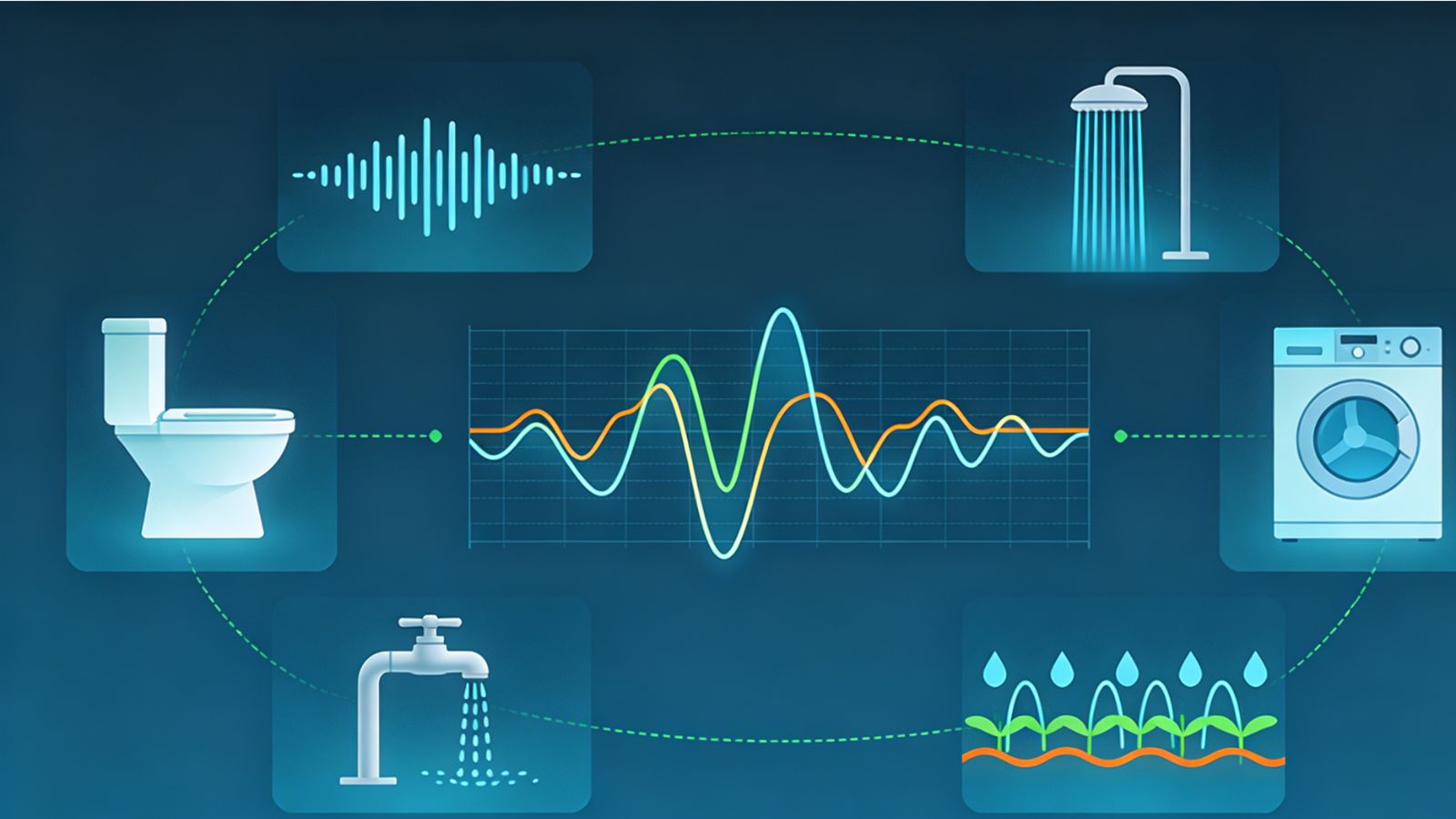
Different household activities create different flow patterns. A toilet flush typically produces a short burst of water. A shower usually creates a longer and more stable pattern. A dripping faucet or running toilet may appear as repeated low-volume events. Appliances such as washing machines and dishwashers often create more complex patterns because they operate through multiple stages.
A monitoring system does not identify a fixture because it directly knows what device is operating. Instead, it interprets flow characteristics and compares them with expected patterns. The accuracy of identification depends on equipment design, sensor placement, plumbing configuration, and the methods used to analyze the collected information.
For this reason, fixture-level monitoring should be viewed as an additional source of insight rather than a perfect record of every household activity.
Water-use patterns often reflect the routines, equipment, and conditions of a household. A monthly bill may show that consumption has increased, but it rarely explains whether the change came from normal lifestyle differences, seasonal demand, or an unexpected issue.
Fixture-level monitoring helps separate these possibilities. A family may assume that showers are responsible for higher indoor consumption, but detailed measurements may show that an older toilet, repeated appliance cycles, or another fixture contributes more than expected. Another household may discover that outdoor irrigation is the primary reason demand increases during warmer months.
This additional context changes how homeowners approach water management. Instead of applying the same solution to every situation, they can focus on the source most likely affecting consumption. Replacing an indoor fixture may have limited impact if irrigation is the main driver, while changing watering schedules may not solve a problem caused by inefficient plumbing equipment.
A common example is a homeowner who notices a higher seasonal bill but cannot determine whether the increase comes from outdoor watering or indoor use. More detailed flow information can help separate those possibilities and make the investigation more focused.
The value of fixture-level data is not only finding problems. It also helps distinguish expected activity from unusual patterns. A temporary increase caused by guests is different from water use that continues during periods when no activity is expected. Recognizing that difference allows homeowners to investigate possible issues earlier.
Although fixture-level monitoring is useful for individual homeowners, its applications extend beyond single-family residences. Property managers, builders, and water utilities can use more detailed consumption information to understand how buildings operate and where improvements may be needed.
In multifamily buildings, this type of information can be especially valuable because water systems are often more complicated. Several apartments may share plumbing infrastructure, common areas may have separate demand patterns, and maintenance teams may have limited visibility into where unusual consumption begins.
For example, a property manager may notice unexpected water activity during periods when usage is normally low. A shared meter may confirm that water is being consumed, but it cannot easily show whether the source is a specific apartment, irrigation equipment, a common-area fixture, or a plumbing issue. More detailed monitoring can help narrow the investigation and allow maintenance teams to focus attention where it is most needed.
This approach can be particularly useful in older buildings where plumbing systems have changed over time. Modifications, renovations, and aging infrastructure can make water-related problems difficult to trace. Additional consumption information can help operators make better decisions before beginning broad inspections.
For building professionals, detailed water-use patterns can support design and operational decisions. Understanding how residents actually use fixtures can help evaluate plumbing layouts, select appropriate equipment, and determine whether efficiency improvements perform as expected after installation.
Water utilities can also benefit from a clearer understanding of customer behavior. Instead of relying only on broad assumptions about residential demand, utilities can develop more targeted conservation programs and better understand how different types of properties use water.
One of the most practical benefits of fixture-level measurement is identifying possible leaks and inefficient fixtures. Traditional meters can show that water consumption is unusually high or that water continues flowing when it should not, but they often cannot show where the problem begins.
Fixture-level information can narrow the search. Repeated short water events may suggest that a toilet is refilling unnecessarily. A continuous low-flow pattern may point toward a dripping fixture or another issue requiring attention. Monitoring outdoor systems can reveal irrigation behavior that does not match expected schedules.
A running toilet is a common example. From the perspective of a whole-home meter, the problem may appear only as unexplained water consumption. More detailed flow information can indicate that repeated toilet-related events are contributing to the pattern, giving homeowners or maintenance teams a more focused place to begin troubleshooting.
However, fixture-level monitoring is a diagnostic tool, not a replacement for professional evaluation. Flow patterns can indicate that something unusual is occurring, but confirming the exact mechanical cause may still require a plumber, irrigation specialist, or building professional.
The main advantage is earlier awareness. Many water problems develop gradually and remain unnoticed until they affect bills, property conditions, or system performance. Better visibility makes those changes easier to recognize.
Water conservation advice often focuses on general recommendations: install efficient fixtures, reduce unnecessary use, adjust outdoor watering, and repair leaks. These actions are valuable, but their effectiveness depends on the actual conditions of each property.
Fixture-level measurements make conservation efforts more targeted. A homeowner who learns that outdoor systems account for most water demand can focus on landscaping choices and irrigation practices. A household with higher indoor consumption may benefit more from reviewing fixture efficiency or daily routines.
The most useful information is not simply the amount of water being consumed, but the reasons behind that consumption. Better measurement allows homeowners and building operators to choose actions that match actual conditions rather than relying on assumptions.
The same principle applies when evaluating water-saving products. A fixture may perform efficiently under controlled conditions, but real-world results depend on how people use it in everyday situations. Monitoring actual patterns helps show whether efficiency improvements deliver meaningful results after installation.
Despite its advantages, fixture-level monitoring is not a perfect solution for every property. Installation complexity remains an important consideration, especially in existing homes where adding sensors may require additional work or changes to plumbing access points.
Older housing stock can present additional challenges. Many homes have experienced renovations or plumbing modifications over decades, creating systems that may not match original designs. A monitoring approach that works well in a newer property may require different planning in an older building.
Data interpretation is another challenge. Not every flow pattern is easy to identify, and systems that estimate fixture activity may sometimes have difficulty separating similar events. Performance depends on equipment design, installation quality, and the analytical methods used.
Privacy also deserves attention. Water-use patterns can reveal information about household routines, including when occupants are usually active or when certain activities occur. Responsible systems should clearly explain how information is collected, stored, and protected.
For these reasons, fixture-level monitoring is best understood as a tool that adds operational insight rather than replacing traditional meters or professional inspection.
The growing importance of water monitoring is not only about collecting more measurements. The real value comes from helping homeowners, property managers, and maintenance teams understand what those measurements mean.
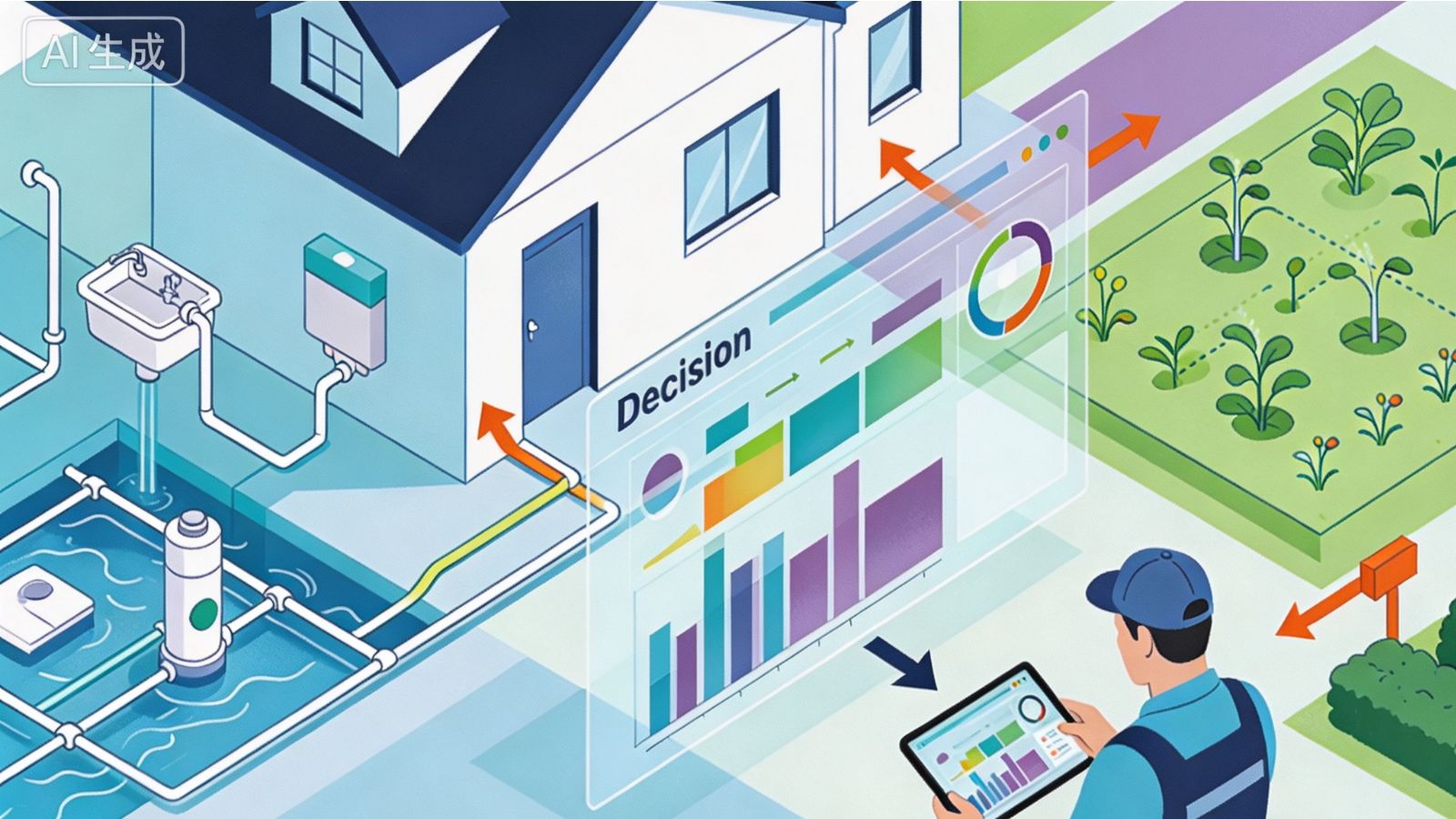
In residential settings, fixture-level information can help identify unusual activity, track changes in usage patterns, and support better maintenance decisions. In larger buildings, the same information can help operators determine whether changing consumption is related to equipment performance, occupancy patterns, irrigation systems, or other operational conditions.
Continued development in monitoring technology is likely to focus less on producing more data and more on making existing information easier to interpret. Clearer alerts, improved analysis methods, and better integration with building management systems may help turn water-use information into a practical maintenance resource.
The broader importance of fixture-level monitoring is that it changes water data from a simple record of past consumption into a tool for understanding how homes and buildings actually function.
Fixture-level flow measurements provide a more detailed perspective on household water use by connecting overall consumption with the fixtures and activities that contribute to it. They do not replace traditional meters, professional maintenance, or responsible water habits, but they provide information that was previously difficult to obtain.
For homeowners, the value comes from turning an unexplained water bill into a clearer picture of daily usage patterns. For property managers, builders, and communities, the value comes from understanding how water systems operate and using that knowledge to support better planning and maintenance decisions.
Water consumption is easy to measure but much harder to explain. A traditional meter records total usage, but it usually cannot show the conditions that created that usage. Fixture-level monitoring helps fill that missing context by revealing how different parts of a home or building contribute to overall demand.
That is the practical value of this technology: not replacing the meter, but helping people understand the story behind the number.
