As recent extreme weather events and grid vulnerabilities have demonstrated, a short power outage is merely a temporary inconvenience, whereas a utility disruption lasting several consecutive days presents an entirely different class of operational challenge. Modern residential structures do not rely on isolated appliances; instead, they depend on an intricate web of interconnected systems that function simultaneously. Electricity is required to operate deep-well water pumps, water-filtration equipment, forced-air heating, central cooling, sewage ejector pumps, refrigeration units, and critical medical devices. When one of these vital lifelines fails due to an extended grid collapse, it frequently triggers cascading failures elsewhere in the home, turning a simple blackout into a severe health and safety crisis.
True home resilience during an extended utility disruption is rarely about keeping every household luxury running at full capacity. Rather, it centers on preserving a tightly managed subset of core functions through a coordinated, systems-thinking approach. Electricity, potable water, independent communications, climate control, and core mechanical infrastructure each require a targeted backup strategy tailored directly to the property's unique location and local climate risks. The ultimate objective is never total, off-grid independence from municipal infrastructure, but rather maintaining basic habitability long enough for regional utility services to recover or for occupants to evacuate safely.
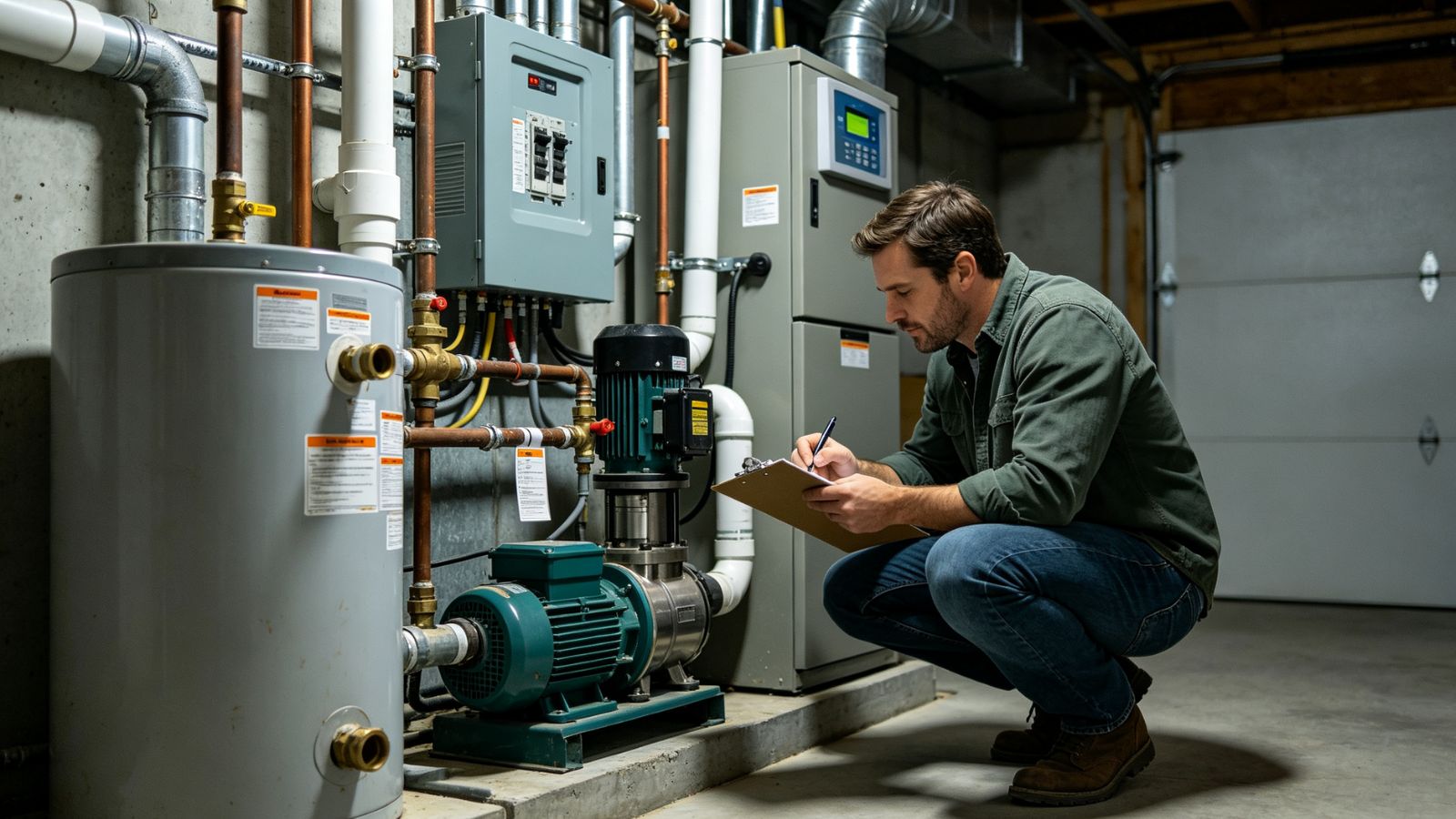
Before investing capital in expensive backup equipment, homeowners must conduct a rigorous inventory to identify what the house actually needs to remain functional during a prolonged crisis. This energy and utility profile will vary drastically depending on local infrastructure. A suburban property connected to a municipal water utility will typically maintain water pressure during a blackout, whereas a rural home dependent on a private groundwater well loses its entire water supply the moment the well pump loses electricity. Similarly, a modern gas-fired furnace consumes very little electricity overall, yet it becomes completely useless if power to its electronic ignition controls and blower motor is cut.
A practical inventory strictly separates essential life-safety loads from ordinary household conveniences. Lighting, food refrigeration, emergency communications, well or sump pumps, heating controls, and medically necessary electrical equipment belong firmly in the primary category. Conversely, large discretionary loads such as electric water heaters, clothes dryers, and electric vehicle chargers demand massive surge capacity and should be strictly deprioritized during a multi-day blackout. The U.S. Centers for Disease Control and Prevention recommends stocking emergency lighting, dedicated backup power for communication devices, battery-powered weather radios, and portable chargers as foundational preparedness items, emphasizing that true resilience begins with knowing which functions must continue rather than simply buying the largest generator available.
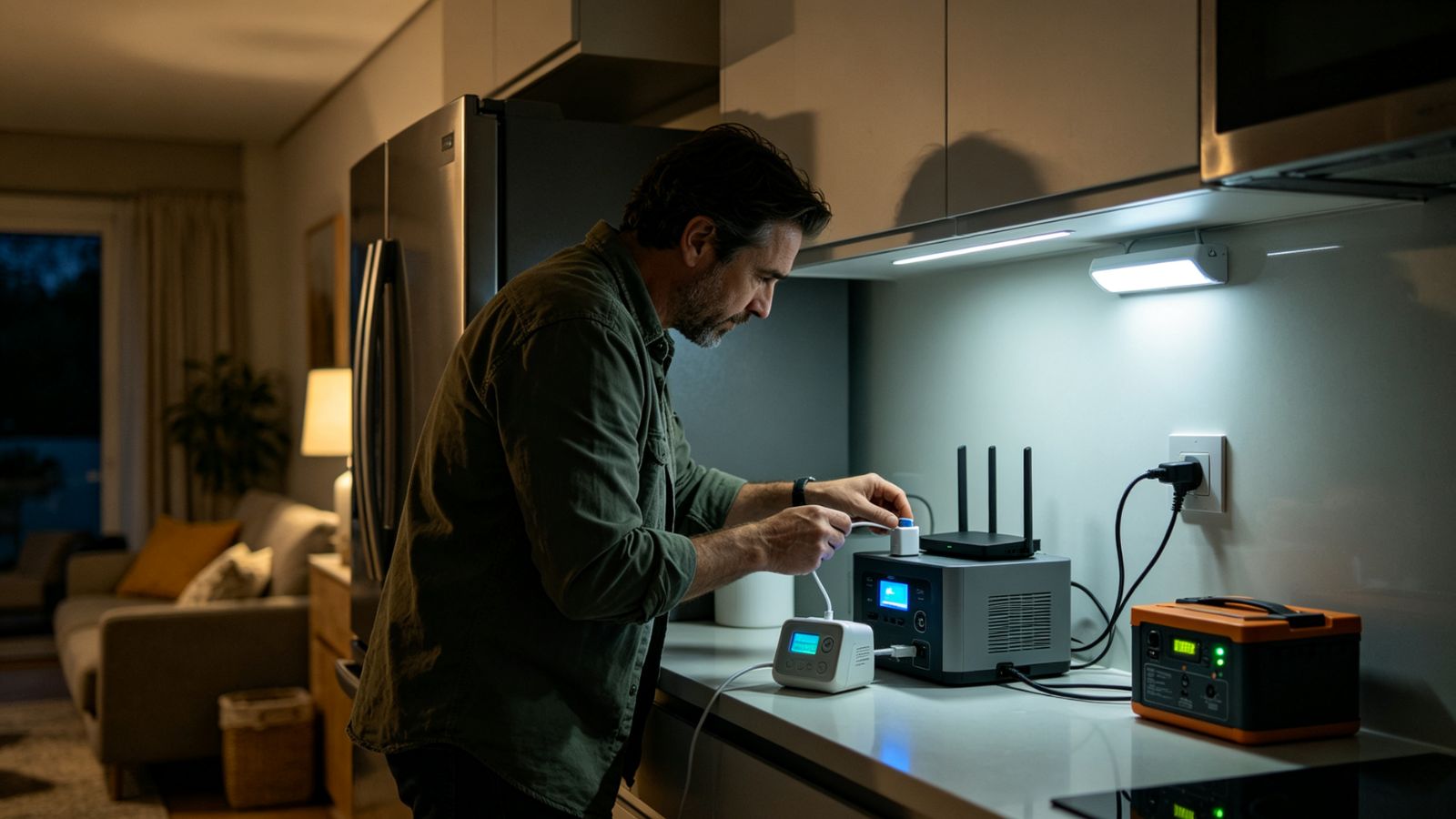
A residential backup electrical ecosystem can range from compact portable power stations to permanently installed standby generators or modular battery storage arrays. The most appropriate technology depends heavily on expected outage durations, critical electrical loads, available fuel types, and local zoning restrictions. Battery-based energy storage systems are exceptionally useful for powering sensitive electronics, communication routers, LED lighting, and refrigeration without making a sound or producing toxic exhaust. However, their long-term utility during a multi-day blackout depends entirely on storage capacity and whether solar arrays or alternative chargers are available to replenish them when the grid stays down.
Stationary standby generators provide substantially longer runtimes when adequate fuel supplies are secured, but they introduce strict maintenance obligations and life-safety hazards. A permanently installed unit connected through an approved transfer switch can automatically power designated household circuits without requiring manual cord connections during a storm. Portable generators can also supply essential loads, but they demand absolute adherence to manufacturer guidelines. Generator exhaust represents a lethal hazard that must never be treated as a minor technical detail; the CDC explicitly mandates that portable generators must never be operated inside a home, garage, or enclosed crawlspace, and must sit outdoors at least 20 feet away from all operable windows, doors, and ventilation intakes. Furthermore, a portable generator must never be connected to a home's internal wiring through an unapproved improvised cord, as improper backfeeding can easily energize dead utility lines and severely injure electrical linemen working to restore power.
Water resilience is frequently misunderstood as merely storing a few cases of bottled drinking water in a pantry. While stored water is vital for immediate survival, a home's complete water system actually encompasses several distinct mechanical steps: extracting water, pressurizing distribution lines, treating biological or chemical contaminants, heating water, and safely removing wastewater. For homes served by municipal utilities, a power outage may not immediately shut off the main valve, though localized emergencies can severely compromise water pressure, treatment plant operations, and boil-water advisories.
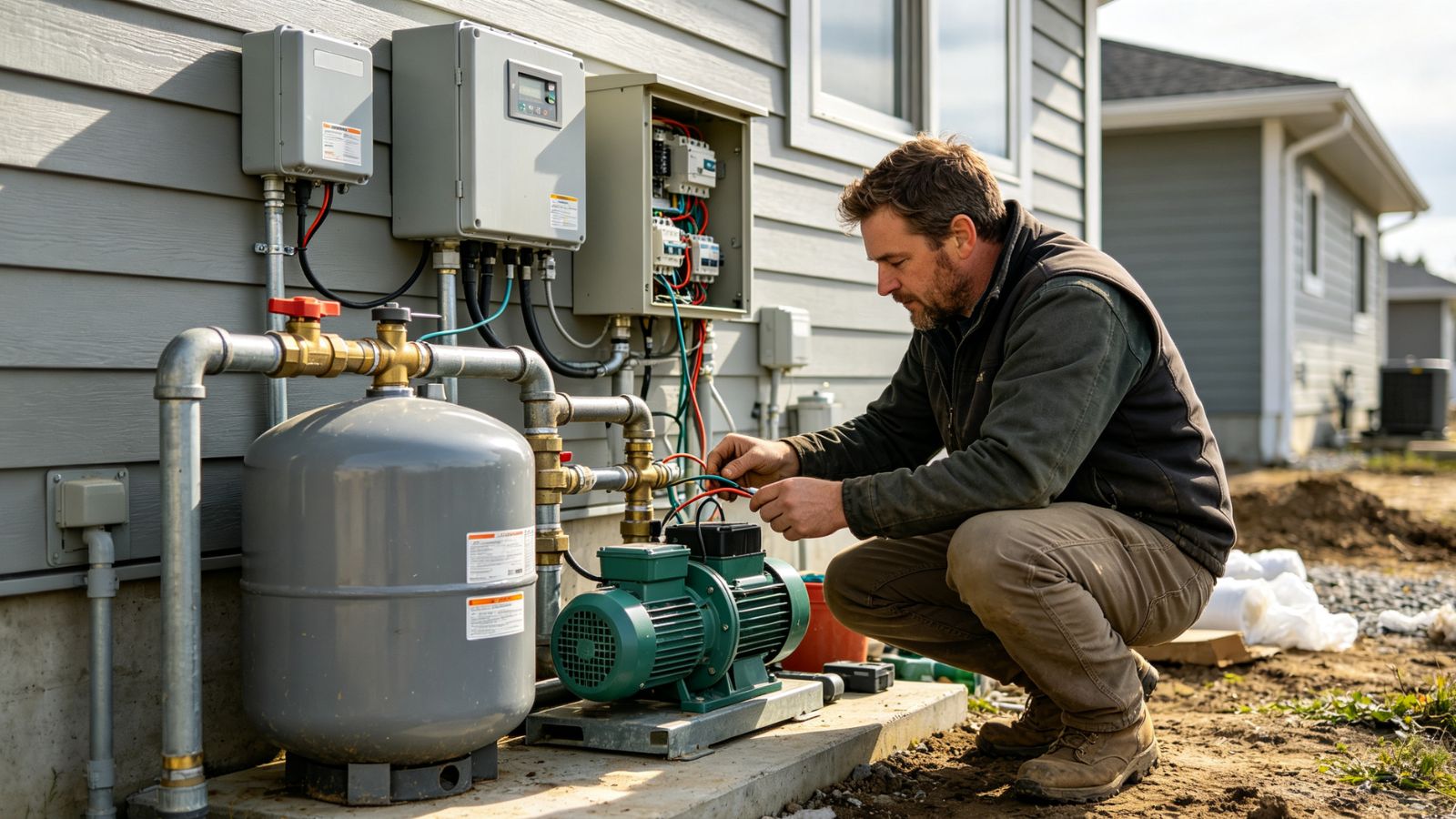
For private well owners, however, the electrical dependency is direct and absolute, as the submersible pump requires continuous power to push groundwater into the pressure tank. Installing a properly sized backup generator circuit preserves access to this existing water infrastructure without requiring redundant storage tanks. Furthermore, advanced water treatment equipment creates a hidden dependency that catches many homeowners off-guard. Filtration systems, ultraviolet purification lamps, and booster pumps often require electricity even when the raw water source remains physically accessible, making a comprehensive audit of all treatment components essential before an emergency strikes.
Modern emergency communications demand an independent backup strategy because a regional grid failure routinely cripples both household electricity and local telecommunications infrastructure. Relying solely on a fully charged smartphone is a short-term gamble, as cellular towers depend on backup battery banks that typically exhaust their power within hours of a major blackout, while home fiber and cable internet routers lose connectivity instantly without grid power.
A robust communication plan therefore combines multiple layers of hardware redundancy. Portable power banks can keep smartphones and small network terminals alive, while a battery-operated or hand-cranked NOAA Weather Radio ensures uninterrupted access to official emergency broadcasts regardless of internet availability. Effective planning must also account for the reality that while household emergency gear may function flawlessly, regional utility networks can remain completely severed. Establishing a multi-channel communication protocol ensures that a family can receive critical safety alerts from civil authorities even when standard commercial networks go offline.
Heating, cooling, ventilation, sump pumps, and refrigeration represent the heaviest mechanical burdens during an extended disruption, as their energy demands dwarf those of standard electronics. Enhancing overall building thermal envelope efficiency directly reduces this mechanical dependency. Superior insulation and air sealing slow down internal temperature drift, allowing a well-insulated home to maintain habitable indoor temperatures for days without active heating or cooling equipment.
These heavy systems also harbor critical operational dependencies that must be mapped out in advance. A natural-gas heating system requires electricity for safety controls and blowers, hydronic radiant systems rely on circulating pumps, and basement sump pumps become life-saving assets during heavy torrential rains precisely when the electrical grid is most fragile. Analyzing these mechanical interdependencies allows homeowners to size their emergency electrical loads accurately rather than guessing their total wattage requirements under pressure.
Attempting to duplicate normal, everyday household electricity consumption during an emergency makes backup systems unnecessarily complex and financially prohibitive. A rational preparedness strategy defines essential survival services first and then calculates the precise runtime required for each. For instance, LED lighting and communications require continuous low-wattage support, refrigeration operates efficiently on intermittent duty cycles, and a well pump only needs to run briefly to keep the pressure tank full.
Fuel availability is another critical constraint that dictates system design. A generator dependent on gasoline that becomes impossible to source during a regional disaster offers far less practical resilience than its nominal kilowatt rating suggests. By carefully matching backup power solutions, emergency lighting, and safe heating alternatives to realistic localized outage profiles, homeowners can build a dependable, cost-effective resilience plan that protects their property and family when normal utility services disappear.
