Understanding household electricity demand requires more than reading a monthly utility bill. A single total combines equipment that operates continuously, systems that respond to weather, appliances that run intermittently, and devices whose consumption depends heavily on household routines. Two homes with similar sizes can therefore have very different electricity profiles because of differences in climate, heating and cooling systems, water-heating equipment, appliances, occupancy, and operating schedules.
For U.S. households, heating and cooling, water heating, refrigeration, lighting, and other equipment account for substantial portions of residential electricity use, but their relative importance varies considerably. The U.S. Energy Information Administration reported that the average U.S. household used about 10,500 kilowatt-hours of electricity per year, while its 2020 residential end-use data showed air conditioning at about 19% of residential site electricity consumption, with space heating and water heating each accounting for about 12%. These figures are national averages rather than a template for every home.
That distinction matters because energy consumption and electrical demand are not the same thing. A refrigerator may use relatively little power at any given moment but operate throughout the year. An electric dryer can draw several kilowatts but run only for part of an hour. A water heater can switch between substantial heating loads and periods with little or no electrical demand. Looking at both how much electricity a system consumes and when that electricity is consumed provides a much clearer picture of residential load behavior.
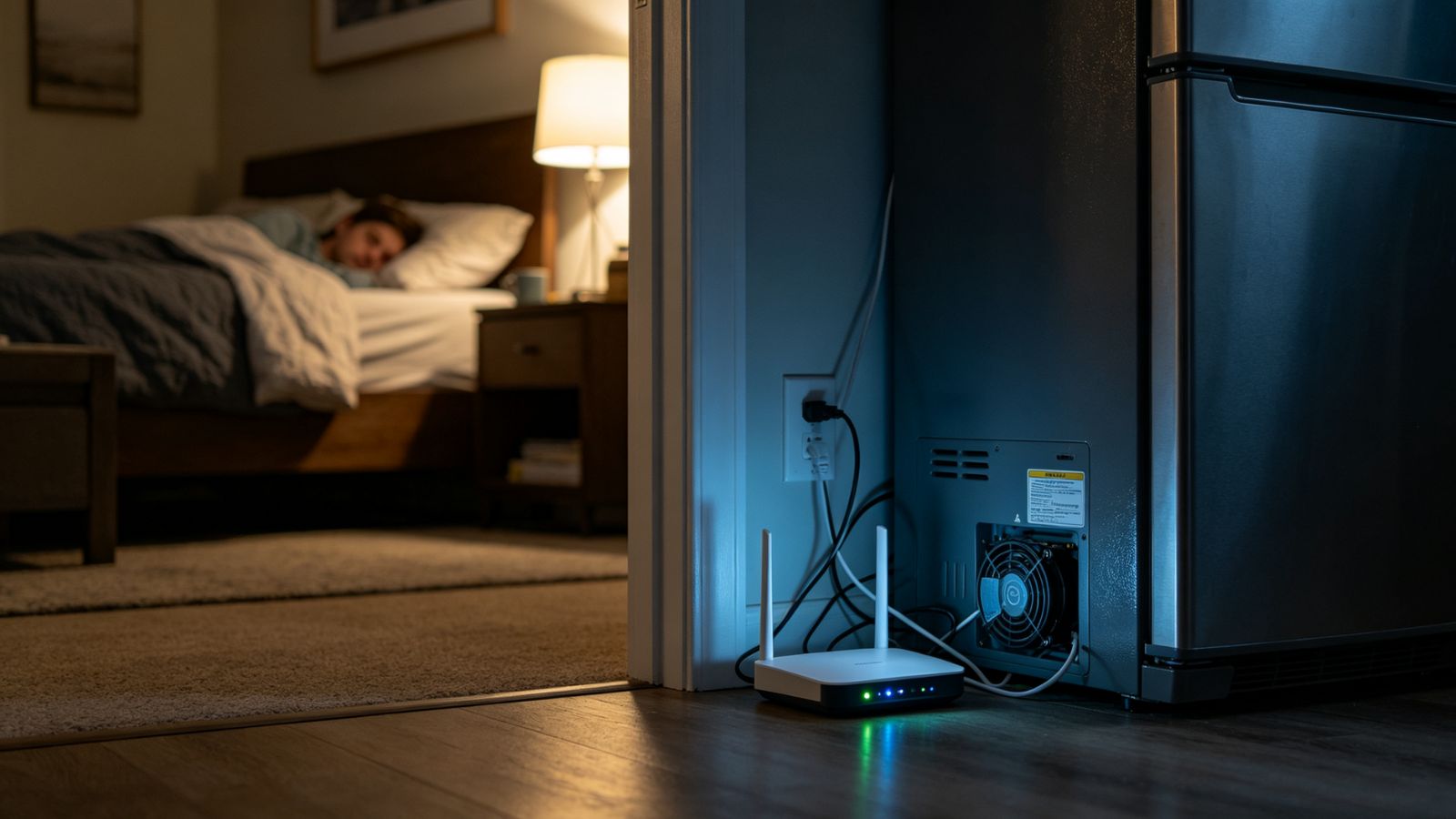
The term baseload is useful for describing the relatively persistent portion of household electricity demand, although it is not a formal category used in national residential energy statistics. In practical terms, a home's baseline load consists of equipment that operates continuously or cycles automatically regardless of whether occupants are actively using the home. Refrigerators, networking equipment, security systems, ventilation equipment, and standby electronics can all contribute to this background demand.
The important point is that a household baseline is not perfectly flat. Most equipment cycles. A refrigerator compressor turns on and off as the appliance maintains its internal temperature, while ventilation systems and other mechanical equipment may operate according to controls or schedules. Networking equipment may maintain a relatively stable draw, while televisions, computers, and other electronics move between active and standby states. The resulting load is better understood as a persistent load envelope than as a constant power level.
Small loads can still accumulate over long periods, but their importance should not be exaggerated. A device drawing only a few watts has limited significance over a short period, yet equipment that remains energized around the clock contributes continuously to annual electricity use. Refrigeration is a good example. EIA reported that 99% of U.S. homes had a refrigerator in 2020, with 34% having two or more. The refrigerator's importance comes from providing continuous temperature control rather than from creating an unusually large instantaneous load.
Heating and cooling deserve separate attention because they can dominate seasonal electricity consumption and substantially influence when a household reaches its highest demand. Unlike many appliances, HVAC systems respond directly to outdoor conditions. When temperatures become unusually hot or cold, equipment may operate for longer periods, changing the home's electrical profile over hours, days, or an entire season.
Air conditioning is particularly significant in the United States. EIA reported that air conditioning accounted for about 19% of residential site electricity consumption in 2020, making it the largest individual residential electricity end use in that dataset. About 89% of U.S. homes used air conditioning in 2020, compared with 57% in 1980. These figures help explain why prolonged summer heat can produce substantial increases in residential electricity demand.
The effect varies considerably by region and heating technology. Homes in warmer areas generally have greater cooling requirements, while electrically heated homes can experience significant winter demand. In colder regions, however, many homes rely on natural gas, heating oil, propane, or other fuels for space heating, so their winter electricity profiles can look very different from those of electrically heated homes.
The building envelope also affects HVAC electricity demand. Insulation, air sealing, windows, shading, home size, and indoor temperature settings influence how quickly heat enters or leaves a building. A less efficient envelope can increase the amount of time HVAC equipment must operate, while a more efficient envelope can reduce the thermal load the system needs to meet. Consequently, national averages should be treated as reference points rather than predictions for an individual household.

Space heating illustrates why electricity consumption must be analyzed alongside the technology supplying the service. EIA's 2020 data show that space heating represented about 12% of residential site electricity consumption, but that figure does not mean every home uses a similar share of electricity for heating. Many U.S. households use natural gas, propane, heating oil, wood, or other fuels instead of electric heating.
Electric heating technologies also produce different load patterns. Electric resistance systems convert electricity directly into heat, while heat pumps move heat through a refrigeration cycle. Their electricity requirements depend on outdoor temperature, system efficiency, thermostat settings, building characteristics, and whether supplemental resistance heating is required.
This distinction becomes increasingly important as homes adopt heat pumps that can provide both heating and cooling. A household previously heated primarily with natural gas can see a substantial change in its electrical load when heating becomes electric. The relevant question is therefore not simply how much thermal energy the home needs, but which technology supplies it and how that technology interacts with the electrical system.
Water heating accounted for about 12% of U.S. residential site electricity consumption in EIA's 2020 data, making it another major residential end use. Unlike HVAC, water heating responds less directly to outdoor temperature and more directly to household occupancy, hot-water routines, tank temperature, equipment design, and control settings.
Conventional electric resistance water heaters use heating elements to transfer electrical energy directly into stored water. When those elements operate, they can create a relatively substantial household electrical load. The heater may also operate periodically between major hot-water events as it replaces heat lost from the tank and maintains the desired temperature.
The timing of showers, bathing, laundry, and dishwashing can therefore create recognizable demand patterns, although the actual electrical profile depends on the equipment and how appliances obtain hot water. A large household can have substantially different hot-water demand from a one-person home even when both have similar heating systems.
Heat pump water heaters behave differently because they use a refrigeration system to move heat from surrounding air into the tank rather than relying primarily on direct resistance heating. This can substantially change the amount and timing of electricity required to produce hot water. The important point is that water heating is not simply another appliance load; it is a thermal load with storage, meaning electricity can be consumed at one time while the resulting hot water is used later.
Clothes dryers, dishwashers, washing machines, cooking equipment, freezers, and other appliances add another layer of household electricity demand. Unlike baseline equipment, these devices generally operate according to household schedules and specific tasks. Their contribution depends on operating frequency, cycle duration, power requirements, and equipment efficiency.
The distinction between power and energy is especially important here. An appliance can have a high power rating without being the largest annual electricity consumer because it may operate only briefly. A clothes dryer can create a noticeable electrical demand during a cycle while remaining off for much of the day. A refrigerator generally has a smaller instantaneous demand but accumulates electricity consumption because it operates throughout the year.
Heating elements can also make appliance loads more significant. Electric dryers use resistance heating, while dishwashers and some washing machines may use electricity to heat water internally. Cooking equipment can likewise produce concentrated electrical loads when heating elements operate. EIA's residential end-use data separately track electricity associated with cooking, refrigerators, clothes washers, clothes dryers, lighting, televisions, air conditioning, space heating, and water heating, illustrating why household loads are better understood by end use rather than as one generic appliance category.

One of the most common mistakes in residential electricity analysis is assuming that the highest-wattage appliance must consume the most electricity over the year. Power describes the rate at which electricity is being used at a particular moment; energy describes the amount accumulated over time. Both measurements matter, but they answer different questions.
For example, a 3,000-watt appliance operating for one hour consumes 3 kilowatt-hours. A 100-watt device operating continuously for 24 hours consumes 2.4 kilowatt-hours. The first produces a much larger instantaneous load, while the second approaches a similar amount of energy consumption because it operates continuously. Actual household equipment cycles and varies in power, but the principle remains useful.
This distinction becomes critical when evaluating peak demand. A home can have a modest background load for most of the day and then experience a substantial increase when air conditioning, water heating, cooking equipment, and laundry appliances operate at overlapping times. Those short periods may be important to the electrical system even when the appliances involved do not dominate annual household consumption.
Annual kWh therefore answers how much electricity a home consumes, while a load profile answers when that electricity is consumed. Residential energy analysis becomes much more informative when both are considered together.
Residential electricity demand cannot be separated from the conditions surrounding the home. Weather is one of the strongest influences because heating and cooling respond directly to outdoor temperature. EIA notes that residential electricity end-use shares can vary from year to year partly because weather conditions change.
A prolonged summer heat wave provides an obvious example. Air-conditioning systems may operate for much longer periods, turning what is normally a moderate household load into a sustained afternoon and evening demand. EIA's analysis of residential electricity use has likewise identified air conditioning as a major contributor to seasonal variation.
Household behavior adds another layer. Occupancy affects cooking, laundry, hot-water use, computers, entertainment equipment, and other loads. A household in which several people work or study from home can have a substantially different daytime profile from a home that is empty during working hours. Housing characteristics matter as well. EIA reports meaningful differences in electricity consumption among regions and housing types, reflecting factors such as climate, home size, equipment, and occupancy.
The result is a dynamic profile rather than a fixed hierarchy. On a mild spring day, HVAC demand may be relatively small. During a summer afternoon, cooling can become dominant. During a winter cold spell, an electrically heated home can experience a dramatic increase in demand. The same household can therefore behave very differently depending on season, weather, occupancy, and equipment schedules.
Individual categories are useful for analysis, but a real home does not experience them independently. The electrical load at any moment is the combined result of equipment operating according to different physical and behavioral conditions. A refrigerator may cycle in the background, networking equipment may remain energized, HVAC equipment may respond to outdoor temperature, a water heater may respond to tank temperature, and household appliances may operate according to daily routines.
This creates several overlapping load layers. Persistent equipment establishes the background demand. HVAC creates a weather-responsive thermal load. Water heating creates a stored thermal load influenced primarily by hot-water demand and equipment characteristics. Appliances create intermittent loads that can become important when several high-power devices operate at the same time.
The relative importance of these layers changes continuously. A national average can describe broad patterns, but it cannot determine the exact load profile of a particular home. Equipment type, climate, building characteristics, household size, and operating schedules can move an individual household substantially away from the national average.

Understanding these categories becomes particularly important when evaluating residential solar generation, batteries, backup systems, or grid connections. A home does not consume a fixed amount of electricity each day. Its demand changes throughout the day, and the highest-demand periods may occur when several systems overlap.
Annual electricity consumption is therefore only a starting point. Two households could use similar amounts of electricity over a year while having very different peak loads and daily consumption patterns. One might consume electricity relatively evenly, while another could concentrate substantial demand into periods when HVAC, water heating, cooking, and other appliances operate simultaneously.
Electrification can make these differences even more important. Replacing a gas furnace with an electric heat pump or a gas water heater with a heat pump water heater changes the home's relationship with electricity. The key question is not simply whether annual electricity consumption rises or falls, but which end use becomes electric, how much power it requires, how frequently it operates, and when that demand occurs.
For residential energy-system planning, this load-based perspective is more useful than treating a home as a single annual kWh figure. Generation equipment, batteries, and grid connections all interact with demand at particular times. Understanding the composition and timing of household loads provides the foundation for evaluating those interactions.
A household electricity bill tells you how much energy was consumed during a billing period, but it does not explain which systems produced that consumption. A more useful analysis separates persistent loads, weather-driven thermal loads, stored thermal loads, and intermittent appliance demand. It then considers both instantaneous power and accumulated energy, because a high-wattage appliance can create a short peak while a lower-power device can consume meaningful electricity through continuous operation.
U.S. residential data support this more nuanced view. EIA's statistics identify air conditioning, space heating, and water heating as major residential electricity end uses, while refrigeration and other equipment contribute across the year. At the same time, the exact distribution varies significantly by region, housing type, equipment, and weather.
The practical lesson is not that every homeowner should focus on one universally dominant appliance. Residential electricity demand has several interacting physical drivers. Baseload equipment creates persistent background consumption. HVAC systems respond to the thermal characteristics of the building and outdoor conditions. Water heaters convert electricity into stored thermal energy according to household demand and equipment design. Major appliances create intermittent loads whose significance depends on both power requirements and operating frequency.
Once these distinctions are clear, household electricity becomes easier to understand as an integrated system rather than a collection of unrelated devices. The most useful questions are how much electricity each end use consumes, how frequently it operates, how much power it draws while operating, and how its schedule overlaps with other loads. That framework provides a stronger foundation for understanding residential load profiles and how individual homes interact with the broader electrical system.
