A hidden water leak is rarely as simple as finding a puddle under a pipe or replacing a dripping faucet. In many homes, water lines are installed behind finished walls, beneath floors, inside concrete slabs, or underground, making the source of a leak difficult to identify without specialized testing. By the time stains, damp materials, unusual odors, or higher water bills appear, the water may have already traveled away from the original failure point.
The challenge in residential leak detection is not only proving that water is being lost, but also determining where that loss is occurring. Plumbing professionals use several diagnostic approaches to investigate hidden leaks, with pressure testing, acoustic detection, and flow-based monitoring being among the most common methods. Each technique provides different information about the plumbing system, and combining them often creates a clearer picture than relying on a single test.
These methods are used for a wide range of residential problems, including underground service line leaks, slab leaks, hidden supply pipe failures, and unexplained increases in household water consumption. Homeowners can often recognize warning signs, but locating a concealed leak typically requires specialized equipment and an understanding of how different plumbing systems behave under different conditions.
Residential plumbing systems are designed to remain mostly invisible. Pipes may run through wall cavities, ceilings, crawl spaces, foundations, and underground areas before connecting to fixtures throughout the home. When a pipe develops a small crack, corrosion problem, loose connection, or fitting failure, the escaping water does not always appear directly below the damaged section.
Water moves through building materials in ways that can make the source difficult to identify. Moisture may travel along framing members, insulation, concrete surfaces, or other pathways before becoming visible. A ceiling stain below a bathroom, for example, does not necessarily mean the leak is directly above the stain. The visible damage may simply be the first place where enough moisture accumulates to become noticeable.
Because of this, professional leak detection focuses on evidence that cannot be seen from the outside. Instead of relying only on visual inspection, technicians examine changes in pressure, water movement patterns, and sound signals created by escaping water. These measurements help narrow the possible location before more invasive inspection or repair work begins.
In many American homes, leak investigations can be complicated because indoor plumbing, irrigation systems, water heaters, and underground service lines may produce similar symptoms. A rising water bill does not always point to a single obvious source. The cause could involve a hidden supply pipe, a toilet component, an outdoor irrigation connection, or another part of the property’s water system.
The age and construction style of a home can also affect the investigation process. Older houses may contain different pipe materials or plumbing layouts compared with newer construction. Homes built on slab foundations can present different challenges from those with accessible crawl spaces. Understanding these differences helps professionals choose the most appropriate detection method.
Pressure testing is commonly used to determine whether a pressurized plumbing section can maintain pressure when water fixtures are closed. It is primarily applied to supply lines, such as water pipes that deliver pressurized water throughout a home, rather than typical drainage pipes, which operate under different conditions.
In a properly functioning supply system, pressure should remain relatively stable under controlled conditions. If pressure decreases unexpectedly, it may indicate that water is escaping somewhere within the tested section. During an investigation, a technician may isolate part of the plumbing system and monitor pressure changes over time.
This approach is especially useful for hidden supply lines, including pipes located inside walls, beneath concrete slabs, or underground between a home and the municipal water connection. For example, a homeowner may notice unusually high water usage but have no visible moisture anywhere inside the house. A pressure test may help determine whether a buried supply line is losing water before sections of the property are opened for inspection.
The main advantage of pressure testing is that it can confirm whether a leak may exist even when there are no obvious signs of water damage. It helps reduce the number of possible locations that need further investigation by showing whether a particular section of plumbing is holding pressure properly.
However, pressure testing has limitations. It usually confirms that a problem exists within a tested section, but it does not automatically identify the exact point where the pipe has failed. A pressure loss may indicate a leak, but additional diagnostic methods are often needed to locate the damaged area more precisely.
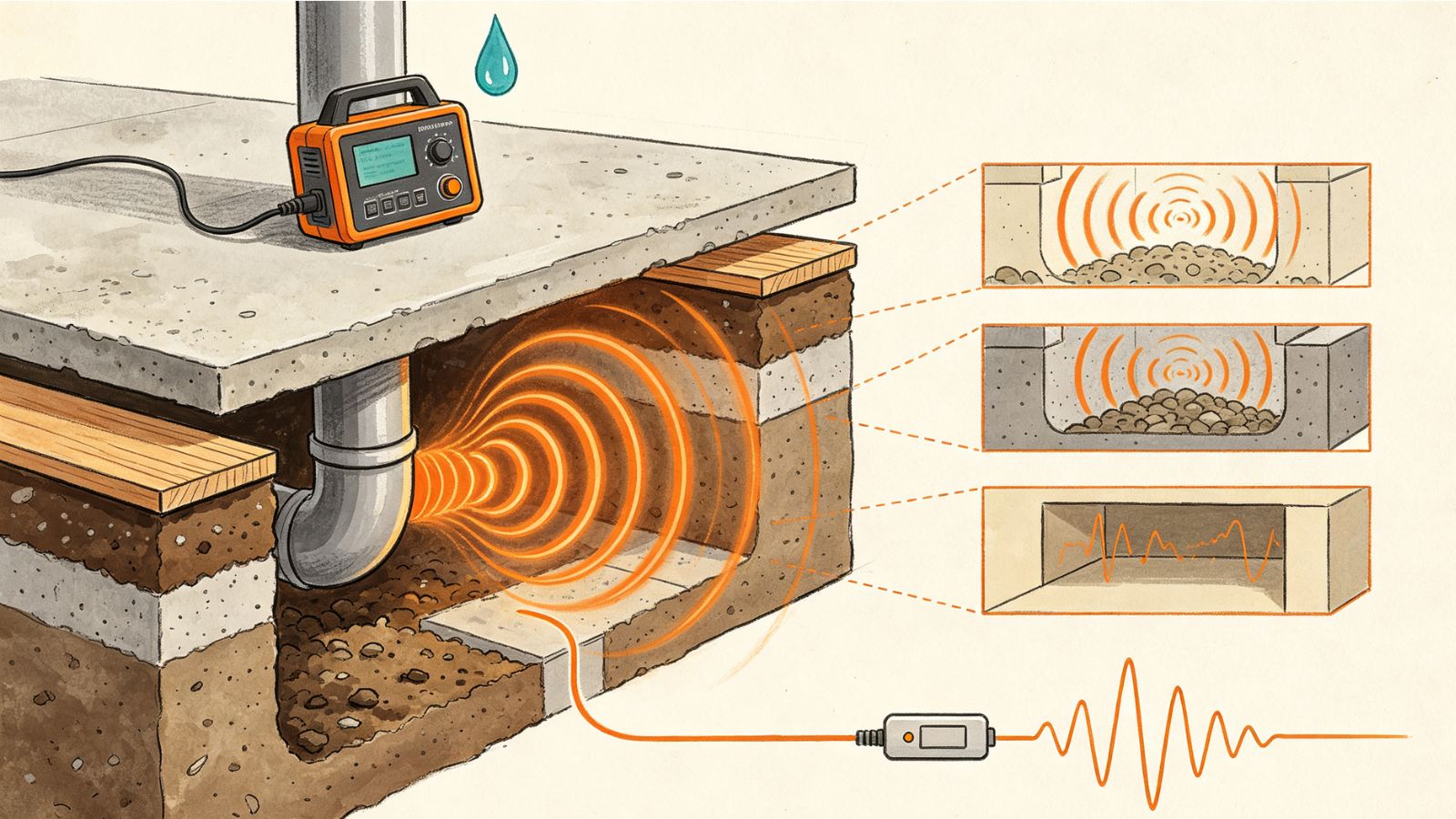
Acoustic leak detection uses sound and vibration analysis to help locate escaping water. When pressurized water moves through a small opening in a pipe, it can create turbulence and vibration that travel through the pipe and surrounding materials. Specialized listening equipment can amplify these signals and allow technicians to compare sound patterns at different locations.
Depending on the situation, professionals may use electronic listening devices, contact sensors placed directly on accessible pipes, or ground microphones for underground investigations. These tools do not simply “hear a leak” in the way a person might hear dripping water. Instead, technicians interpret changes in sound intensity and vibration patterns to estimate where the problem may be located.
The accuracy of acoustic detection depends on several factors, including pipe material, leak size, water pressure, pipe depth, and surrounding conditions. Copper and steel pipes often transmit vibration differently from plastic materials such as PEX or PVC. Soil composition, insulation, concrete, and other construction materials can also affect how easily a leak signal travels.
Environmental noise is another important limitation. Household appliances, HVAC systems, traffic, and other background sounds can interfere with measurements. A technician may need to account for these factors when interpreting sound data. Because of these variables, acoustic detection is most effective when combined with other information rather than treated as a standalone solution.
Flow-based leak detection takes a different approach by examining how much water is moving through a plumbing system. If water continues flowing when faucets, toilets, appliances, and irrigation systems are not being used, there may be a leak or another source of unexpected consumption.
Water meters have long been useful for identifying this type of problem. A homeowner can sometimes notice continuous meter activity during periods when no water should be flowing. Modern smart water monitoring devices provide more detailed information by tracking usage patterns and identifying unusual changes over time.
Flow monitoring is particularly helpful for detecting slow leaks that may not immediately create visible damage. Examples include a toilet with an internal valve problem, a dripping fixture that goes unnoticed, or a leaking underground service connection.
The limitation is that flow measurements generally show that abnormal water use is occurring, not where the problem is located. A home may have several possible sources of water loss, so additional testing is often necessary to determine the specific cause.
No single leak detection method works perfectly in every residential situation. The most appropriate approach depends on factors such as pipe material, leak location, accessibility, water pressure, and the type of plumbing system involved.
Each detection method answers a different question. Flow monitoring can help determine whether unexpected water loss is occurring. Pressure testing can help identify which section of the plumbing system may be affected. Acoustic tools can then assist with narrowing down the physical location of the leak within that area.
Consider a homeowner who receives an unusually high water bill but cannot find any visible signs of leakage. A flow monitor may reveal that water is continuously being used even when fixtures are turned off. A pressure test may suggest that the problem is related to a supply line rather than normal household use. Acoustic detection can then help identify whether the damaged pipe is behind a wall, beneath a floor, or underground.
This process is especially valuable for difficult problems such as slab leaks. Opening concrete, removing flooring, or cutting into finished walls without enough information can create unnecessary disruption. When multiple detection methods are combined, they provide better information before inspection or repair decisions are made.
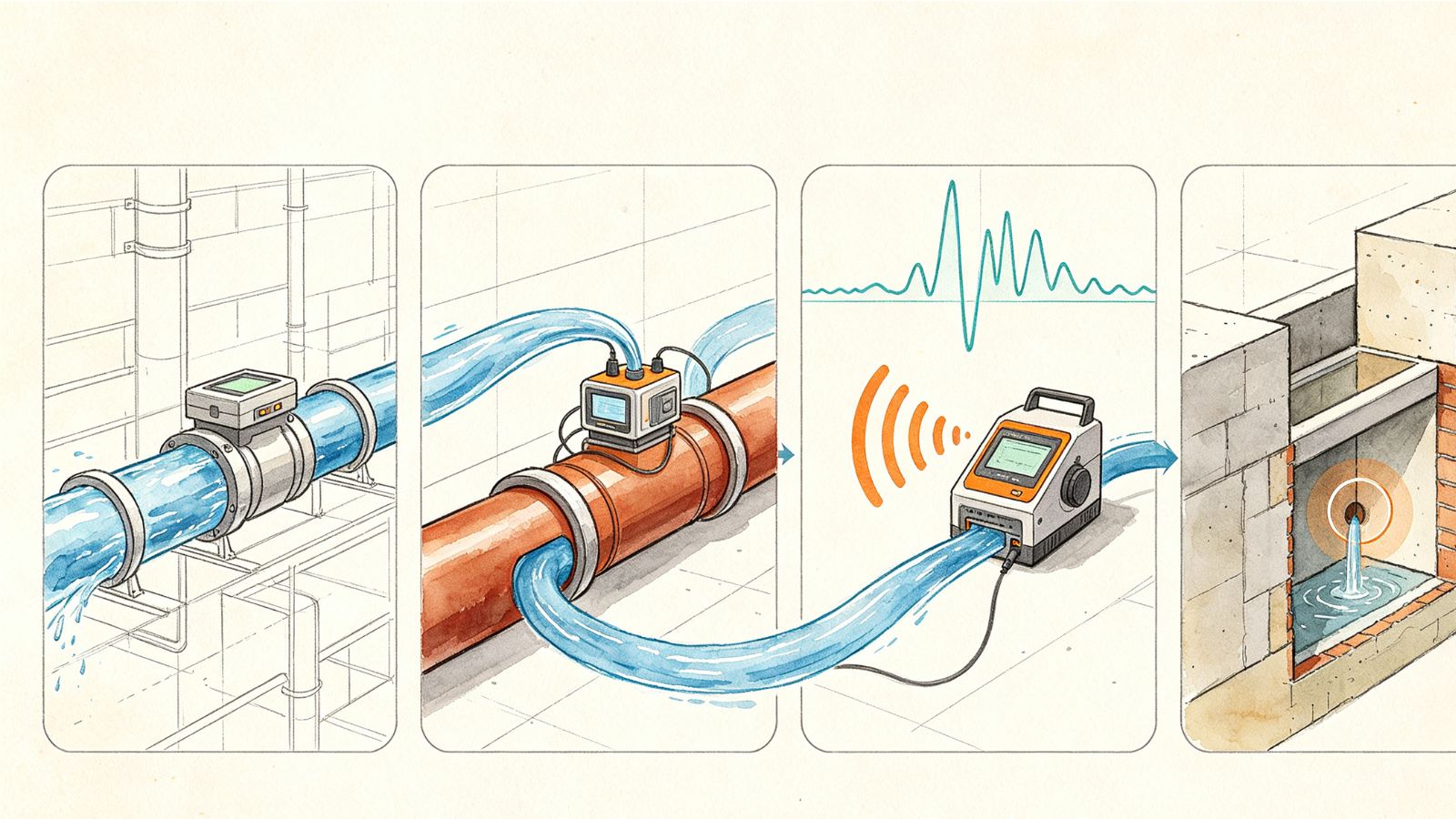
Finding a hidden leak is usually a process of elimination rather than a single moment of discovery. Professionals often begin by confirming that unusual water loss is actually occurring, then gradually narrow the possible sources until the affected area becomes easier to identify.
The first step is usually recognizing an abnormal pattern. A homeowner may notice a higher-than-normal water bill, a meter that continues moving when fixtures are turned off, or sounds of water use that cannot be explained. These signs suggest that further investigation may be needed, but they do not reveal where the problem is located.
The next step is determining which part of the plumbing system may be involved. A home can contain multiple water-related systems, including indoor supply lines, water heaters, irrigation connections, and underground service lines. Since these systems can produce similar symptoms, professionals often isolate sections of the plumbing system to determine where water loss may be occurring.
After the affected section is identified, technicians can use additional methods to narrow the location further. Acoustic equipment may help identify sound patterns from escaping water, while other inspection techniques can provide additional information about pipe conditions and accessibility.
The final decision involves evaluating the repair approach. Even after a leak location is estimated, professionals must consider factors such as pipe material, access requirements, surrounding construction, and the overall condition of the plumbing system before determining the next step.
This process explains why leak detection is not simply about finding water. It is about collecting enough evidence to understand what is happening inside a hidden plumbing system.
Advances in leak detection equipment have improved the ability to investigate hidden leaks, but they do not eliminate every challenge. Detection equipment provides evidence that helps locate a problem; it does not replace a complete evaluation of the plumbing system.
Results still depend on factors such as pipe materials, construction methods, accessibility, environmental conditions, and the overall condition of the system. A tool that works well in one home may provide different results in another because every plumbing layout has unique characteristics.
Homeowners can perform basic observations, such as checking for unexplained water usage, looking for visible moisture, or monitoring their water meter. However, concealed plumbing problems can involve pressurized lines and areas that are difficult to access safely. More complex investigations often require professional evaluation.
It is also important to separate leak detection from leak repair. Detection identifies where water loss is likely occurring, while repair decisions depend on the type of pipe, the location of the failure, the condition of surrounding materials, and the appropriate repair approach.
Possible warning signs include a sudden increase in water bills, sounds of running water when fixtures are off, damp areas near plumbing locations, unusual odors, or a water meter that continues moving without apparent use. These signs do not always confirm a leak, but they can indicate that further investigation may be necessary.
Hidden residential water leaks are difficult to locate because the visible evidence often does not match the true source of the problem. Water can travel through walls, floors, foundations, and other materials before appearing in a noticeable location.
Pressure testing, acoustic detection, and flow-based monitoring provide different ways to understand what is happening inside a plumbing system. Pressure testing helps confirm possible water loss, acoustic methods help analyze the location of escaping water, and flow monitoring identifies unusual consumption patterns.
By combining these approaches, professionals can collect more reliable information before deciding where inspection or repair work should begin. For homeowners, understanding how these methods work can make it easier to recognize warning signs and respond appropriately when a hidden plumbing issue is suspected.
