Residential greywater reuse is one option some homeowners consider when looking for ways to use household water more efficiently. In a typical suburban home, water from showers, bathroom sinks, and laundry cycles is often sent directly into a sewer or septic system even though part of that water may still be suitable for approved non-potable uses.
A properly designed greywater system can capture selected wastewater streams, treat them according to their intended purpose, and redirect them for applications such as landscape irrigation. This approach is especially relevant in regions where outdoor water demand is high, including drought-prone areas where homeowners and communities are exploring ways to reduce pressure on freshwater supplies.
However, greywater reuse is not simply a matter of connecting a drain pipe to a garden. Residential systems require careful separation of wastewater sources, appropriate plumbing design, suitable treatment methods, and compliance with local requirements. The effectiveness of a greywater system depends on how well the collection, treatment, and distribution stages work together.
Residential greywater refers to wastewater generated from household activities that does not include toilet waste. Common greywater sources include showers, bathtubs, bathroom sinks, and clothes washing machines. This water typically contains traces of soap, detergents, personal care products, hair, lint, and other materials produced during normal household activities.
Greywater is separated from blackwater because the two streams have very different treatment requirements. Blackwater includes toilet wastewater and may contain pathogens associated with human waste, making it unsuitable for simple reuse systems. Kitchen wastewater is also often excluded from basic residential greywater designs because grease, food particles, and higher organic content can create additional treatment challenges.
The purpose of a greywater system is not to make household wastewater universally clean or suitable for drinking. Instead, the system is designed around a specific reuse goal. Water intended for underground landscape irrigation has different requirements from water that may be reused inside a building for applications such as toilet flushing.
For many homeowners, landscape irrigation is the most practical use because plants can benefit from additional moisture without requiring drinking-water quality. However, greywater quality begins at the household level. The soaps, detergents, and cleaning products used inside the home can influence soil conditions, plant health, and the performance of the treatment system.
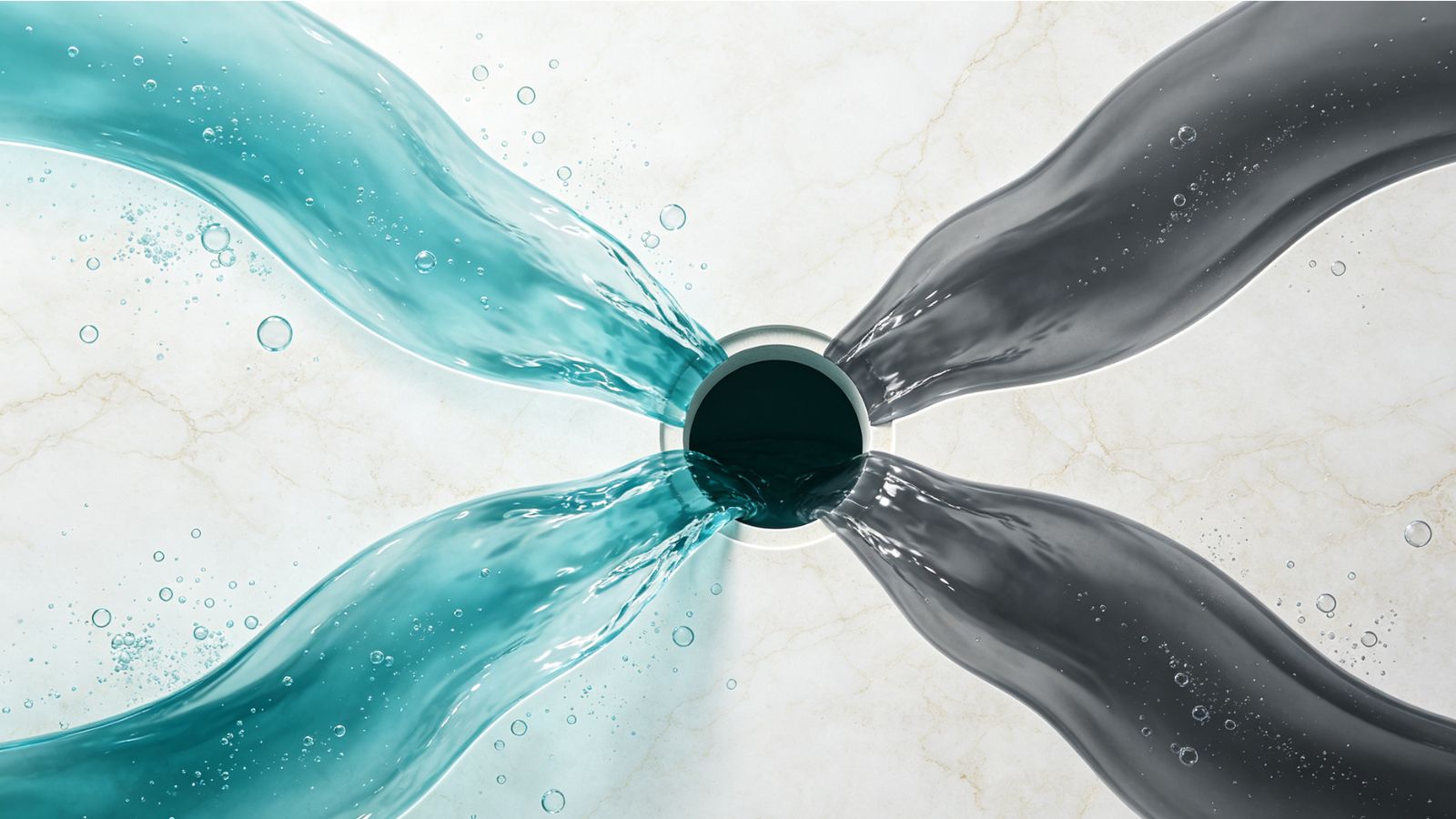
A conventional home plumbing system usually combines wastewater from showers, sinks, toilets, and appliances into one drainage network. A greywater system changes this arrangement by separating selected wastewater sources before they mix with other household waste.
Greywater collection is easiest to incorporate during new home construction because plumbing layouts can be designed with water reuse in mind. Builders can install dedicated drain lines that collect water from approved fixtures and direct it toward treatment components or irrigation areas.
Retrofitting an existing home requires more planning because most older plumbing systems were not designed for wastewater separation. Depending on the home's layout, a retrofit may involve modifying drain connections, installing additional piping, or changing how certain fixtures discharge wastewater.
Some fixtures may be easier to adapt than others. A washing machine, for example, often has a dedicated discharge line that can make collection simpler. Bathroom sinks, showers, and bathtubs are usually more challenging because they are integrated into the home's existing drainage system.
Greywater requirements vary significantly between states and even between municipalities, particularly in regions where drought conditions have increased interest in residential water reuse. Some areas regulate greywater through plumbing codes, while others involve environmental agencies or local health departments. Before modifying an existing plumbing system, homeowners should review local requirements to understand permitted uses, installation standards, and inspection expectations.
Regardless of location, one principle remains consistent: greywater plumbing must remain completely separate from potable water systems. Because greywater is not treated to drinking-water standards, preventing cross-connections is essential for protecting household water supplies.
After greywater is collected, it must move through the system before reaching its final destination. Some systems rely on gravity, using carefully planned pipe slopes to move water naturally toward irrigation zones. Others use pumps when property conditions, elevation changes, or longer distribution distances make gravity flow impractical.
The timing of greywater production also affects system design. A household may generate wastewater during morning showers, evening laundry, or other daily activities, while landscape watering needs may occur at different times. Some systems include limited surge storage or automated controls to manage these differences, while others distribute water soon after collection.
Extended storage is generally avoided because greywater contains organic materials that can produce odors and encourage unwanted microbial activity when left stagnant. Efficient movement through the system helps maintain better water quality and reduces maintenance problems.
Before installing a greywater system, homeowners need to evaluate whether their property and daily water patterns are suitable for reuse. A system that works well for one household may not perform effectively on another property because greywater availability, landscape conditions, and local requirements can vary widely.
Household water volume is one of the first factors to consider. The amount of greywater produced depends on the number of residents, bathing habits, laundry frequency, and fixture efficiency. A larger household may generate enough greywater to support regular landscape irrigation, while a smaller household may produce less water than the landscape requires.
Property layout also affects system design. Homes with accessible plumbing routes, suitable elevation changes, and nearby irrigation areas may be easier to adapt than properties where water must travel long distances or require extensive pumping. The location of existing drainage lines can significantly influence installation complexity and cost.
Soil conditions are another important consideration because irrigation performance depends on how quickly the ground can absorb water. Sandy soils generally drain differently from dense clay soils, and applying too much water to poorly drained areas can create standing water or other landscape problems.
Local rules should be reviewed before installation begins. Requirements vary between states, cities, and counties, and some areas have specific standards for permitted greywater sources, irrigation methods, and system design. Understanding these requirements early can prevent costly changes after installation.
Unlike conventional wastewater systems that are designed to handle combined household wastewater streams, residential greywater systems are usually built around a specific reuse purpose. A system intended for landscape irrigation does not necessarily require the same treatment approach as one designed for indoor non-potable applications.
The goal is not to make greywater universally clean, but to make it appropriate for a clearly defined use while maintaining safety standards. Treatment methods vary depending on local regulations, system design, and the level of contact people may have with the reused water.
A typical residential greywater treatment process may involve removing larger solids, improving water quality through filtration or biological processes, and adding additional treatment when required for certain applications.
The first stage of treatment usually focuses on removing physical materials that could damage equipment or interfere with water distribution. Shower water may contain hair and personal care product residue, while laundry water may contain lint and fabric fibers.
Screens and filters help capture these larger particles before greywater reaches irrigation pipes, pumps, or additional treatment components. This improves system reliability and reduces problems such as clogged emitters or restricted water flow.
However, filtration has clear limitations. Removing visible particles does not mean the water has been completely purified. Dissolved chemicals, microorganisms, and other contaminants may remain after filtration, which is why the treatment process must match the intended reuse application.
Some greywater systems use biological treatment methods that rely on natural microbial activity to reduce certain organic compounds. These systems create conditions where microorganisms can help break down materials present in household wastewater before reuse.
Engineered treatment units and planted filtration systems are examples of approaches that may incorporate biological processes. Their performance depends on proper design, regular maintenance, temperature conditions, and the quality of the incoming greywater.
Biological treatment can provide greater control over water quality than basic filtration alone, but it is not maintenance-free. These systems depend on maintaining suitable operating conditions rather than simply passing water through a filter.
The final destination of greywater determines whether additional treatment is necessary. Water delivered below the soil surface for landscape irrigation generally involves less direct exposure than water reused inside a building.
Some jurisdictions allow treated greywater to be used for indoor non-potable applications such as toilet flushing. These systems usually require stricter treatment standards, additional plumbing safeguards, and compliance with specific local codes.
A greywater system approved for outdoor irrigation cannot automatically be converted into an indoor reuse system. The treatment requirements, plumbing design, and regulatory approvals may be different.

The most common residential use for treated greywater is landscape irrigation. Instead of using treated drinking water for outdoor plants, homeowners can redirect suitable greywater into designed irrigation areas.
Subsurface irrigation is often preferred because it delivers water below the soil surface and reduces direct contact between people and reused water. By placing moisture closer to plant roots, these systems can also reduce evaporation compared with some surface watering methods.
The effectiveness of greywater irrigation depends on matching the system to the property. Soil conditions, drainage characteristics, plant selection, and local climate all influence whether the water can be absorbed effectively.
For example, a homeowner in a drought-prone region may design a greywater system around laundry and shower discharge to support drought-tolerant landscaping. In contrast, a property with heavy clay soil, limited drainage, or frequent rainfall may require different design considerations or may not be suitable for greywater irrigation without additional planning.
The contents of greywater also influence long-term landscape performance. Products containing high levels of salts or unsuitable chemicals may affect sensitive plants or gradually change soil conditions. Choosing appropriate household products is therefore part of maintaining a successful system.
Indoor non-potable applications, such as toilet flushing, require a different level of engineering. Because these systems introduce reused water into indoor environments, they typically involve additional treatment, monitoring, and plumbing separation requirements.
A residential greywater system is not a one-time installation that operates without attention. Long-term performance depends on whether the design matches household water production, property conditions, climate, and maintenance capabilities.
The amount of greywater available varies from home to home. A larger household with frequent laundry and bathing activities may generate enough water to support regular irrigation, while a smaller household may produce less water than the landscape requires.
Climate conditions also affect the value of greywater reuse. In dry regions where outdoor irrigation represents a significant portion of residential water demand, greywater systems may provide greater benefits. In wetter climates, rainfall may already satisfy much of the landscape's water needs.
Property characteristics can determine whether a system performs well or develops problems. Poor drainage, incorrect irrigation placement, or applying more water than soil can absorb may lead to standing water, odors, or plant stress.
Maintenance remains one of the most important factors in system reliability. Filters need cleaning, pipes may require inspection, and treatment components must continue functioning properly. Issues such as reduced flow, unpleasant odors, or uneven irrigation are often signs that the system needs adjustment or maintenance.
Many greywater problems result from poor design decisions or incorrect assumptions about what the system can handle. One common mistake is treating all household wastewater as equally suitable for reuse. Toilet wastewater and certain kitchen wastewater streams require different handling because of their contamination levels.
Another issue occurs when homeowners assume basic filtration makes greywater equivalent to purified water. Filtration improves the physical quality of the water but does not remove every possible contaminant. The appropriate treatment level depends on the intended use and applicable regulations.
Household behavior also plays an important role. Large amounts of harsh cleaning products, unsuitable detergents, or high-salt substances can affect treatment performance and landscape conditions. A greywater system works best when the household understands that water quality begins before the wastewater reaches the collection pipes.
Residential greywater reuse combines plumbing design, water treatment, and landscape planning into a single system. The process begins with separating suitable wastewater sources, continues through collection and treatment, and ends with distributing water for approved non-potable applications.
When properly designed and maintained, greywater systems can provide a practical way to reuse part of a home's wastewater stream while reducing reliance on freshwater for certain uses. Their performance depends on more than the equipment itself; it depends on whether the system matches the home's water patterns, local regulations, climate conditions, and maintenance requirements.
The best residential greywater systems are not necessarily the most complicated ones. They are the systems that fit the home's plumbing, landscape, local requirements, and the homeowner's ability to maintain them over time.
