A residential rainwater harvesting setup is not simply a tank connected to a gutter. It is a connected process that collects rainfall, manages water quality, stores supply, and delivers water for specific household purposes. The performance of the entire design depends on how well each part works together, from the roof surface where rain first lands to the pipes and controls that move stored water to its final destination.
Many homeowners use collected rainwater for landscape irrigation, toilet flushing, laundry, and other non-potable applications. Some properties use more advanced configurations intended for drinking water, but those require additional treatment, monitoring, and careful compliance with applicable public health requirements. Because rules vary between states and local jurisdictions, homeowners should review guidance from local building departments, environmental agencies, and health authorities before connecting harvested rainwater to household plumbing.
A successful rainwater harvesting approach is not determined only by how much water can be captured. The most effective designs balance rainfall patterns, property conditions, intended use, maintenance requirements, and available space. A smaller, well-maintained installation can often perform better than a larger one that is poorly matched to the home’s actual needs.
The roof is the starting point of most residential rainwater collection designs. When rainfall reaches the roof, gravity moves the water toward gutters, downspouts, and collection pipes that guide it toward storage or treatment components.
The amount of water available for collection depends on several factors, including roof area, rainfall frequency, roof material, and overall collection efficiency. A commonly used estimate is that one inch of rainfall over 1,000 square feet of roof area can produce about 600 gallons of water before accounting for losses. In real conditions, the amount captured is usually lower because some water is lost through evaporation, overflow, leaks, and the initial runoff that carries accumulated debris away from the roof.
Roof condition plays an important role in water quality. Smooth, durable surfaces are often preferred because they allow water to drain efficiently and are easier to maintain. Metal roofing is frequently used in rainwater collection applications, although suitability depends on the specific product, coatings, age, and condition of the surface. A deteriorating roof or one that accumulates significant debris may increase maintenance demands and affect the quality of collected water.
Regular roof maintenance is one of the simplest ways to protect the entire installation. Leaves, pollen, dust, bird waste, and organic materials can collect between storms and wash into the drainage system during rainfall. Reducing these contaminants at the beginning of the process helps filters and storage components operate more effectively.
Once rainfall leaves the roof surface, gutters and downspouts become the pathway that carries water into the collection setup. Their function is not only to transport water but also to reduce the amount of unwanted material entering storage.
Screens and gutter guards are commonly installed to block larger debris such as leaves and twigs. These features can reduce cleaning requirements, but they do not remove dissolved substances, microorganisms, or fine particles. They should be viewed as a basic debris control measure rather than a complete water treatment solution.
Many residential designs also include a first-flush component that redirects the initial portion of rainfall away from storage. After dry periods, the first runoff may contain accumulated dust, pollen, roof residue, and other materials collected on the catchment surface. Removing this early runoff can reduce the contamination entering the storage tank.
However, first-flush diversion does not make collected rainwater suitable for every purpose by itself. The amount diverted depends on roof conditions, rainfall patterns, and the intended use of the water. A garden irrigation setup may require a different level of treatment than a design connected to indoor household uses.
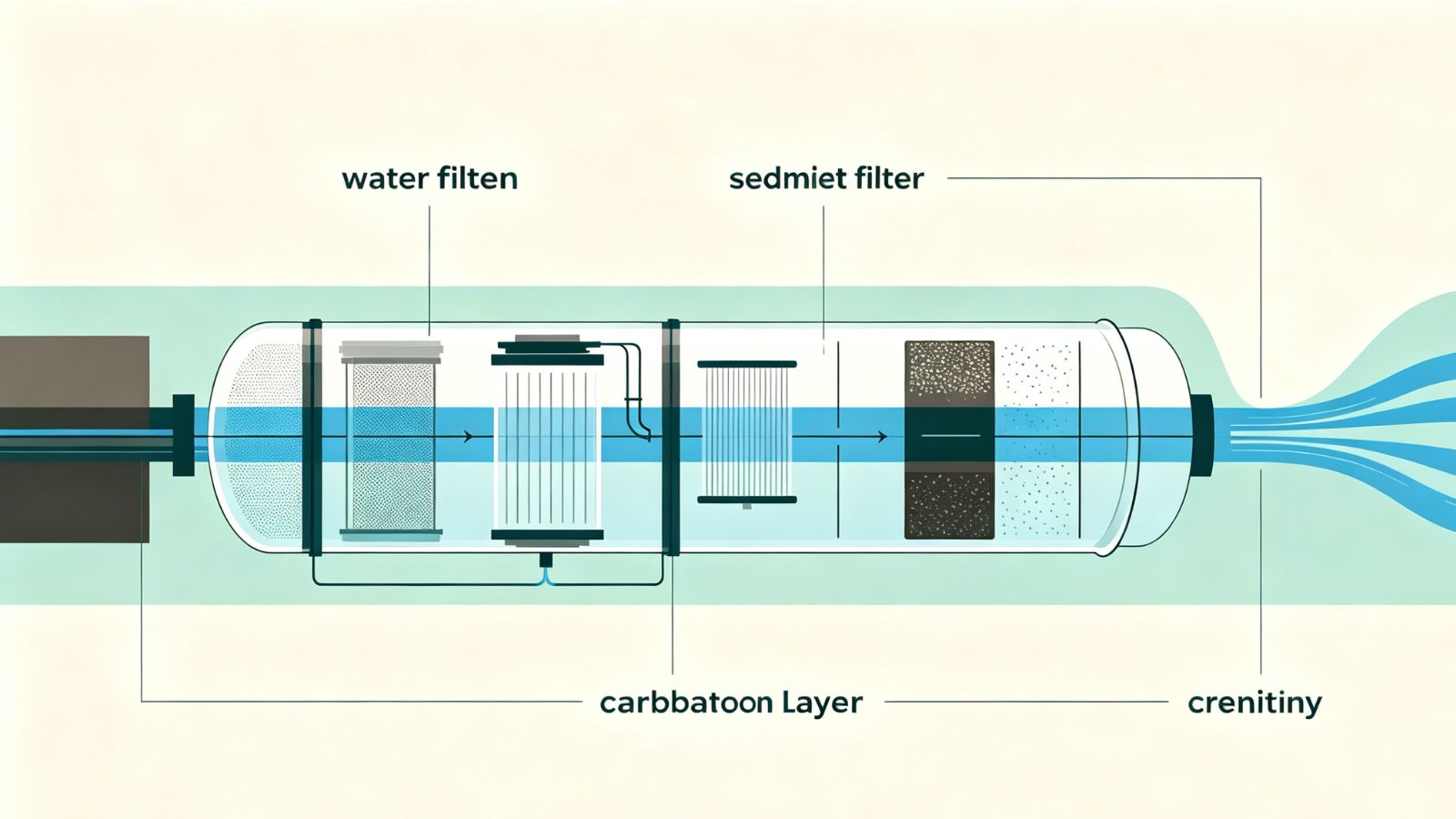
Filtration is where collected rainwater receives additional treatment before distribution. The type of filtration needed depends primarily on how the water will be used and what level of quality is required.
For irrigation, filtration is often focused on protecting equipment. Screens and sediment filters can remove particles that may clog pipes, pumps, and irrigation emitters. These components improve reliability, but they do not automatically make rainwater safe for human consumption.
Indoor applications usually require a more careful approach. Sediment filters can reduce suspended particles, activated carbon filters may help reduce certain odors and organic compounds, and disinfection methods may be used to control microorganisms when appropriate for the design.
Rainwater should not be considered automatically clean simply because it comes from precipitation. During collection, water can be affected by the atmosphere, roof materials, storage conditions, and plumbing components. The final quality depends on the complete collection and treatment process rather than the original source alone.
For drinking water applications, filtration by itself is not enough. A potable rainwater design must consider possible contaminants, local requirements, treatment performance, and ongoing maintenance. Homeowners should consult appropriate local authorities or qualified professionals before using collected rainwater as a drinking source.
Storage allows homeowners to capture rainfall when it occurs and use it later when demand increases. Without adequate storage, much of the collected water may be lost during wet periods while remaining unavailable during dry conditions.
Residential storage options include above-ground tanks, underground cisterns, and smaller collection barrels. The appropriate choice depends on property size, climate, available space, installation limitations, and intended water use. A homeowner with a large landscaped area may prioritize irrigation capacity, while a smaller urban property may focus on a compact design that supports limited outdoor uses.
Protecting stored water requires thoughtful planning. Covered tanks help limit sunlight exposure and reduce algae growth, while screened openings prevent insects and debris from entering. Access points allow inspection and cleaning, and overflow pathways help manage excess water during heavy storms.
Tank capacity should match realistic expectations. A larger tank is not always a better choice if rainfall is limited or household demand is low. Effective sizing considers local weather patterns, roof area, water needs, and how frequently the stored supply is expected to be used.
Maintenance remains necessary after installation. Gutters, filters, pumps, and storage tanks require periodic inspection to maintain performance. The frequency depends on climate, surrounding vegetation, rainfall patterns, and the specific design of the installation. A well-maintained smaller setup can often outperform a larger system that receives little attention.
Before choosing a rainwater harvesting design, homeowners should evaluate several practical factors beyond collection volume. The goal is not simply to capture as much water as possible but to create an approach that fits the property and the people using it.
Climate is one of the most important considerations. Homes in regions with seasonal drought may need greater storage capacity because rainfall may be separated by long dry periods. Properties in wetter areas may place more emphasis on overflow management, drainage, and efficient distribution rather than maximum storage.
Roof condition should also be reviewed before installation. A roof that requires frequent repair or has unsuitable materials may create additional maintenance challenges. Available space is another major consideration because tanks, pumps, filtration equipment, and access areas all require practical placement.
The intended use of the collected water should guide the entire design. A system created mainly for landscape irrigation may be relatively simple, while indoor applications require greater attention to treatment and plumbing separation. Homeowners should also consider whether they can realistically maintain the equipment over time.
Local requirements are another important factor. Rainwater regulations, plumbing rules, and approval processes can differ significantly depending on location. Reviewing requirements before installation helps prevent costly changes later.
Many rainwater harvesting problems result from poor planning rather than problems with the basic concept. One frequent mistake is selecting storage capacity without considering actual rainfall patterns and household demand. A tank that is too small may provide limited value, while an oversized installation may increase costs without improving performance.
Another common issue is relying too heavily on filtration while ignoring maintenance. Filters cannot compensate for neglected roofs, dirty gutters, or poorly maintained storage tanks. Protecting water quality begins with good collection practices before water reaches treatment components.
Overflow planning is also often overlooked. Heavy storms can produce more runoff than a tank can hold, so excess water needs a safe path away from foundations and other vulnerable areas. Poor overflow design can reduce system reliability and create drainage problems.
Some homeowners also underestimate the importance of plumbing separation. When rainwater is used indoors, the design must prevent accidental connections between non-potable water and drinking water supplies. Clear labeling and proper installation practices help maintain household safety.
A rainwater harvesting design should reflect the characteristics of the home rather than follow a universal formula. For example, a suburban property with a moderate roof area and extensive landscaping may benefit from a design focused on irrigation, reliable storage, and simple maintenance. The homeowner’s priority may be reducing outdoor water demand rather than creating a complex treatment system.
A smaller urban property may require a different approach. Limited space may make a compact tank and targeted outdoor use more practical than a large underground installation. In this situation, the best design is not the one that collects the most water but the one that provides useful benefits without creating unnecessary complexity.
These examples demonstrate why residential rainwater harvesting is a design challenge rather than a one-size-fits-all solution. The right configuration depends on climate, roof characteristics, available space, intended use, and the homeowner’s ability to maintain the equipment.
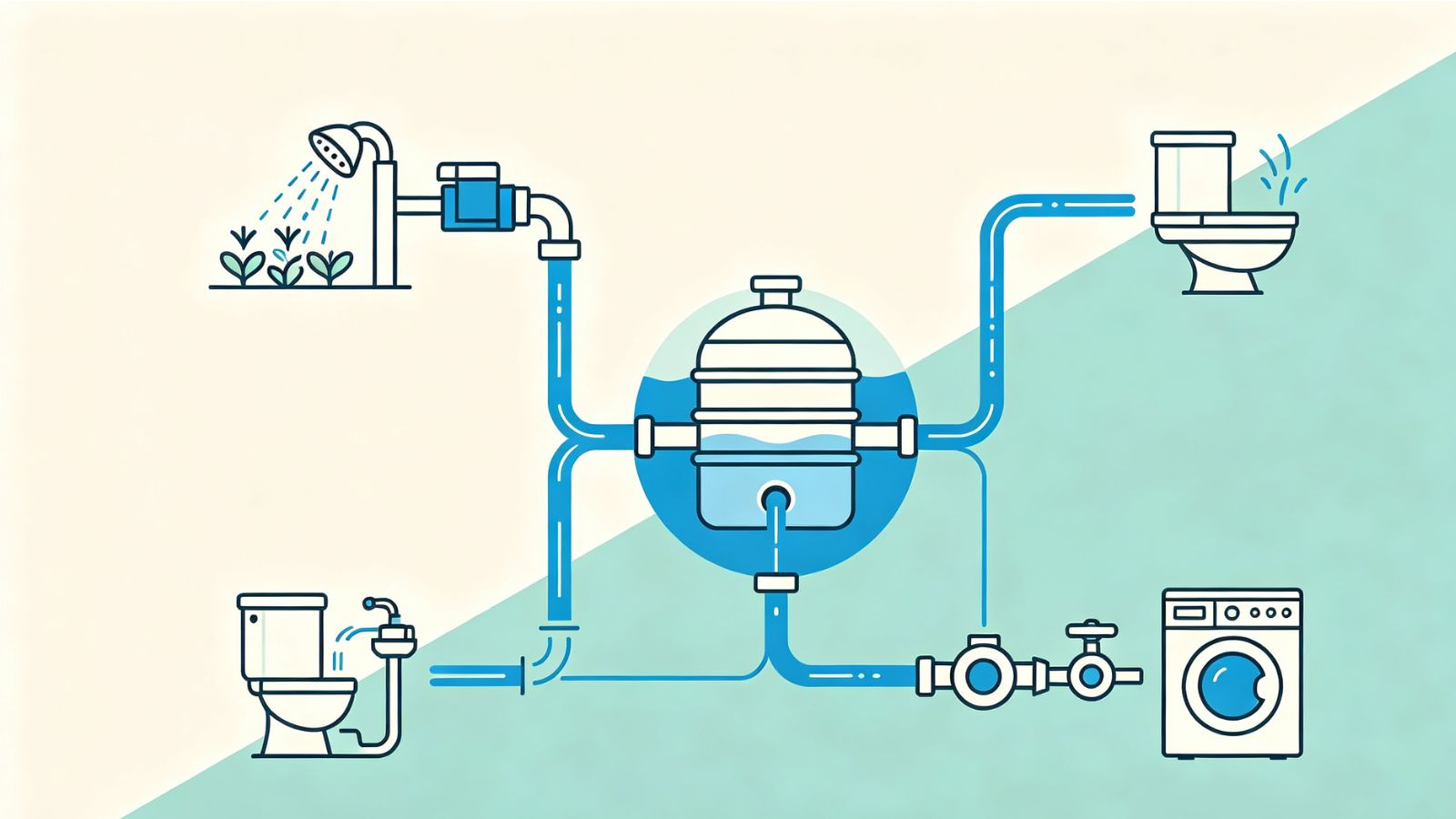
Residential rainwater harvesting succeeds when every part of the process supports the next. The roof captures rainfall, gutters and downspouts move it, first-flush components reduce incoming debris, filtration manages water quality, storage preserves supply, and distribution equipment delivers water where it is needed.
The value of a rainwater harvesting setup is not measured only by the volume of water collected. A well-designed installation is one that matches the property’s conditions, the homeowner’s goals, and the realities of long-term maintenance. When planned carefully and managed properly, residential rainwater collection can become a practical way to improve household water efficiency while making better use of available rainfall.
