A home’s electrical system is designed to move power safely from the utility connection to the appliances, lighting, and equipment used every day. While homeowners typically interact with visible parts such as outlets, switches, and circuit breakers, the capacity behind those components determines what the property can support and how easily future upgrades can be completed.
Electrical demands have changed as households adopt technologies that require more power than many older homes were originally designed to handle. Electric vehicle chargers, heat pumps, induction ranges, home workshops, and other modern equipment can significantly affect how electricity is distributed throughout a property. Understanding service amperage, load centers, subpanels, and circuit capacity helps explain why some homes can support new equipment with minor changes while others require a more detailed evaluation.
These elements are evaluated together during electrical planning because changes in one area can affect available options elsewhere in the home. A larger component alone does not solve every capacity issue; the service, distribution equipment, wiring, and connected loads must remain properly matched.
Service amperage describes the maximum current capacity of the electrical service entering a home. It represents the amount of power available from the utility connection before electricity is distributed through the home’s panels and branch circuits.
Many residential properties were built with service sizes that reflected the appliances and electrical needs common when they were constructed. Older homes may have been designed around basic lighting, standard household appliances, and traditional heating systems. Modern households often place different demands on electrical infrastructure because equipment that once relied on other energy sources may now require electrical power.
Increasing service size can help some properties accommodate additional demand, but it must be evaluated in relation to the home’s actual electrical usage, existing equipment condition, and applicable safety requirements. Electrical load calculations are used to estimate expected demand and determine whether the current service can support additional equipment.
The National Electrical Code (NEC), published by the National Fire Protection Association, provides requirements for electrical installations, including methods used to evaluate loads and protect electrical systems. These standards help ensure upgrades are based on realistic operating conditions rather than assumptions about the home’s size alone.
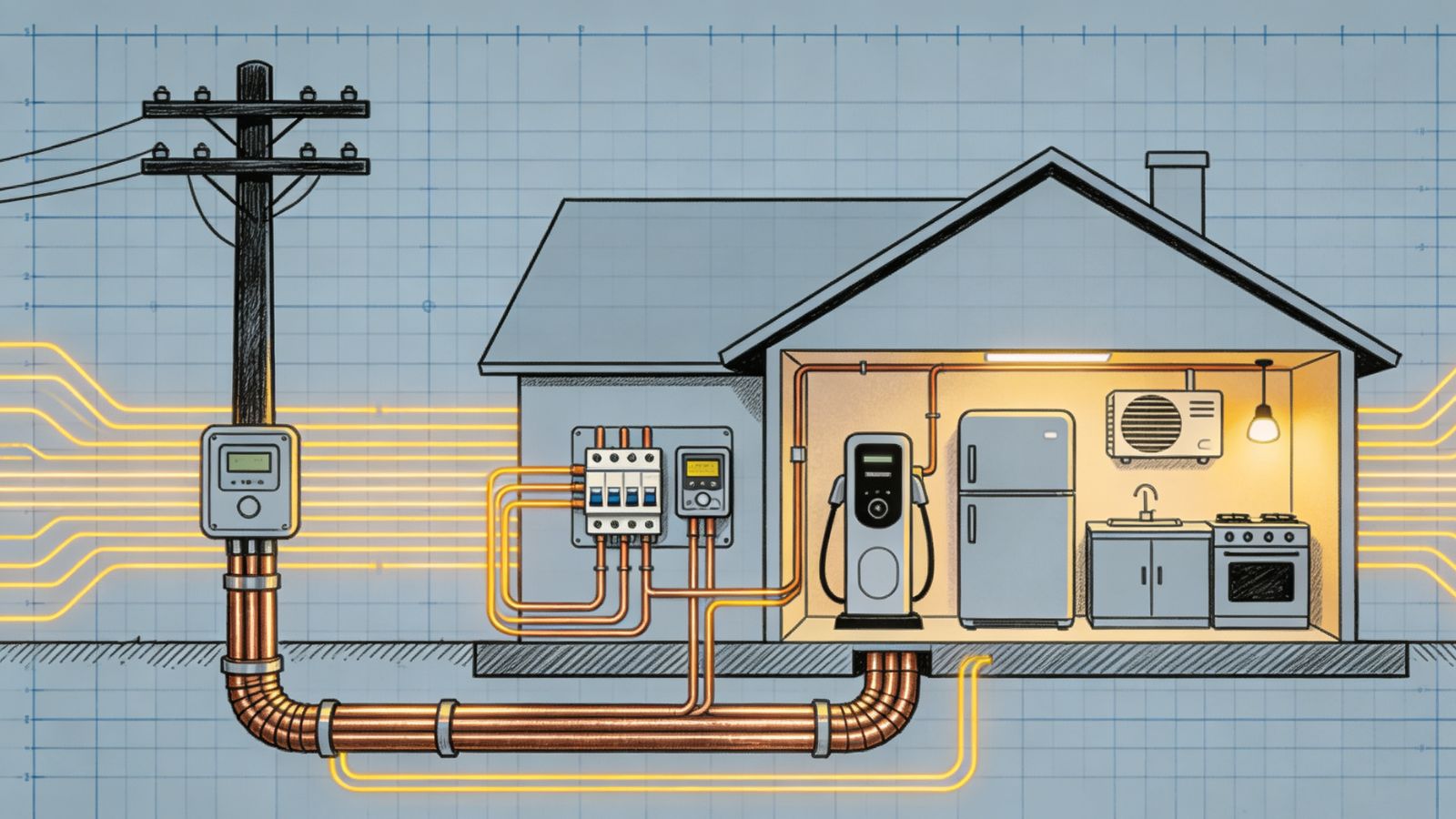
The load center, commonly called the electrical panel or breaker panel, serves as the main distribution point for a home’s circuits. Electricity enters the panel from the service equipment and is divided into individual circuits that supply different areas and appliances.
Circuit breakers inside the load center protect wiring by interrupting electrical flow when a circuit experiences excessive current. Each breaker connects to a branch circuit designed for specific uses, including lighting, kitchen outlets, laundry equipment, and dedicated appliances.
A frequent misconception is that the number of available breaker spaces tells the entire story of a home’s electrical capability. A panel may have room for additional breakers while the service is already operating near its available capacity. In other situations, a panel may have sufficient electrical capacity but lack physical space for new circuits.
When homeowners plan renovations or add new equipment, both the available supply and the panel’s ability to organize additional circuits must be considered. Adding breakers without reviewing connected loads and service limitations may create an installation that appears expanded but does not actually address the underlying demand.
A subpanel is a secondary electrical panel connected to the main panel that distributes power to a specific area of a property. It is often used when multiple circuits are needed in a location that is distant from the main panel or when separating different areas makes the installation more practical.
Detached garages, workshops, home additions, and larger properties commonly use subpanels to simplify circuit management. For example, a homeowner converting a garage into a workspace may need separate circuits for lighting, outlets, and equipment. A subpanel allows those circuits to be organized closer to the area where electricity is being used rather than routing every circuit back to the main panel.
A subpanel improves distribution but does not increase the total electricity available from the utility service. If the existing service cannot support additional demand, a new subpanel will not remove that limitation.
Proper installation requires evaluating feeder conductors, breaker protection, grounding, and other electrical requirements. Because these factors affect safety and code compliance, subpanel projects are generally reviewed and installed by qualified electrical professionals.
While service amperage describes the home’s overall electrical supply, individual circuits determine how much power specific equipment can safely use. Each branch circuit is designed around the wiring, breaker rating, and intended application.
Residential circuits commonly serve lighting and general outlets, while larger appliances require dedicated circuits designed for their electrical requirements. Equipment such as electric dryers, air conditioners, electric ranges, and vehicle chargers can place very different demands on a home compared with ordinary household devices.
A common situation occurs when older homes receive modern upgrades. A homeowner may install an electric vehicle charger in the garage or replace a gas range with an induction model, only to discover that the original electrical layout was designed for a different pattern of use. The issue is often related to available capacity and circuit planning rather than the new equipment itself.
For example, a homeowner purchasing an older property may find that the electrical panel appears functional, but previous remodeling projects, added appliances, or converted living spaces have changed the demands placed on the original system. A new appliance installation may require reviewing existing circuits and available capacity before the project can move forward safely.
Electrical load calculations help identify these situations before installation. Rather than looking at a single appliance in isolation, the evaluation considers how multiple loads may operate together and whether the service, panel, and branch circuits can support the expected demand.
Replacing a breaker with a higher-rated model is not an appropriate solution when the wiring was not designed for that level of current. The breaker protects the conductors, so every part of the circuit must remain properly matched.
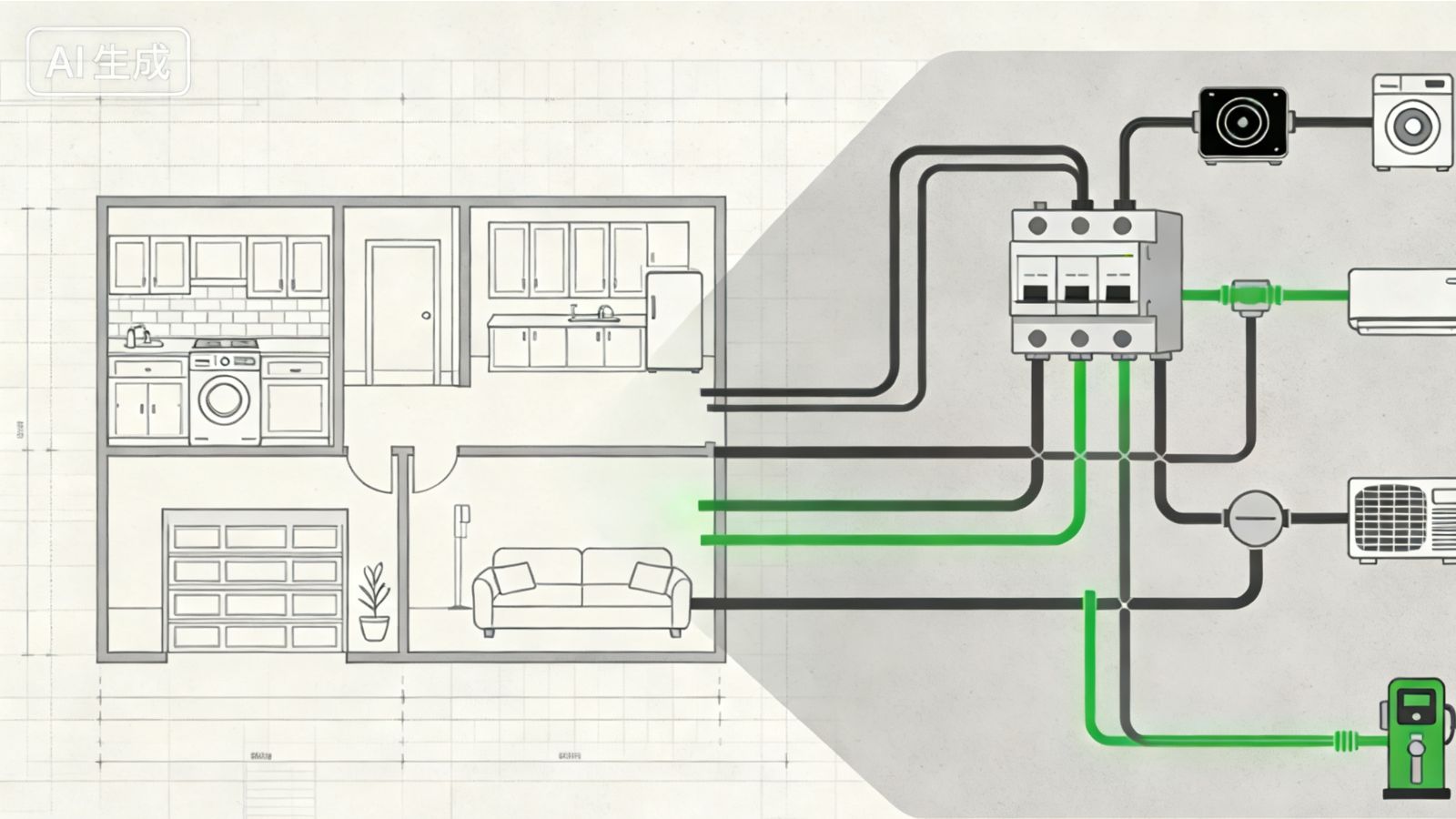
Many electrical projects begin with a visible goal: adding an appliance, finishing a room, installing charging equipment, or updating an older property. The final result depends on less visible factors, including available service capacity, panel configuration, circuit availability, and existing electrical demand.
Consider a homeowner preparing to install an electric vehicle charger in a garage. The location may be convenient, and the charger may meet manufacturer requirements, but the installation still requires checking whether the home can support the additional load and whether the panel can accommodate the required circuit. Depending on the existing installation, the solution may involve circuit adjustments, equipment changes, or a broader electrical upgrade.
The same approach applies to home electrification projects. Replacing several gas-powered systems with electric alternatives can change household electricity use significantly. Evaluating the existing installation before beginning work helps identify potential limitations and avoid unexpected changes later.
Age alone does not determine whether an electrical system is suitable for modern use. Many older homes continue to operate safely because their electrical systems have been maintained and updated over time. Other properties may contain outdated equipment, limited circuit availability, or previous modifications that require additional review.
A homeowner purchasing a decades-old property may see a modern-looking breaker panel and assume the electrical system is ready for future upgrades. However, a closer evaluation may reveal that earlier renovations added new circuits, the wiring configuration has changed, or major appliances now place different demands on the service. Understanding those details before installing equipment such as a heat pump or vehicle charger can prevent problems during a renovation.
A professional evaluation considers more than the label on the panel. Wiring condition, previous electrical work, available circuit capacity, and expected future needs all influence whether an upgrade is appropriate.
Service amperage, load centers, subpanels, and circuit capacity each serve a specific purpose in residential electrical infrastructure. The service determines how much electricity reaches the property, the load center distributes that supply, subpanels extend circuit organization, and branch circuits deliver power to individual uses.
As homes adopt more electrical equipment, understanding these components becomes increasingly useful for homeowners planning improvements. Reliable upgrades come from matching electrical capacity with actual household needs while maintaining proper protection throughout the installation.
A well-planned electrical system supports current demands while leaving room for future changes. Careful evaluation, appropriate equipment selection, and proper installation practices help maintain dependable operation as household energy needs continue to evolve.
