Modern smart homes can make energy management appear almost effortless. A thermostat adjusts heating or cooling, a smart plug reports the electricity used by a connected appliance, an occupancy sensor detects that a room is empty, and an automation hub can respond without requiring a homeowner to intervene manually. Behind these simple actions is a continuous exchange of measurements, device states, and control commands among hardware components that may use different communication technologies.
Understanding this data flow is useful because the devices involved do not all measure the same thing or perform the same function. Smart plugs can measure electrical consumption at an individual outlet, while thermostats primarily monitor conditions and equipment operation. Occupancy and environmental sensors provide contextual information, and automation hubs interpret those inputs according to configured rules or software logic. Together, these components can turn fragmented measurements into a coordinated system for monitoring and controlling residential energy loads.
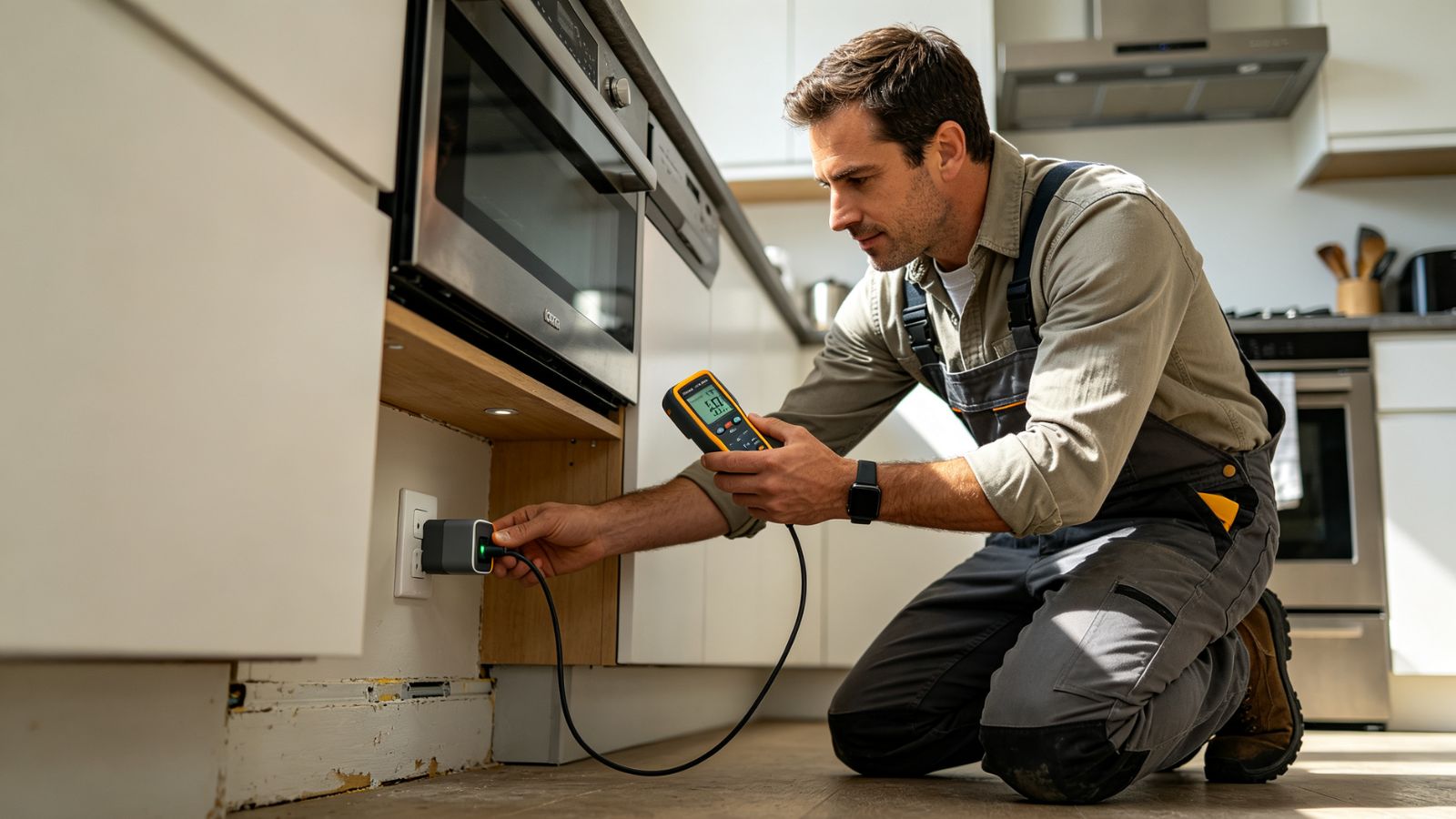
A residential energy-management system begins with devices that observe either electricity use or the conditions that influence it. Smart plugs are among the most direct measurement points because many models contain circuitry capable of measuring voltage, current, power, and cumulative energy consumption. Depending on the product and its measurement capabilities, a plug may report instantaneous or periodically sampled power in watts and accumulated energy in kilowatt-hours. These measurements allow a home automation system to distinguish between an appliance that is actively consuming power and one that is merely connected but drawing little or no electricity.
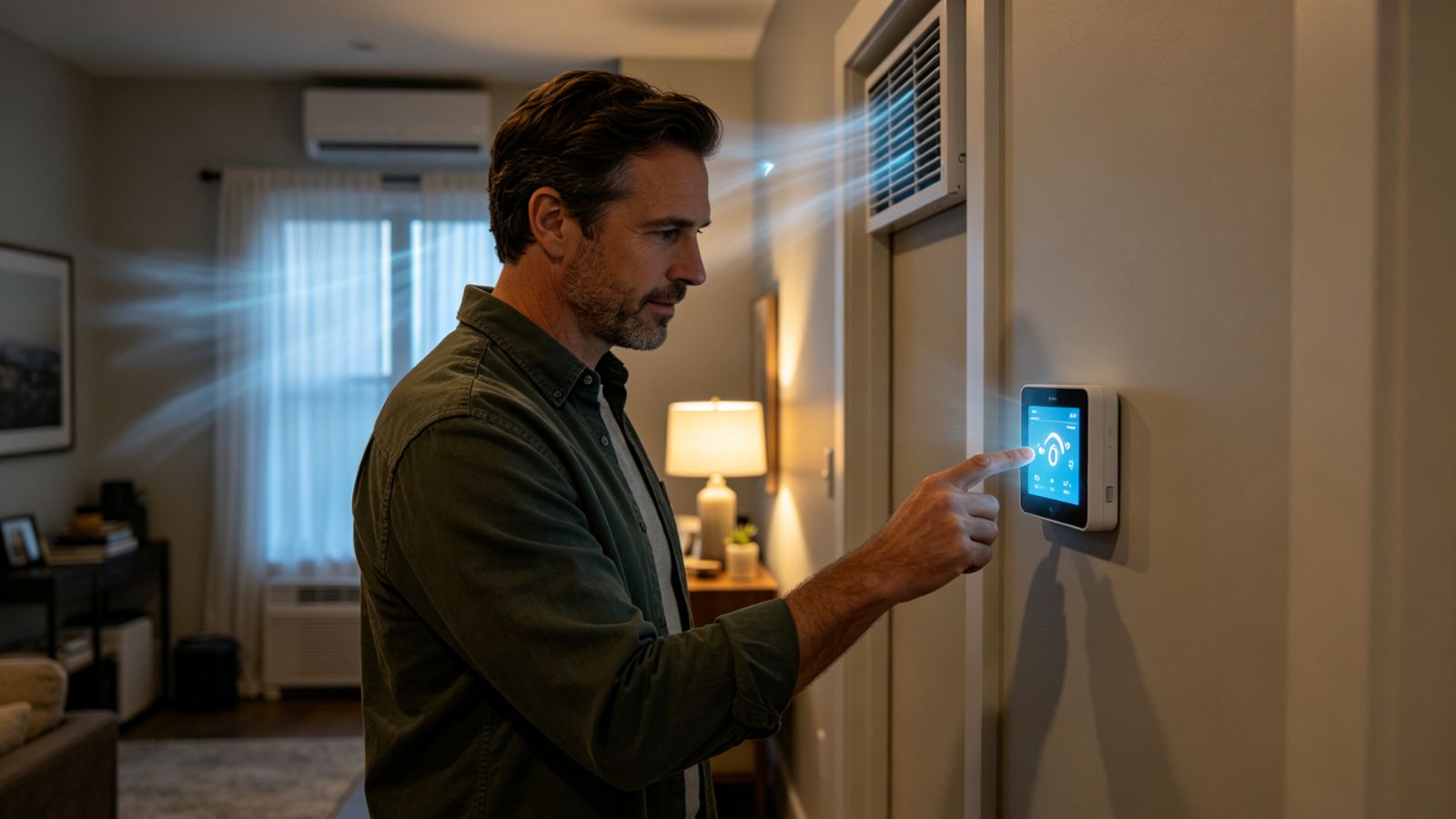
Smart thermostats serve a different role. Their primary inputs are usually temperature and, depending on the model, humidity, occupancy, equipment state, and other environmental information. Rather than directly measuring the electricity consumed by an entire HVAC system, a thermostat can record operating states and runtime for heating, cooling, or fan equipment. Some systems can combine that information with equipment specifications or utility data to estimate energy use, but an estimated consumption figure should not be treated as equivalent to a dedicated electrical meter unless the system actually measures electricity.
Occupancy and environmental sensors add another layer of context. Motion detectors, door and window contacts, temperature sensors, humidity sensors, and illuminance sensors generally do not measure electrical consumption themselves. Their value comes from explaining why an electrical load might need to operate. An occupancy signal, for example, can provide evidence that a room is being used, while a temperature sensor can indicate that a particular zone is warmer or cooler than the rest of the home. Automation software can then use those observations when deciding whether equipment should continue operating.
The automation hub or controller acts as the coordination layer. Depending on the system, this function may be performed by a dedicated hub, a home server, a smart-home controller, a router-integrated platform, or a cloud service. The controller receives device states and measurements, applies configured rules or other logic, and sends commands back to compatible equipment. The important point is that the hub does not necessarily measure energy itself. Its primary contribution is combining information from multiple sources so that one device's measurement can influence another device's behavior.
For these components to work together, they need a communication pathway as well as compatible data formats and control interfaces. Residential smart-home systems can use several networking technologies, including Wi-Fi, Zigbee, Z-Wave, Thread, Bluetooth, Ethernet, and manufacturer-specific protocols. These technologies differ in radio characteristics, network topology, power requirements, range, interoperability, and how devices communicate with controllers.
Low-power mesh technologies such as Zigbee, Z-Wave, and Thread are particularly useful for battery-powered sensors and other relatively lightweight devices. In a mesh network, compatible devices can participate in communication pathways that extend beyond the range of a single radio link, although the exact routing behavior depends on the protocol and device roles. Wi-Fi, by contrast, generally provides higher available bandwidth and is already widely deployed through household routers, making it common for mains-powered smart plugs, appliances, and other connected equipment.
The data exchanged does not normally consist of a continuous recording of an appliance's electrical waveform. A smart plug might periodically report a power measurement, cumulative energy value, device state, or other telemetry, while a motion sensor may simply report a state transition such as occupied or unoccupied. The underlying message format depends on the device and software ecosystem. JSON is common in many Internet and software interfaces, but it would be misleading to imply that Zigbee, Z-Wave, or Thread devices universally transmit JSON payloads. Many systems use compact binary representations or protocol-specific application structures instead.
Some home-automation platforms also use messaging systems such as MQTT. In a typical MQTT architecture, a device can publish telemetry to a defined topic while another component subscribes to that topic and processes incoming messages. This creates a flexible separation between measurement and decision-making: the device generating the measurement does not necessarily need to know which automation will ultimately use it. The controller can consume the information, evaluate it alongside other inputs, and issue a separate command when appropriate.
The practical value of these connections becomes clearer when the complete sequence is considered. Imagine a smart plug monitoring an entertainment system in a room that also contains an occupancy sensor. The plug may report that the connected equipment is drawing a relatively stable amount of power while the room remains unoccupied. On its own, that measurement does not establish whether the load should be switched off. The system needs additional context and a defined control policy.
An automation rule could therefore combine several conditions: the measured power must remain above a selected threshold for a specified period, the room must be reported as unoccupied, and the connected equipment must be considered safe to disconnect. If those conditions are satisfied, the controller can send a command to the smart plug to switch its output off. The resulting sequence is essentially measurement → transmission → interpretation → decision → command → state change.
The example also illustrates why energy automation is more than simple remote control. A smart plug supplies information about electrical behavior, while an occupancy sensor supplies information about the surrounding environment. The controller provides the logic that determines whether those two observations should produce an action. If the room is occupied, the same 45-watt load might be perfectly intentional. If the room has been empty for several hours, the system may determine that the load is a candidate for automatic shutdown.
The timing of this process varies by architecture. A locally processed automation may respond quickly because the relevant devices communicate within the home network. Cloud-dependent systems introduce an additional communication path between the home and an external service, which can affect responsiveness and also means that some functions may depend on an active internet connection or continued availability of the manufacturer's service. Consequently, "smart" does not automatically mean local, instantaneous, or independent of outside infrastructure.
The greatest advantage of a connected system appears when different measurements are interpreted together. A power measurement by itself can show that an appliance is consuming electricity, but it may not explain whether the consumption is necessary. Occupancy information can provide context for lighting or room conditioning, while temperature data can help explain why an HVAC system is operating. Utility pricing information can add another dimension by identifying periods when electricity costs more or when reducing simultaneous demand may be valuable.
This creates opportunities for more sophisticated residential load management. A controller could, for example, allow a water heater to operate within predefined scheduling limits while avoiding a period of unusually high household demand. It could coordinate certain flexible loads with time-of-use pricing, or use occupancy information to avoid conditioning an unoccupied zone unnecessarily. These systems do not eliminate the underlying energy requirement; they change how available information is used to determine when and under what conditions equipment operates.
The quality of those decisions depends heavily on the quality of the underlying data. Sensors can produce false positives or false negatives, smart plugs can lose connectivity, and estimated energy values can differ from measurements obtained through dedicated electrical instrumentation. A motion sensor may also fail to recognize a person who remains relatively still, while an automation rule based on an overly simple threshold can interpret legitimate activity as waste. Reliable energy management therefore requires not only connected devices but also sensible thresholds, appropriate time delays, fallback behavior, and clear boundaries around what equipment can safely be controlled.
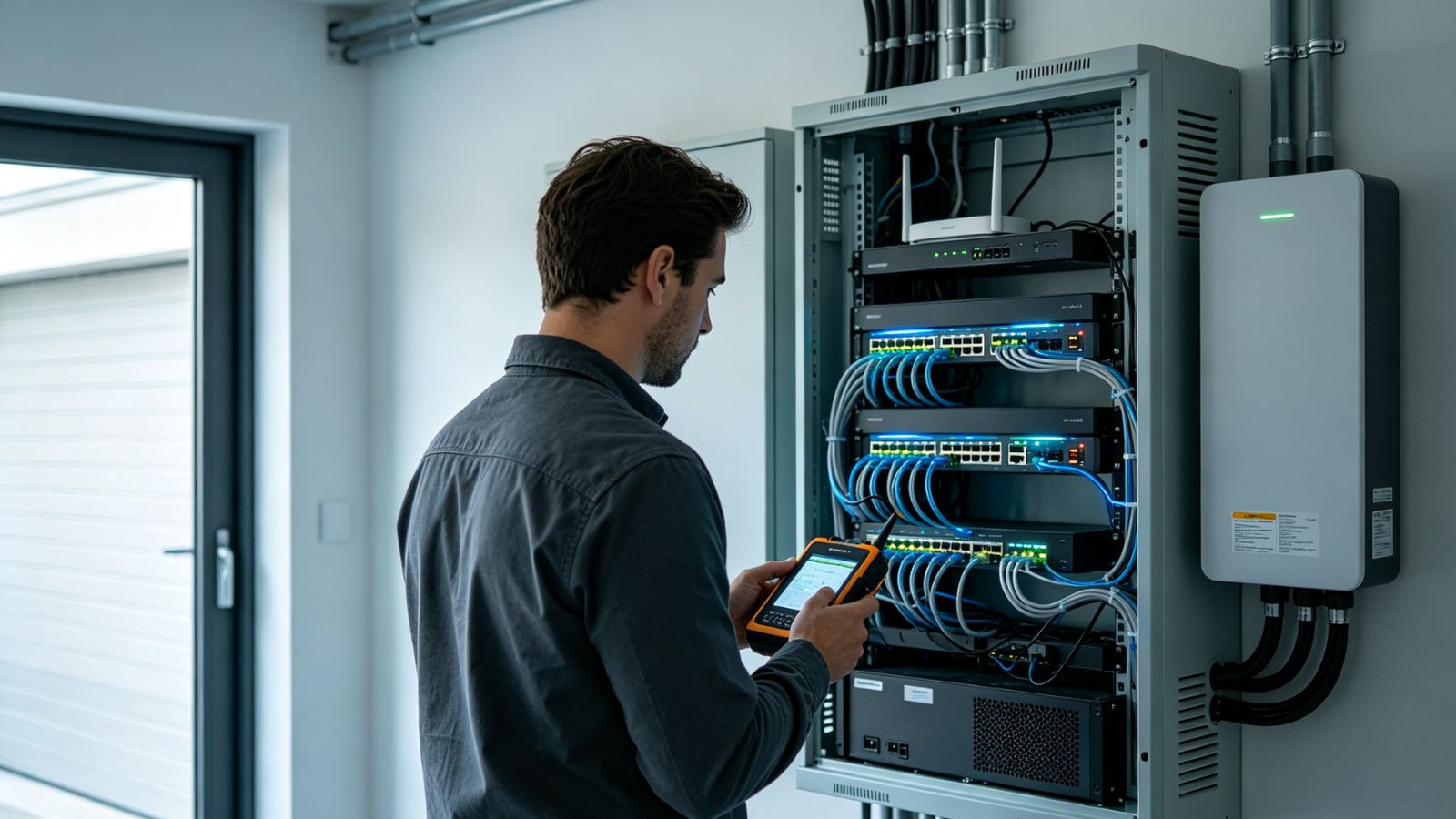
Interconnecting many devices introduces operational considerations that are easy to overlook when the system is viewed only as a collection of convenient features. Wireless interference, network congestion, depleted sensor batteries, router failures, firmware changes, and manufacturer service interruptions can all affect the availability of energy-related data. A controller that depends on a particular cloud service may also lose some functionality if that service becomes unavailable or a product reaches the end of its supported lifecycle.
Data handling is another important consideration because energy-related telemetry can reveal more than electrical consumption. Repeated measurements may indicate when equipment operates, when rooms are occupied, or how household routines change throughout the day. The privacy implications depend on what information is collected, where it is processed, how long it is retained, and which services or devices can access it. Local processing can reduce the amount of household telemetry sent to external services, although it does not automatically guarantee privacy or security.
A robust architecture therefore treats communication reliability and data governance as part of energy management rather than as secondary technical details. Devices should have clearly defined failure states, automation rules should avoid unsafe assumptions when sensor information disappears, and homeowners should understand whether their system depends on local processing, a cloud account, or both. These considerations become increasingly important as more household equipment becomes connected to the same control environment.
Smart plugs, thermostats, sensors, and automation hubs each provide only part of the information required for intelligent residential energy control. Smart plugs can supply direct measurements of electrical behavior, thermostats describe HVAC operating conditions and environmental targets, sensors provide occupancy and physical context, and controllers combine those inputs into decisions. Communication protocols and software interfaces provide the infrastructure that allows the individual pieces to operate as a coordinated system rather than as isolated devices.
The resulting architecture can be understood as a layered information loop: devices measure conditions, networks transport information, software interprets the measurements, and controllers send commands that change equipment states. The usefulness of the system depends not on any single component but on how accurately those layers work together. When measurement quality, communication reliability, control logic, and privacy considerations are all addressed, connected-home technology can transform fragmented household energy information into practical load-management decisions without requiring every action to be performed manually.
