A residential energy audit is most useful when it connects what a home has actually consumed with evidence of how the building and its equipment operate. A monthly utility bill can show that electricity or fuel use increased, but it cannot by itself explain whether the change came from weather, equipment performance, building-envelope conditions, occupancy, or household routines. An inspection of insulation, windows, ductwork, and mechanical equipment provides a different kind of information, but a physical snapshot does not necessarily reveal how those systems perform over an entire season. The value of an audit comes from bringing these perspectives together rather than treating any single source as a complete explanation.
A useful way to think about the process is to separate observation from diagnosis. Utility records establish patterns in actual consumption. Interval meter data, when available, adds information about when demand occurs. On-site measurements provide evidence about the physical conditions that could produce those patterns. Energy modeling can then compare expected and observed performance, while the auditor uses professional judgment to determine which explanations are plausible and which require further investigation. The result is not a mathematically perfect representation of every energy flow in the house. It is a more evidence-based understanding of where energy is being used and which conditions may deserve attention.
That distinction is important because residential energy use is affected by many variables at once. Weather changes from year to year, occupants adjust thermostats, appliances are replaced, household schedules change, and equipment does not always perform according to its nameplate rating under actual operating conditions. A strong audit therefore does not simply collect more data; it uses different types of data to test one another. When billing history, meter patterns, physical measurements, and building characteristics point in the same direction, confidence in the diagnosis increases. When they disagree, the disagreement itself becomes a reason to investigate further.
The diagnostic process often begins with historical utility records because they provide a real-world record of how much energy the household actually consumed. Where sufficient data is available, an auditor may examine a year or more of electricity and fuel bills to identify seasonal patterns, unusual changes, and relationships between consumption and weather. Looking across multiple billing periods is generally more informative than examining a single month's usage because residential energy demand can vary substantially with temperature, occupancy, and household routines.
Monthly consumption patterns can reveal useful clues without identifying the exact cause. A pronounced increase in electricity use during hot weather may indicate that cooling has become a major contributor to household demand, but the billing pattern alone cannot determine whether the underlying reason is equipment efficiency, building-envelope performance, thermostat settings, weather severity, or a change in household use. Similarly, increased winter energy consumption could reflect electric resistance heating, heat-pump operation, longer heating schedules, or other electrical loads. If a home uses natural gas or another fuel for space heating, the electricity record may tell only part of the story.
This limitation is central to interpreting utility data correctly. A bill tells an auditor how much energy was consumed during a period, but it normally does not identify which appliance, room, occupant behavior, or building component was responsible for that consumption. It is therefore better viewed as a baseline against which more detailed evidence can be compared. An auditor can also account for differences in billing periods and, where appropriate, compare consumption with local weather conditions to avoid treating every seasonal change as evidence of a building defect.
Historical records can also reveal changes that deserve investigation. A household might show a sustained increase in electricity consumption after installing new equipment, changing occupancy patterns, or replacing a heating or cooling system. Conversely, a substantial reduction may follow an equipment upgrade, weatherization project, or behavioral change. None of these patterns proves causation on its own, but they give the auditor specific questions to investigate during the physical assessment.
Monthly utility records provide a broad picture, while interval meter data can provide a much more detailed view of when electricity demand occurs. Where utilities provide interval information through advanced metering infrastructure, electricity consumption may be available at substantially finer time intervals than the monthly billing cycle. Depending on the utility and the data available to the customer or auditor, this can reveal recurring daily patterns, evening peaks, overnight baseloads, and changes associated with seasonal operation.
The additional detail can be valuable because two homes with identical monthly electricity consumption may have very different load profiles. One might have relatively steady demand throughout the day, while another could have pronounced peaks associated with cooking, electric water heating, clothes drying, or air conditioning. Seeing when demand rises and falls gives an auditor another way to form and test hypotheses about what is happening inside the home.
Interval data should not, however, be treated as a device-by-device inventory. A meter records aggregate electrical consumption at the point where electricity enters the home. A fifteen-minute or hourly pattern can show that demand increased at a particular time, but it generally cannot prove that a specific appliance caused the increase. Several devices may operate simultaneously, and household schedules may change from one day to another. Identifying an individual end use typically requires additional evidence, such as equipment operating information, temporary measurement, circuit-level monitoring, or a detailed understanding of the home's systems and occupancy patterns.
This distinction makes interval data most useful as a bridge between utility records and physical investigation. If a recurring evening peak appears during periods when electric water heating is likely to operate, the auditor has a testable hypothesis. If a large overnight load remains unusually consistent, refrigeration, ventilation, pumps, networking equipment, standby loads, or other continuous systems may deserve attention. The meter pattern does not establish the answer, but it helps determine where more detailed investigation is worthwhile.
Once consumption patterns have been established, the audit can turn to the physical conditions that influence energy use. This is where the difference between an energy bill and an energy audit becomes particularly important. Utility records describe actual consumption, while on-site measurements can reveal characteristics of the building envelope, heating and cooling systems, water heating equipment, ducts, windows, and other components that influence that consumption.
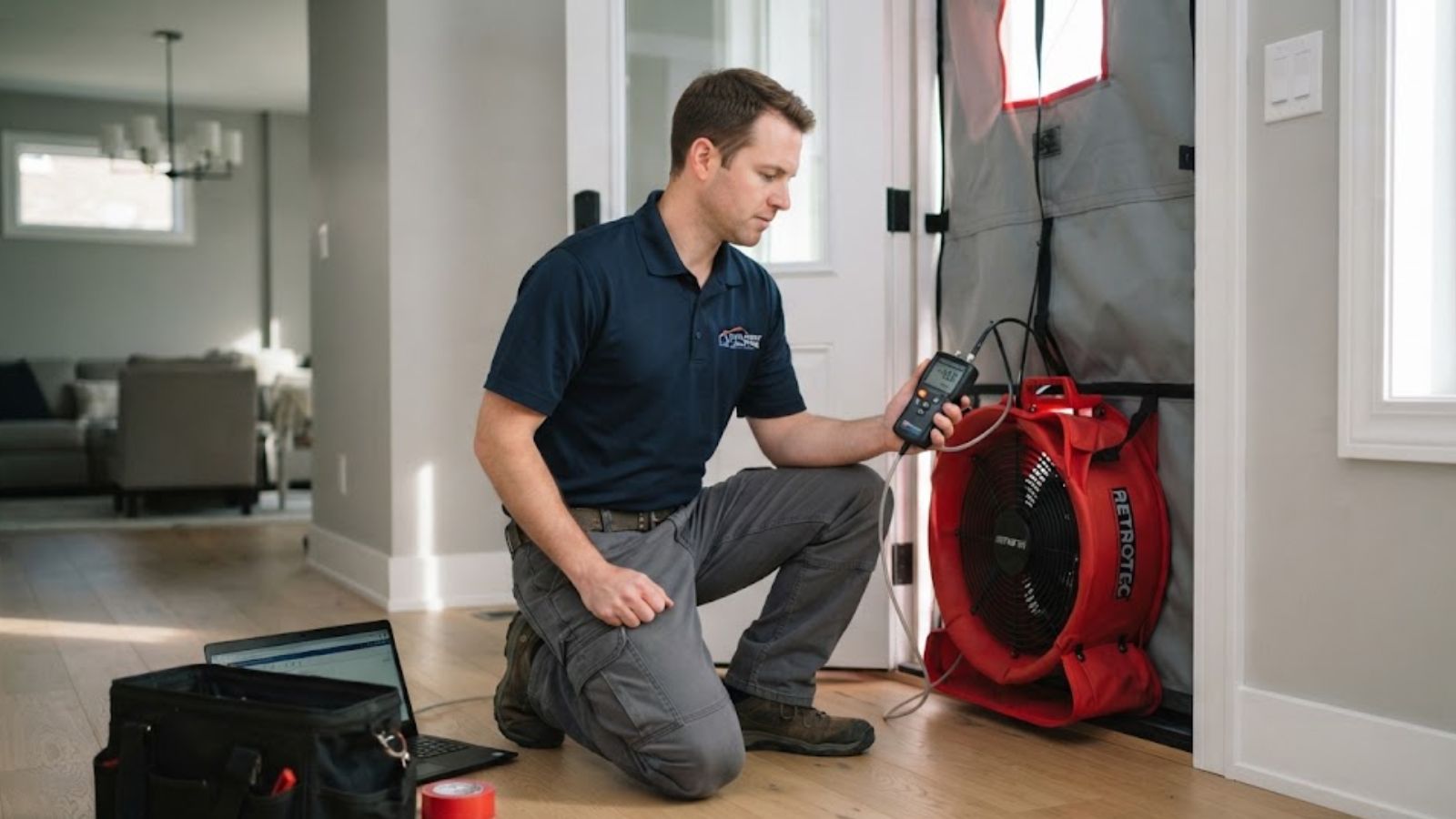
A blower door test, for example, uses a calibrated fan installed in an exterior doorway to create a controlled pressure difference between the inside and outside of the home. The resulting airflow measurement provides a way to quantify the building's overall air leakage. Additional diagnostic techniques can then help locate specific leakage pathways, such as poorly sealed penetrations, joints, bypasses, or other connections between conditioned and unconditioned spaces. The important distinction is that the blower door measurement quantifies overall leakage; identifying individual leakage locations generally requires complementary investigation.
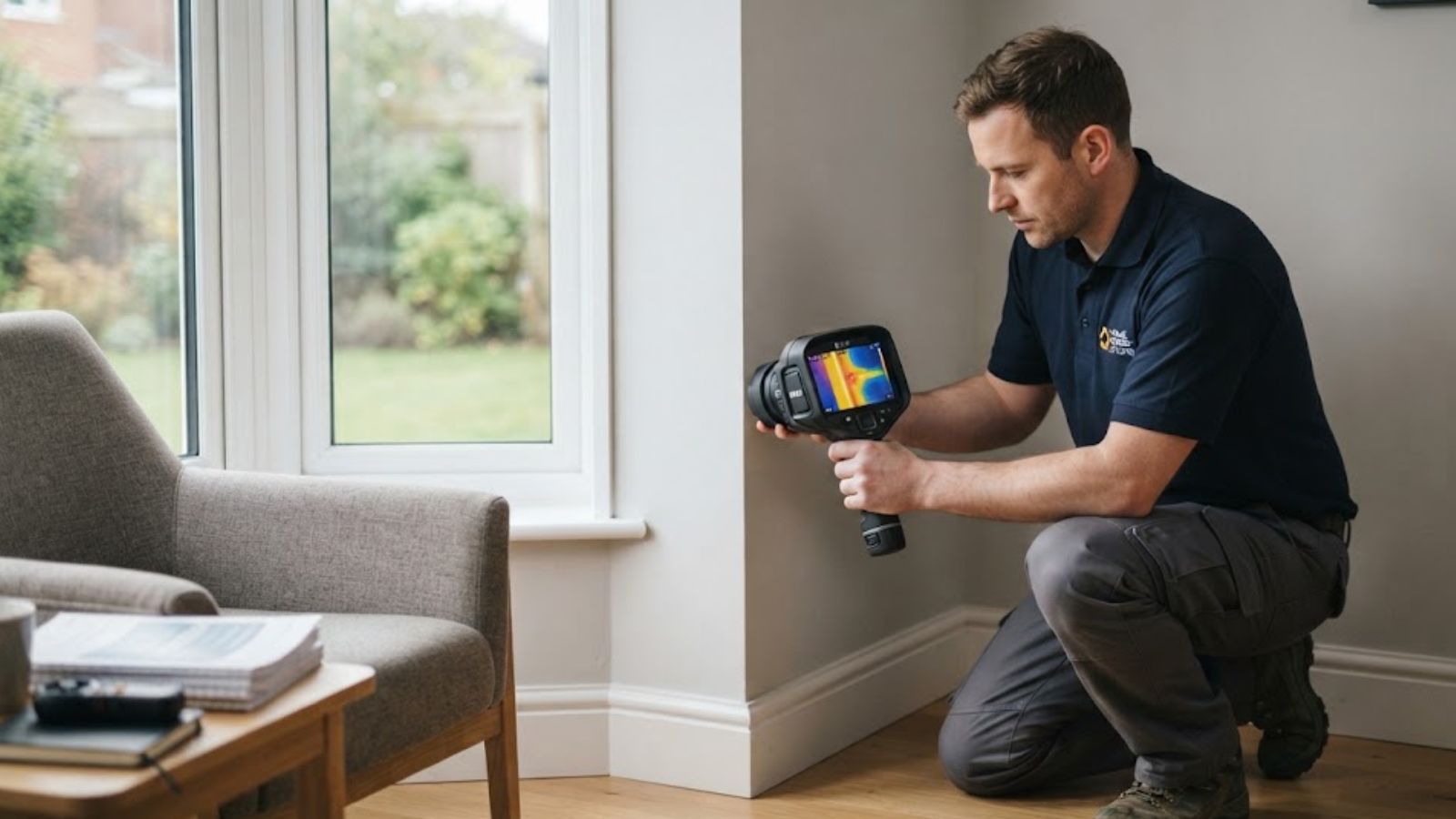
Infrared thermography provides another form of evidence. An infrared camera can reveal temperature patterns across walls, ceilings, windows, and other surfaces that may be associated with insulation differences, thermal bridging, moisture, solar exposure, or possible air leakage. Those patterns should not automatically be interpreted as proof of a particular defect. Surface temperature differences have multiple possible causes, and confirming the underlying mechanism may require other observations or tests. Used appropriately, thermal imaging is therefore a diagnostic aid rather than a standalone answer.
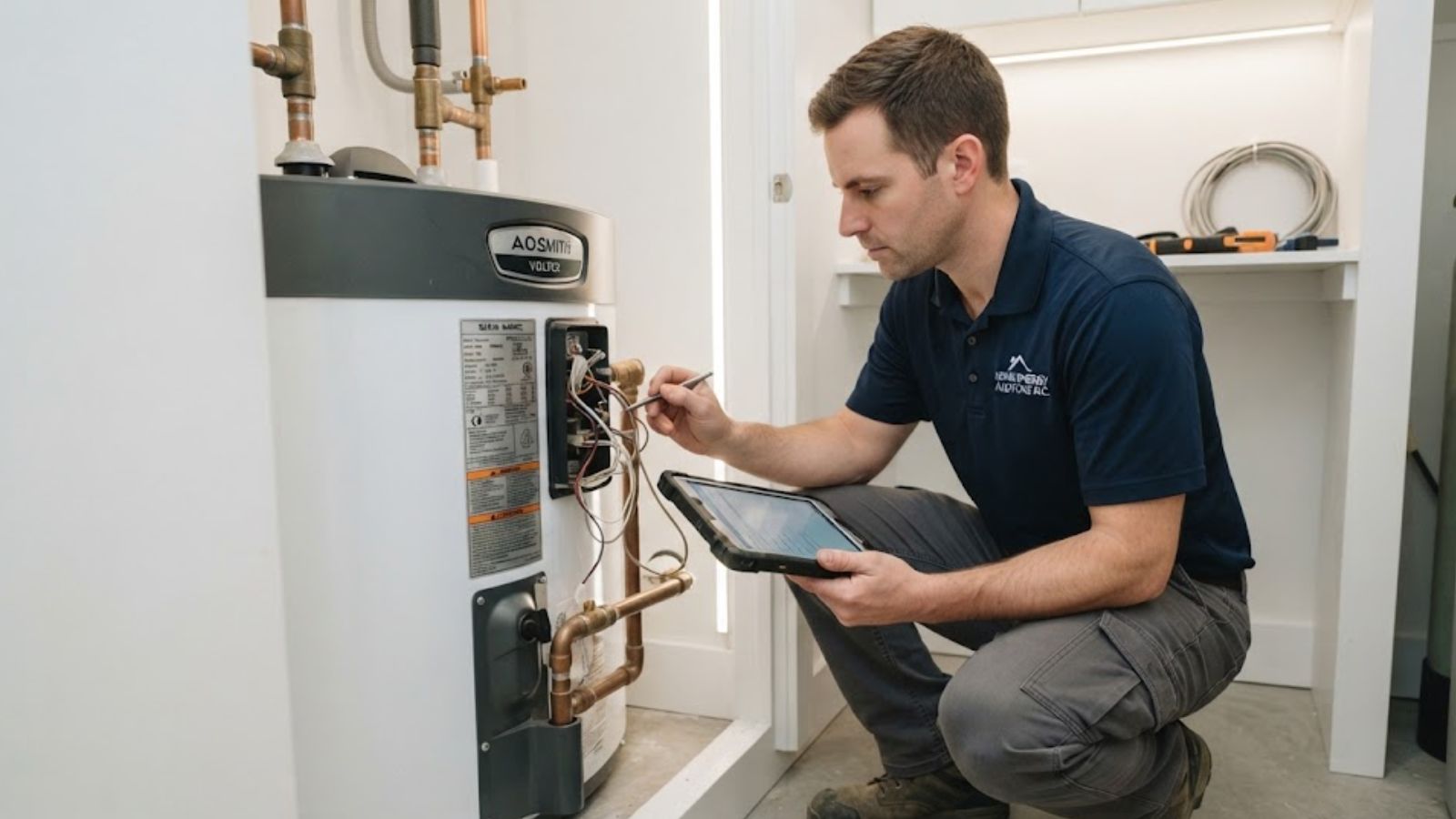
Mechanical systems also require direct observation. An auditor may document the type, age, capacity, and rated efficiency of heating and cooling equipment, inspect accessible ductwork, examine water-heating systems, and review equipment nameplate information. Where combustion appliances are present, appropriate safety testing can be important because changes to building tightness or ventilation conditions may interact with combustion performance. These assessments help connect the physical characteristics of the home with the consumption patterns observed in the utility records.
The building envelope deserves similar attention. Insulation levels, air sealing, window characteristics, building dimensions, and the relationship between conditioned and unconditioned spaces can influence heating and cooling requirements. Yet even here, one measurement should not automatically determine the retrofit priority. An under-insulated area may be worth addressing, but the potential benefit depends on factors such as climate, surface area, existing conditions, HVAC interaction, installation quality, and the relative cost of other improvements.
The analytical value of an energy audit becomes much greater when the different sources are compared rather than interpreted independently. Utility records establish what actually happened over time. Interval data can reveal when electricity demand occurred. On-site testing provides evidence about the physical conditions that could influence that demand. Energy modeling can add another perspective by estimating how the building might perform under specified assumptions.
Energy models are particularly useful when they are treated as analytical tools rather than as perfect representations of reality. An auditor can enter characteristics such as building dimensions, insulation levels, window properties, equipment efficiency, duct conditions, occupancy assumptions, and local weather information to estimate energy performance. The resulting model can then be compared with actual utility consumption. If the modeled result differs substantially from the household's historical use, the discrepancy becomes a diagnostic signal.
A difference between modeled and actual consumption does not, by itself, identify the cause. Modeling depends on assumptions about occupancy, thermostat settings, internal heat gains, equipment schedules, weather, and other operating conditions. A home that consumes more energy than expected may have higher internal loads, different thermostat practices, less efficient equipment operation, or physical conditions that were not represented accurately in the model. A home that consumes less than expected may have lower occupancy, conservative thermostat settings, periods when parts of the home are unused, or other behaviors that differ from standard assumptions.
This is why disagreement between the model and the utility record can actually be useful. Instead of forcing the data to match, an auditor can ask why it does not match. If several independent observations point toward the same explanation, the diagnosis becomes more credible. If the evidence conflicts, the auditor has reason to revisit assumptions, gather additional measurements, or recognize that the available information is insufficient to support a confident conclusion.
The process can therefore be understood as a form of triangulation. No single data source needs to explain the entire home. The objective is to see whether different forms of evidence reinforce one another and to identify where uncertainty remains. That approach is more defensible than assuming that the largest visible system, the oldest piece of equipment, or the most obvious physical defect must automatically be the largest source of energy waste.
Once consumption patterns and physical conditions have been evaluated together, the findings can be translated into potential improvement strategies. The purpose is not simply to produce a long list of recommendations. A useful audit should help distinguish measures that appear technically relevant from measures that are likely to provide meaningful benefits under the home's actual conditions.
For example, air sealing, additional insulation, equipment replacement, duct improvements, or water-heating changes may all be technically reasonable in a particular house. That does not mean they are equally valuable or should all be completed immediately. Their relative importance depends on the building's climate, existing condition, equipment characteristics, expected energy savings, installation costs, operating assumptions, and the interaction between different improvements. An auditor can use the available evidence to estimate potential savings and compare the relative economics of different options, but those estimates should be understood as estimates rather than guarantees.
The distinction is particularly important when homeowners consider payback. A retrofit's financial outcome depends on factors that can change over time, including utility rates, installation costs, equipment life, maintenance requirements, incentives, and actual household operation. A technically effective improvement may have a long financial payback, while a less dramatic measure may be inexpensive enough to make economic sense sooner. Good analysis therefore considers both technical performance and economic context rather than presenting a single upgrade as universally optimal.
The interaction between measures also matters. Improving the building envelope can change heating and cooling requirements, while equipment replacement can change operating patterns. A retrofit sequence should therefore be considered as a system rather than as a collection of unrelated products. This does not mean that every project requires a complex computer model. It means that recommendations should be based on the relationship between the building, its equipment, its occupants, and the energy patterns documented during the audit.
One of the most important skills in interpreting residential energy audits is knowing the boundary between evidence and inference. A utility bill can establish that consumption changed, but it generally cannot establish why. Interval meter data can show when demand occurred, but usually cannot identify the individual appliance responsible. A blower door test can quantify overall air leakage, but additional investigation is needed to locate particular leakage paths. Thermal imaging can reveal temperature patterns, but those patterns can have several causes. An energy model can estimate expected performance, but its output depends on the assumptions used to construct it.
Recognizing these limitations does not make an audit less useful. It makes the analysis more credible. A strong diagnosis does not claim more certainty than the evidence supports. Instead, it combines independent observations and identifies which conclusions are well supported, which are plausible but require confirmation, and which cannot be determined from the available information.
This distinction is particularly valuable when communicating results to homeowners. A statement such as “the attic insulation is inadequate” describes a physical condition, while “adding insulation will reduce annual electricity use by a specific percentage” is a much stronger claim that requires additional assumptions and analysis. Similarly, identifying a high overnight electrical load does not automatically justify replacing a particular appliance. The audit's role is to narrow the possibilities and provide evidence for decisions, not to turn every correlation into a causal conclusion.
More data does not automatically produce a better energy audit. Historical records can contain gaps, billing periods may vary, interval data may not be available at the desired resolution, and physical measurements can be affected by weather conditions or access limitations. Equipment information may also be incomplete, particularly in older homes where documentation has been lost or systems have been modified over time.
Data quality therefore matters at every stage. An auditor needs to know whether a billing record represents the full period being analyzed, whether weather conditions were unusual, whether occupancy changed, and whether the physical characteristics entered into a model accurately represent the house. When those conditions are uncertain, the resulting conclusions should reflect that uncertainty rather than presenting an artificially precise number.
This principle also helps explain why professional energy auditing is different from simply reviewing a utility bill or walking through a house looking for obvious problems. The value lies in connecting different forms of evidence while understanding their limitations. A good audit is not necessarily the one with the most measurements. It is the one in which the measurements answer useful questions and collectively provide a defensible explanation of how the home is performing.
Combining utility records, meter data, and on-site measurements creates a more complete framework for understanding residential energy performance. Historical consumption shows how the household has actually used energy over time. Interval data, when available, adds information about the timing and shape of electrical demand. Physical measurements provide evidence about the building envelope and equipment that influence those patterns. Modeling can then help compare expected and observed performance, while professional interpretation determines which explanations are sufficiently supported to influence a retrofit decision.
The most important lesson is that none of these sources should be treated as a complete answer on its own. A high utility bill is evidence of high consumption, not proof of an inefficient appliance. A temperature pattern on an infrared camera is evidence of a surface difference, not automatic proof of an air leak. A model-to-bill discrepancy is a reason to investigate, not proof that a particular assumption is wrong. Keeping those distinctions clear allows an energy audit to remain evidence-based without creating a false impression of precision.
For homeowners and professionals alike, this approach produces a more useful way to think about residential energy performance. Instead of asking only which component uses the most energy or which upgrade appears most attractive, the better question is how the available evidence fits together. When historical records, meter patterns, physical measurements, and building characteristics reinforce one another, an auditor can develop stronger conclusions about where further attention is warranted. When they do not, the uncertainty itself identifies where additional investigation may be necessary.
A residential energy audit is therefore best understood not as a single test or inspection, but as a process of reconciling different kinds of evidence. The goal is not to produce a perfectly precise model of every watt consumed in the home. It is to replace broad assumptions with increasingly well-supported explanations and to use those explanations to prioritize practical improvements. That combination of measurement, comparison, and careful interpretation is what turns raw energy data into a useful basis for understanding how a home actually performs.
