Building durability depends on how effectively a wall assembly manages moisture over time. When most homeowners think about water problems inside a building, they usually imagine visible issues such as roof leaks, plumbing failures, or damaged exterior siding. However, moisture can also enter and move through a building in less obvious ways. Water vapor traveling through wall assemblies may remain invisible for years before creating conditions that contribute to material deterioration, mold growth, or reduced structural durability.
The challenge is that moisture behavior inside walls is controlled by several interacting factors rather than a single material choice. Temperature differences, indoor humidity, outdoor climate, material permeability, air leakage, and the ability of the assembly to dry all influence whether moisture accumulation becomes a problem. A wall that performs well in one region may experience durability issues when exposed to a different climate or construction approach.
Understanding vapor diffusion, moisture migration pathways, and dew point conditions provides a foundation for evaluating how walls manage moisture. These concepts help explain why modern building practices focus not only on preventing water entry but also on creating assemblies that can safely control moisture movement and dry when small amounts of moisture inevitably occur.
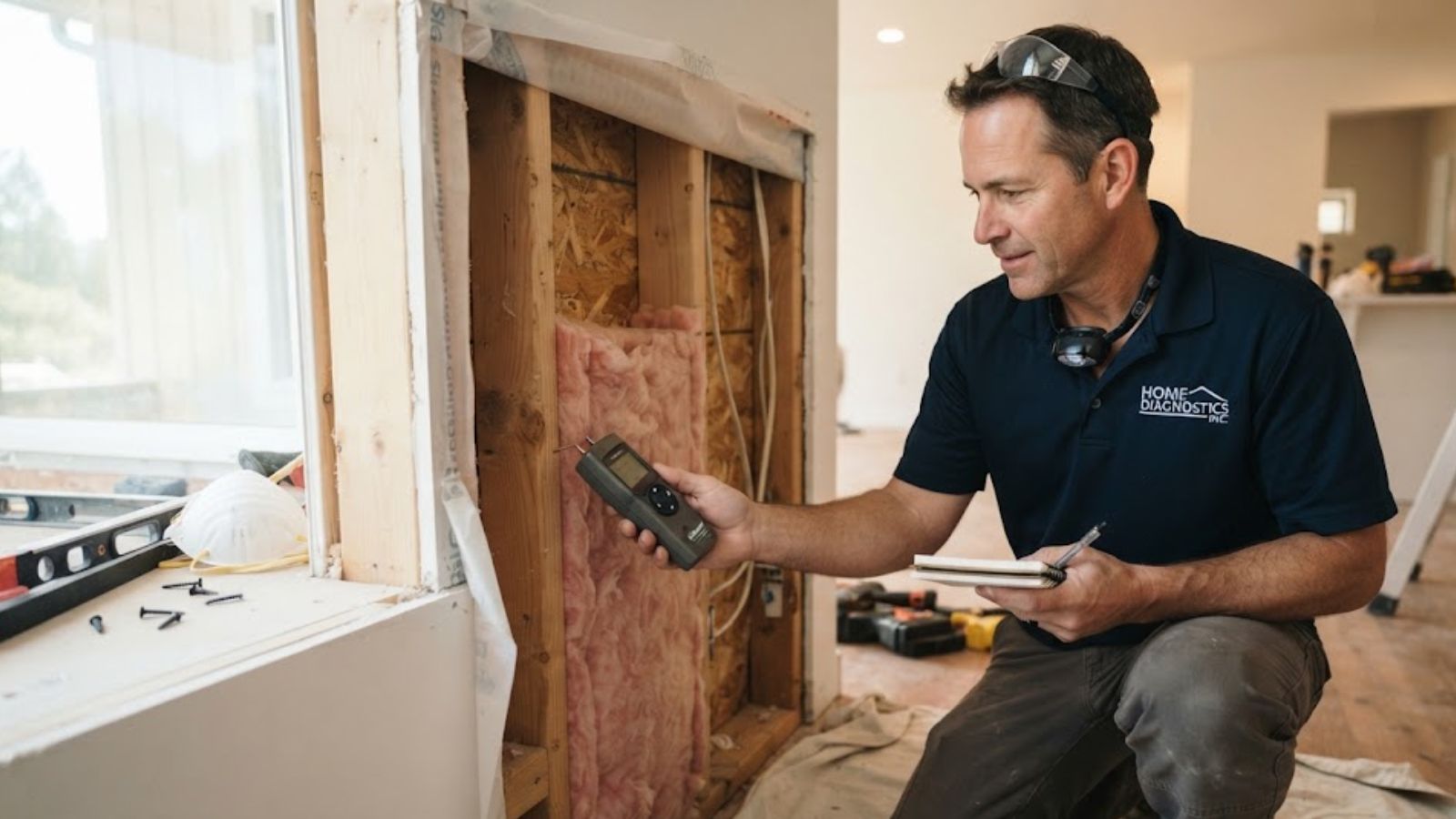
Moisture moves through building assemblies primarily through two mechanisms: air movement and vapor diffusion. Although both involve water vapor, they behave differently. Air leakage occurs when moisture-laden air moves through gaps, cracks, and incomplete air barriers because of pressure differences. Vapor diffusion is a slower process in which water molecules move through materials from areas of higher vapor pressure toward areas of lower vapor pressure.
In residential buildings, vapor movement is strongly influenced by seasonal conditions. During winter in cold northern climates, indoor air is typically warmer and may contain more moisture than outdoor air. This difference in vapor pressure can encourage moisture movement toward colder portions of the wall assembly. During hot and humid summers, the direction of moisture movement may change because outdoor air can contain significantly more moisture than conditioned indoor air.
The speed of vapor diffusion depends largely on the permeability of the materials within the wall assembly. Building materials are commonly classified by vapor permeance, measured in perms, which indicates how easily water vapor can pass through them. Vapor-impermeable materials, such as certain polyethylene sheets or foil-faced insulation products, strongly limit vapor movement. More permeable materials, such as unfaced fiberglass insulation or some painted surfaces, allow greater vapor transmission.
Material permeability is important, but it is only one part of moisture management. A wall assembly does not necessarily fail because moisture can enter it. The greater concern is whether moisture reaches a vulnerable location, accumulates faster than it can dry, and remains trapped long enough to damage moisture-sensitive materials.
The dew point is the temperature at which air becomes fully saturated with moisture and can no longer hold additional water vapor. When humid air cools to or below its dew point, water vapor begins changing from a gas into liquid water. Inside a wall assembly, this phase change can occur on cold surfaces such as exterior sheathing, framing components, or interior sides of exterior finishes.
During winter, a typical cold-climate wall has a temperature gradient from warm indoor conditions to cold outdoor conditions. As moisture moves through the assembly, the temperature of surrounding materials decreases. If a surface within the wall becomes colder than the dew point of the surrounding air, condensation risk increases.
This process is difficult for homeowners to detect because it occurs inside enclosed spaces. Unlike a plumbing leak that creates immediate visible damage, interstitial condensation may slowly increase moisture levels in wood framing, sheathing panels, and insulation. Persistent elevated moisture conditions can create an environment where wood-decay organisms are more likely to develop. A commonly referenced threshold is around 20% wood moisture content, although actual risk depends on temperature, duration, material conditions, and other environmental factors.
The location where moisture accumulates is often more important than simply identifying where the dew point temperature occurs. In many wall assemblies, the first significant condensation concern may occur at colder surfaces such as the back side of exterior sheathing rather than exactly at the theoretical dew point location. This is why controlling surface temperatures and maintaining drying potential are central principles in durable wall design.
A wall assembly that performs successfully in one region of the United States may not perform the same way in another. Climate determines the dominant moisture risks, including whether the primary vapor drive occurs from the interior or exterior and whether walls have sufficient opportunity to dry.
In heating-dominated climates, such as many northern states, winter conditions typically create an outward vapor drive because indoor air is warmer and often more humid than outdoor air. Traditional construction methods commonly used interior vapor retarders to limit moisture movement into colder wall sections. However, modern building science recognizes that vapor control must be balanced with drying ability because highly impermeable layers can restrict moisture movement in the opposite direction during other seasons. (buildingscience.com)
In hot and humid climates, the moisture challenge often reverses. Outdoor air may contain significantly more moisture than conditioned indoor air, creating inward moisture movement during cooling seasons. An improperly located vapor-impermeable layer can reduce the wall’s ability to dry and may increase the risk of moisture accumulation. For this reason, wall assemblies in humid regions often prioritize controlling outdoor moisture entry while maintaining appropriate interior drying potential. (buildingscience.com)
Mixed climates create additional complexity because walls must handle changing conditions throughout the year. Effective designs consider not only vapor resistance but also air control, water management, insulation placement, and the ability of materials to dry toward one or both sides of the assembly.
Many moisture problems are not caused by a single defective material but by an assembly that does not work as an integrated system. One common mistake is focusing only on stopping moisture entry while ignoring how the wall will dry if moisture does enter. Durable wall systems are designed around controlling water, air, vapor, and heat flow together rather than relying on one barrier to solve every moisture problem.
Another frequent issue is placing highly impermeable materials in locations that prevent drying in the wrong climate. A vapor control layer that performs well in a cold region may create problems when used in a warm, humid environment where moisture needs a different escape pathway. The correct location and permeability of vapor control materials depend on climate conditions, wall construction, and overall assembly design.
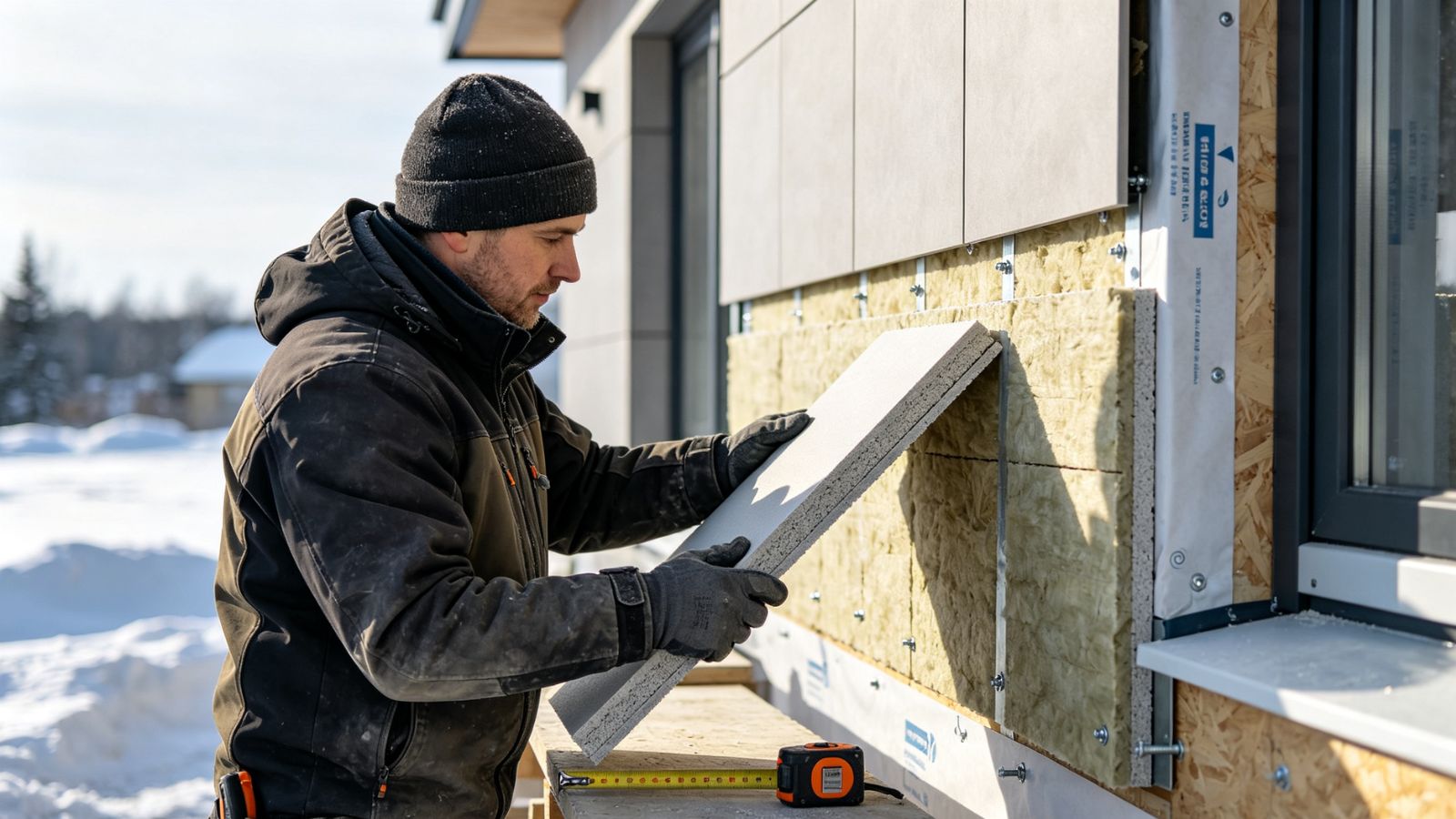
Insufficient exterior insulation is another important consideration in cold climates. When insulation is placed only inside the wall cavity, exterior sheathing may remain cold enough to approach condensation conditions during winter. Adding continuous exterior insulation can raise sheathing temperatures, reducing the likelihood that interior moisture will condense on cold structural surfaces.
Air leakage is also frequently underestimated. Although vapor diffusion receives significant attention, uncontrolled air movement can transport much larger quantities of moisture into wall assemblies because it carries moisture-laden air directly through openings. Creating a continuous air barrier is therefore a critical part of moisture management. (buildingscience.com)
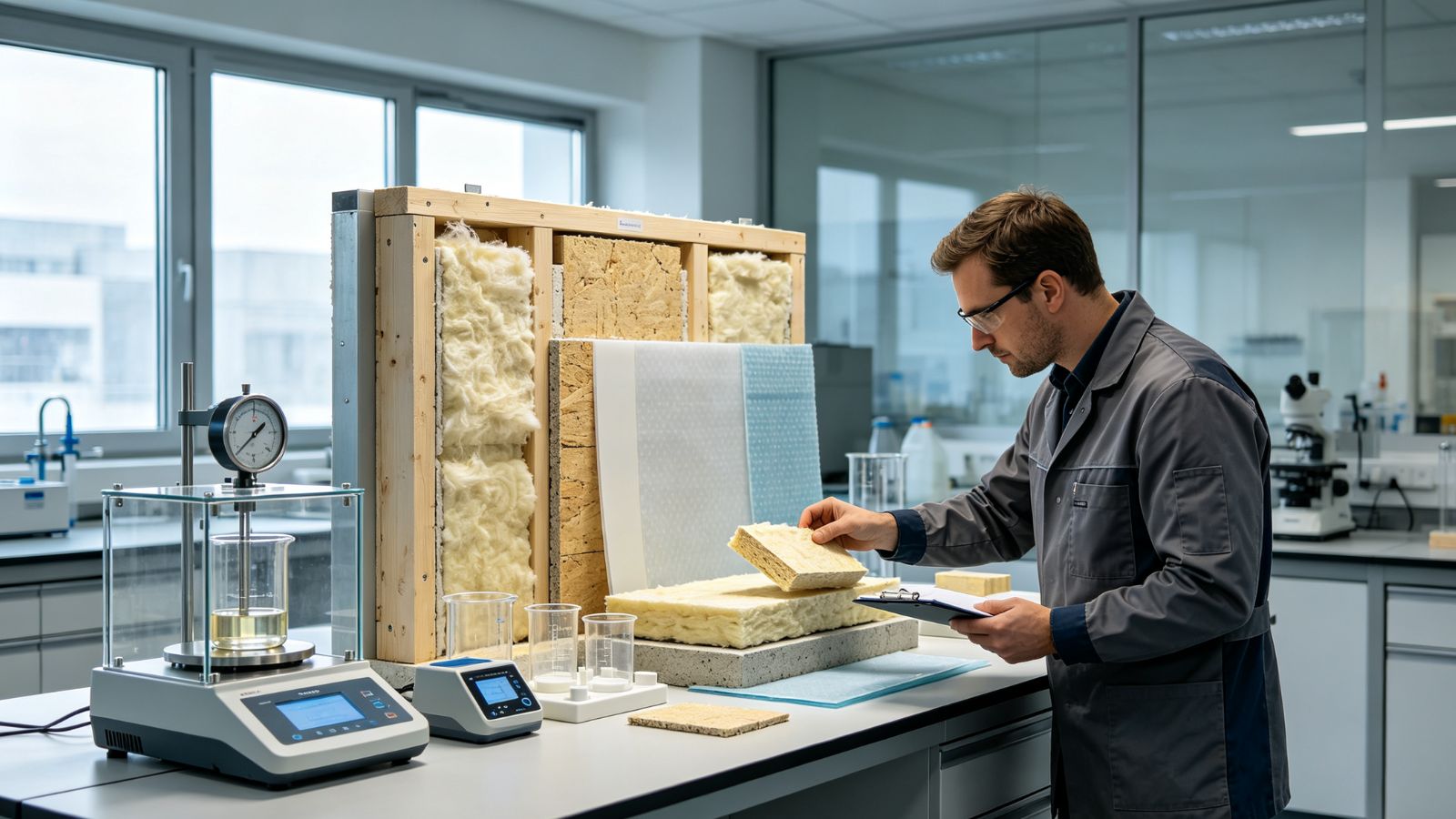
The most durable wall assemblies are not necessarily those that block all moisture movement. Instead, they are systems designed to control moisture entry while allowing safe drying when small amounts of moisture occur. This approach recognizes that buildings are exposed to changing conditions and that some moisture movement is unavoidable.
Exterior continuous insulation is one strategy commonly used to improve moisture durability, particularly in colder climates. By keeping structural sheathing warmer, exterior insulation can reduce the chance that the sheathing temperature falls below interior dew point conditions during winter. This helps protect moisture-sensitive materials while improving overall thermal performance.
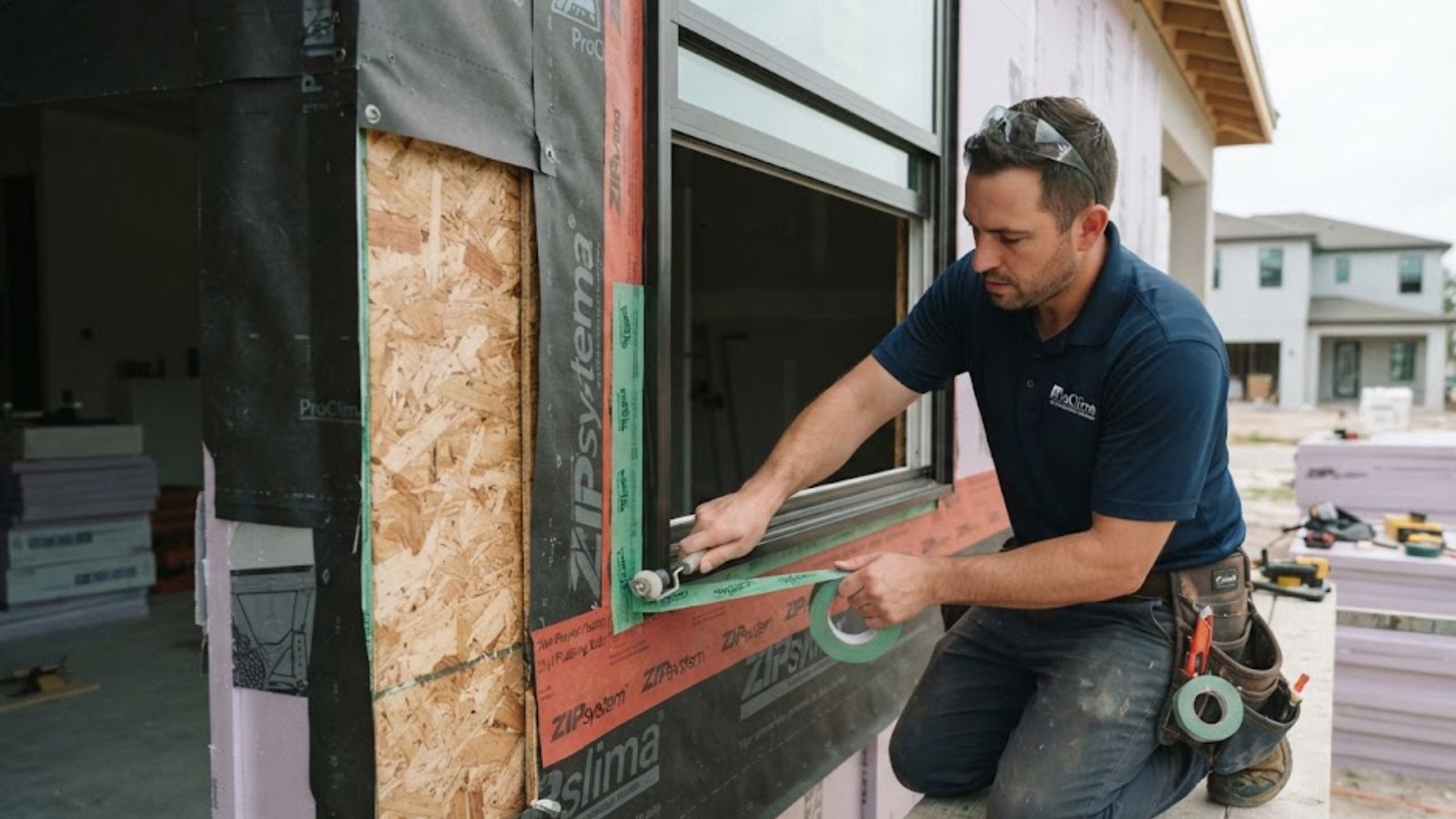
Air sealing is equally important because uncontrolled airflow can bypass vapor control strategies and carry moisture directly into wall cavities. Properly connected air barriers, carefully sealed penetrations, and appropriate construction detailing help limit unwanted moisture transport through air movement.
Ultimately, successful moisture management requires coordination between material selection, climate conditions, and assembly design. Vapor permeability, insulation placement, air control, and drying potential must be considered together rather than individually. A wall that can manage moisture movement effectively is better prepared to maintain durability, comfort, and performance over decades.
Wall assemblies succeed when they are designed to control how moisture enters, moves, and leaves the structure. Vapor diffusion, air leakage, and condensation risks are not isolated problems; they are connected processes influenced by climate, materials, and construction details.
Understanding dew point conditions helps explain why hidden moisture problems develop, while understanding vapor movement helps explain why the same wall design may perform differently in different regions. The goal of modern building science is not simply to create walls that never experience moisture but to create assemblies that manage moisture safely and maintain the ability to dry.
By combining appropriate vapor control, effective air sealing, proper insulation strategies, and climate-specific design principles, builders can create wall systems that remain durable and resilient throughout changing seasonal conditions.
