A home’s plumbing system is not just a network of pipes carrying water from one place to another. Every day, the water inside those pipes interacts with the materials around it, creating chemical conditions that can influence performance over time. A homeowner may notice white mineral deposits around faucets, declining water pressure in an older bathroom, or a water heater that seems less efficient than it once was. These issues can sometimes be connected through the relationship between water chemistry and plumbing materials.
Water hardness, mineral scaling, and corrosion are often discussed as separate problems, but they are closely related processes. Dissolved minerals can form deposits when conditions change, while certain water characteristics can accelerate the deterioration of metal pipes. The type of plumbing material, the age of the home, local water sources, and everyday usage patterns all influence how these processes develop.
The same water supply can produce very different outcomes in different houses. A newer home with PEX plumbing may mainly experience mineral spots on fixtures, while an older property with galvanized steel pipes may eventually develop restricted flow caused by years of internal corrosion and buildup.
Understanding how water hardness, scaling, corrosion, and pipe materials interact helps homeowners identify plumbing issues more accurately and avoid assuming that every water-related problem has the same solution.
Water hardness refers primarily to the concentration of dissolved calcium and magnesium minerals in water. These minerals naturally enter groundwater as water moves through layers of rock and soil. The U.S. Geological Survey (USGS) commonly expresses hardness as calcium carbonate equivalent, providing a consistent way to compare mineral levels in different water supplies.
Hard water is not generally considered a health concern, but it can influence plumbing performance and appliance maintenance. While water is moving through pipes, calcium and magnesium usually remain dissolved. Problems become more noticeable when water is heated, concentrated, or exposed to surfaces where minerals can accumulate.
Hardness levels vary widely across the United States because local geology and water sources differ from one region to another. Many areas that rely heavily on groundwater experience higher mineral content because underground water often dissolves minerals from surrounding rock formations. Parts of the Southwest, including areas of Arizona, Nevada, and portions of Texas, are known for water conditions that can contribute to significant mineral buildup in homes.
Homes supplied by surface water systems may experience different conditions because lakes, rivers, and reservoirs generally interact with different geological materials than groundwater sources. Municipal water treatment also influences household water characteristics. Water providers may adjust chemistry to meet drinking water standards and manage corrosion control, but the final water conditions entering a home can still vary depending on the source, treatment methods, and distribution network.
For homeowners, the practical impact of hardness is usually seen through mineral deposits on faucets, shower doors, and fixtures. Inside the plumbing system, however, minerals can gradually accumulate in water heaters, valves, and narrow passages where changes in temperature or flow encourage deposits to form.
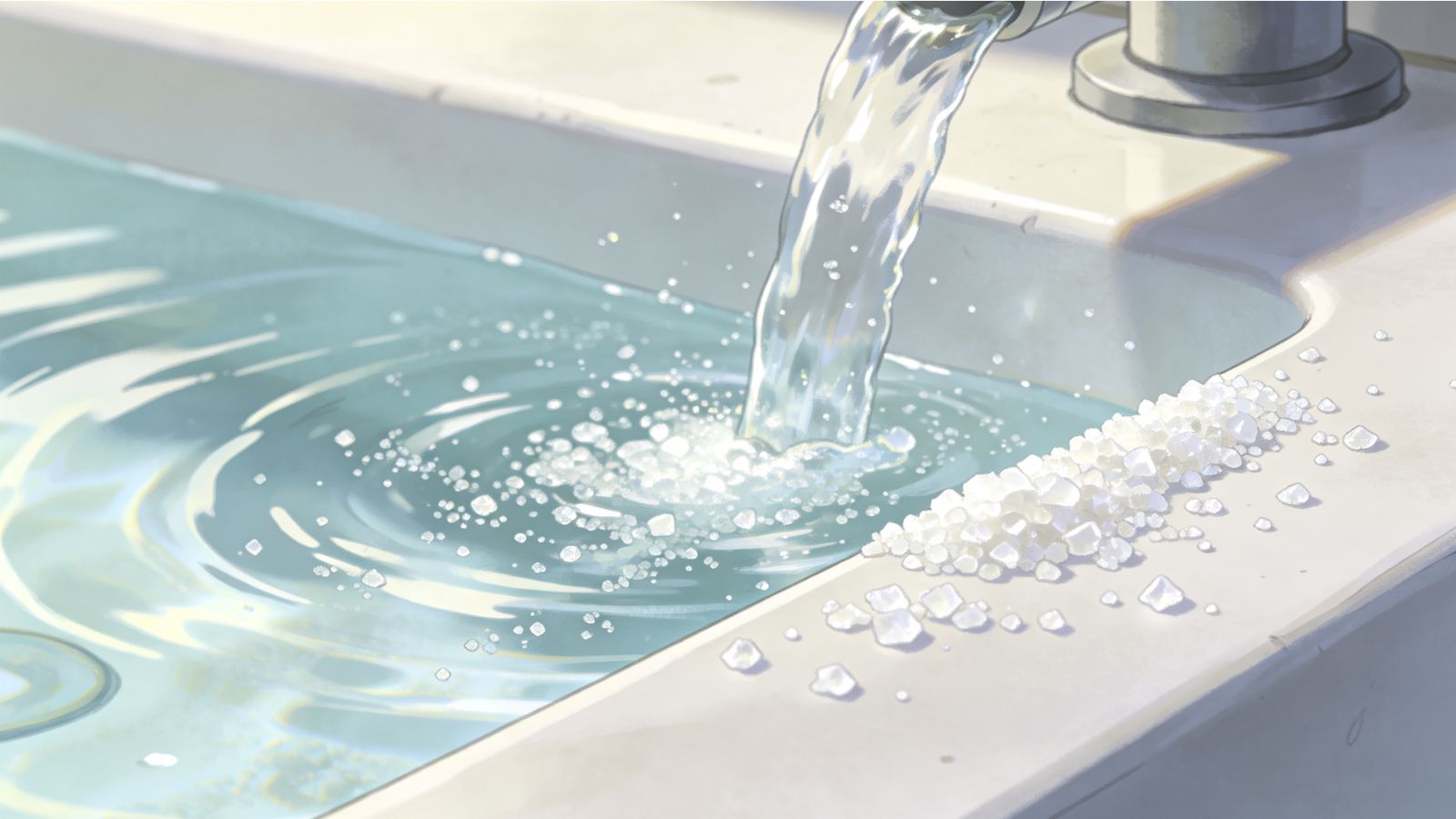
Scaling occurs when dissolved minerals separate from water and form solid deposits on surfaces. Calcium carbonate is one of the most common household scale materials because calcium-containing water can create deposits under certain chemical conditions.
Scale formation is especially common in areas where water is heated. As temperature increases, the chemical balance of water changes, making some dissolved minerals more likely to come out of solution and attach to heating surfaces.
Water heaters are among the plumbing components most affected by mineral scaling. Deposits can accumulate on heating elements, tank surfaces, and other internal parts exposed to hot water.
Heavy scale buildup can reduce heat transfer efficiency by creating an insulating layer between the heating source and the water. When this occurs, the equipment may require more energy to achieve the same heating performance. The actual impact depends on the amount of buildup, the type of water heater, and the characteristics of the local water supply.
This is why many manufacturers recommend maintenance procedures designed to manage sediment and mineral accumulation. A small amount of mineral presence does not automatically mean a water heater will fail, but significant deposits over many years can affect performance.
Mineral deposits inside pipes generally develop more slowly than visible deposits on faucets and showerheads. However, in older plumbing systems or areas with restricted flow, buildup can gradually reduce the space available for water movement.
Scale can affect valves, aerators, and appliance connections where openings are already relatively small. A homeowner may notice weaker flow from a faucet or showerhead even when the overall water supply remains normal.
A thin mineral layer inside some metal plumbing systems may occasionally reduce direct contact between water and the pipe surface. However, this does not mean scale buildup is desirable. This protective effect depends on water chemistry and does not eliminate the problems caused by excessive deposits, such as reduced efficiency, restricted flow, or maintenance issues.
Corrosion is the gradual deterioration of metal caused by chemical or electrochemical reactions between the metal surface and its environment. In household plumbing, corrosion is influenced by the type of metal, water chemistry, temperature, and the condition of the existing pipe surface.
Metal pipes naturally develop surface layers over time. Under favorable conditions, these layers can slow additional corrosion. However, certain water characteristics can weaken these protective layers and allow deterioration to continue.
Water pH plays an important role in corrosion behavior. Water with lower pH is more acidic and may increase corrosion rates in some plumbing materials, including copper. Acidic conditions can contribute to metal deterioration and may increase the release of metals into water.
However, pH alone does not determine whether corrosion will occur. Plumbing professionals typically consider several factors together, including alkalinity, dissolved minerals, temperature, dissolved oxygen, and water movement.
Oxygen dissolved in water can participate in corrosion reactions, while mineral balance influences whether deposits protect surfaces or contribute to problems. From a homeowner’s perspective, this means that two homes receiving similar water may experience different plumbing outcomes because their pipe materials and system conditions are different.
Hot water systems often experience faster chemical reactions because higher temperatures can accelerate many processes. In addition, very fast-moving water can contribute to erosion-corrosion by gradually removing protective surface layers from metal pipes.
The materials used in a home’s plumbing system strongly influence how water chemistry affects long-term performance. Many American homes contain multiple pipe materials because repairs, additions, and renovations often occur over several decades.
Homes built before widespread adoption of modern plastic plumbing may still contain galvanized steel pipes, especially if major renovations have not replaced the original plumbing system. Copper became common in many residential applications during the second half of the twentieth century, while PEX and other plastic materials became increasingly popular in newer construction.
Each material responds differently to minerals, corrosion conditions, and temperature changes.
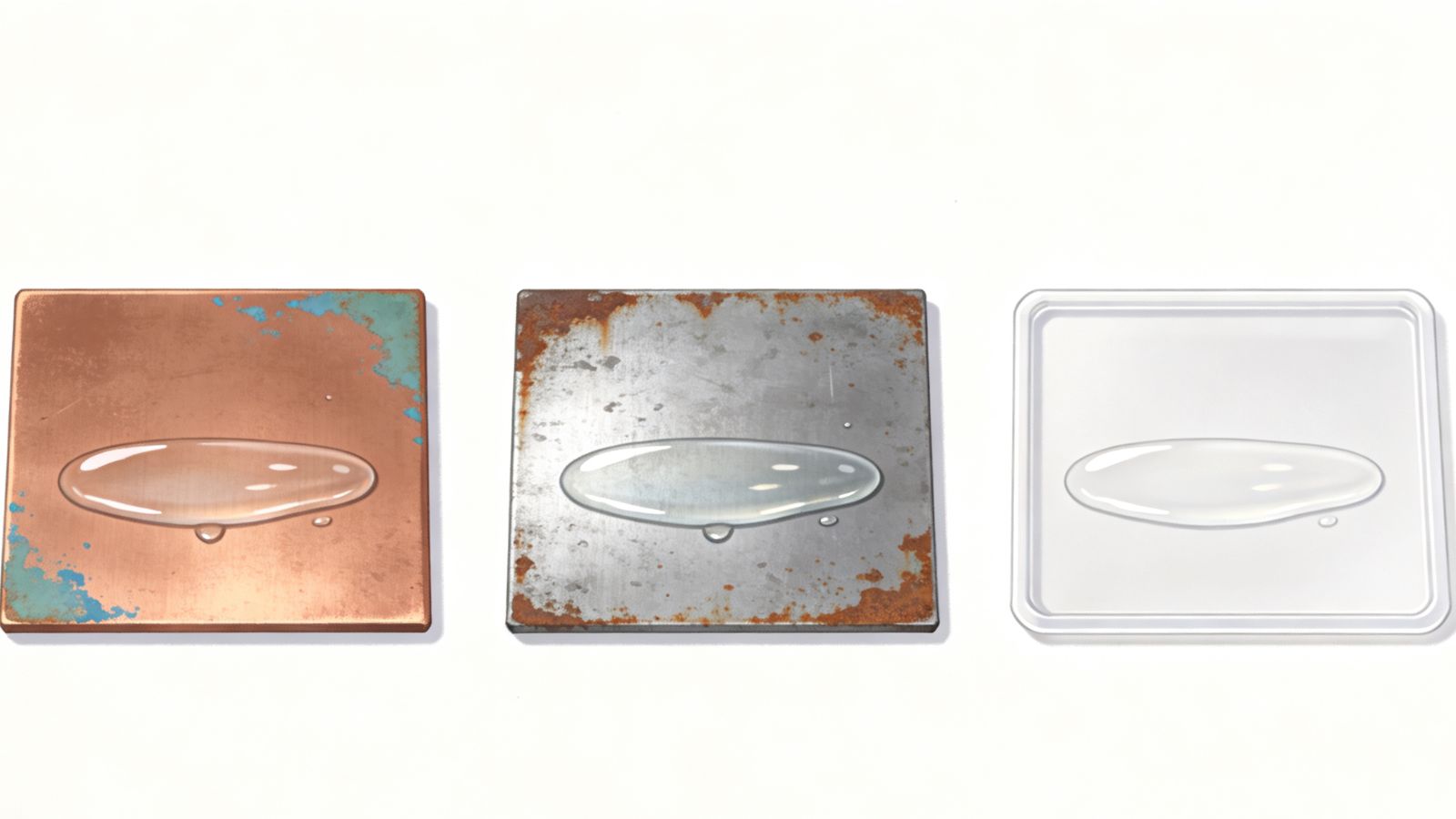
Copper has been widely used in residential plumbing because it offers durability, heat resistance, and a long service history. When exposed to water, copper develops a surface patina that can help protect the underlying metal.
Under suitable conditions, this protective layer slows further corrosion. However, certain water characteristics can interfere with this process. Low-pH water, high acidity, and other unfavorable conditions may contribute to copper corrosion over time.
Possible signs of copper-related plumbing concerns include blue-green staining around fixtures, metallic tastes, or leaks developing in aging systems. These signs do not identify a single cause by themselves, but they may indicate that the plumbing system requires evaluation.
Compared with some older metal plumbing materials, copper generally performs well in residential applications. However, long-term performance depends on maintaining water conditions that are compatible with the pipe material.
Galvanized steel pipes were commonly installed in older homes because their zinc coating provided protection against rust when the pipes were new. Over decades of service, however, the protective coating can deteriorate and expose the underlying steel.
As corrosion progresses, rust and mineral deposits can combine inside the pipe, creating thick internal buildup. Unlike a sudden pipe failure, this process often develops gradually and may first appear as reduced water pressure or uneven flow between fixtures.
For example, a homeowner may replace a showerhead expecting stronger water pressure but see little improvement because the restriction is not located at the fixture. Inside aging galvanized pipes, corrosion and mineral deposits may have reduced the available opening for water flow.
Common signs of deteriorating galvanized plumbing include rusty-colored water, repeated leaks, and declining pressure throughout the house. Once internal corrosion becomes significant, replacing affected sections is often more practical than attempting to restore the original pipe interior.
Plastic plumbing materials such as PEX and PVC do not corrode in the same way as metal pipes because they do not undergo metallic oxidation. Compared with metal plumbing, they are less affected by rust-related problems and corrosion products from the pipe material itself.
However, plastic pipes are not completely independent from water conditions. Fittings, valves, connectors, and nearby metal components can still experience corrosion or mineral buildup.
Over decades of service, the overall reliability of a plumbing system depends not only on the pipe material but also on installation quality, operating conditions, and maintenance practices.
Scaling and corrosion often develop together because each process can influence the conditions that allow the other to continue.
A corroded pipe surface becomes rougher, creating additional areas where minerals can attach. At the same time, mineral deposits can create uneven surfaces where water chemistry changes from one location to another.
This interaction can contribute to localized corrosion, where small sections of a pipe deteriorate faster than surrounding areas. These weak points may eventually become locations where leaks develop.
A common example is an older metal plumbing system where mineral deposits and corrosion gradually narrow the internal pipe opening. The homeowner may notice reduced water pressure years before an actual leak appears.
Many plumbing issues related to water chemistry become easier to understand when viewed in the context of an older American home. A house built in the 1960s or 1970s may still have sections of galvanized steel plumbing that have remained in service for several decades. The homeowner may notice that the kitchen faucet works normally while an upstairs shower has weak pressure, especially after years of gradual buildup inside the pipes.
Replacing the showerhead or cleaning the faucet aerator may provide little improvement because the restriction is not located at the fixture. Inside aging galvanized pipes, corrosion products and mineral deposits can slowly reduce the available opening for water flow. If the home is also supplied by relatively hard groundwater, mineral accumulation may add another layer of buildup over time.
A different situation can occur in a newer home with PEX plumbing. The homeowner may experience fewer corrosion-related problems because the pipe material itself does not rust, but hard water can still leave deposits on fixtures, affect water heaters, and create maintenance issues around fittings and appliances.
These examples show why plumbing problems cannot always be diagnosed by looking only at the water supply or only at the pipe material. The condition of the entire system matters, including the home’s age, previous repairs, and local water characteristics.
Water-related plumbing issues often appear through everyday signs rather than sudden failures. Recognizing these patterns can help homeowners investigate the underlying cause instead of treating each symptom separately.
White crust around faucets and showerheads usually indicates mineral deposits associated with hard water. Reduced hot water performance may suggest scale accumulation in water-heating equipment. Brown or rusty-colored water, particularly in older homes, may indicate corrosion inside metal plumbing.
Testing is especially useful before installing a water softener, replacing old pipes, or investigating repeated plumbing failures. Basic measurements such as hardness and pH can provide valuable information about whether the issue is related to mineral buildup, corrosion conditions, or another factor.
The best approach depends on the specific combination of water characteristics and plumbing materials in a home. Hardness alone does not explain every plumbing issue, and installing treatment equipment without understanding the underlying conditions may not solve the actual problem.
Routine maintenance can reduce many common issues. Homeowners can follow water heater maintenance recommendations, clean mineral deposits from removable fixtures, inspect older metal pipes for warning signs, and seek professional evaluation when leaks, discoloration, or major pressure changes appear.
Water softening systems can reduce calcium and magnesium hardness and may help control certain types of mineral buildup. However, they are not designed to solve every corrosion problem. Whether a softener is appropriate depends on the hardness level, household preferences, and the condition of the existing plumbing system.
Household plumbing performance depends on the relationship between water chemistry and the materials carrying that water throughout the home. Hard water minerals can contribute to scaling, while certain chemical conditions can accelerate corrosion in metal pipes. The impact varies depending on local water sources, pipe materials, temperature conditions, and the age of the plumbing system.
A home built decades ago with galvanized steel pipes may respond very differently to the same water supply as a newer home using PEX plumbing. Looking at the entire plumbing system rather than a single symptom can help homeowners identify problems more accurately and choose more practical solutions.
