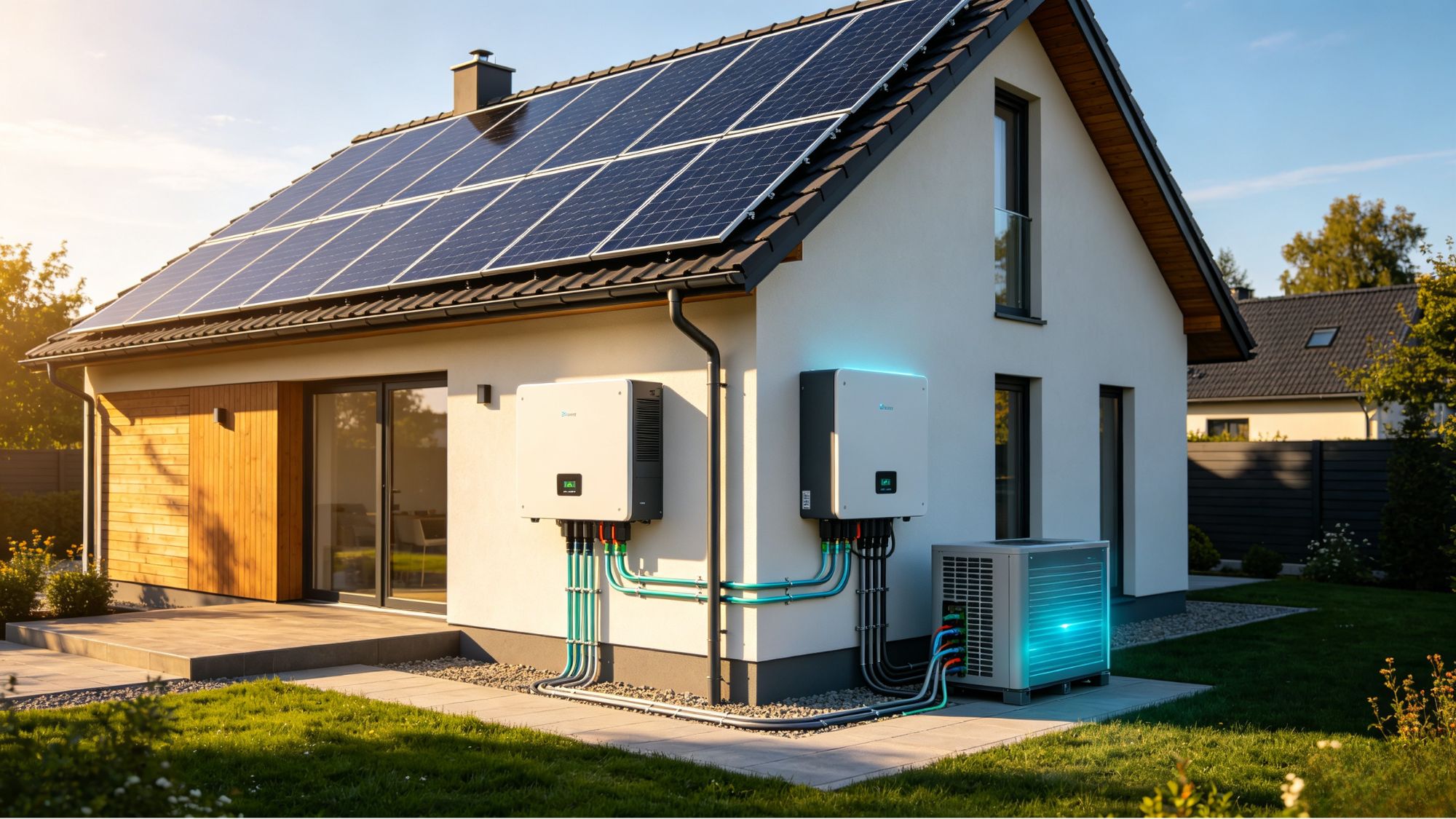
As residential solar adoption continues to grow, generating electricity from sunlight is only part of the energy management challenge. Solar panels produce power during daylight hours, but many households need electricity after sunset, during periods of low sunlight, or when the utility grid is unavailable.
Home energy storage systems solve this timing challenge by storing excess electricity and releasing it when needed. However, a modern battery system is much more than a large power pack. Its performance depends on several engineering factors, including battery chemistry, usable capacity, power output, and the way the storage system connects with solar panels and household electrical circuits.
Understanding these elements helps explain why different home battery systems perform differently in terms of efficiency, lifespan, and daily usability.
At the core of every energy storage system are electrochemical cells that store and release electricity through chemical reactions. Different battery chemistries influence important characteristics such as safety, energy density, charging speed, and expected lifespan.
For residential applications, lithium-ion batteries are widely used because they provide a balance of performance and practicality. Among lithium technologies, lithium iron phosphate (LFP) and nickel manganese cobalt (NMC) are two commonly discussed options.
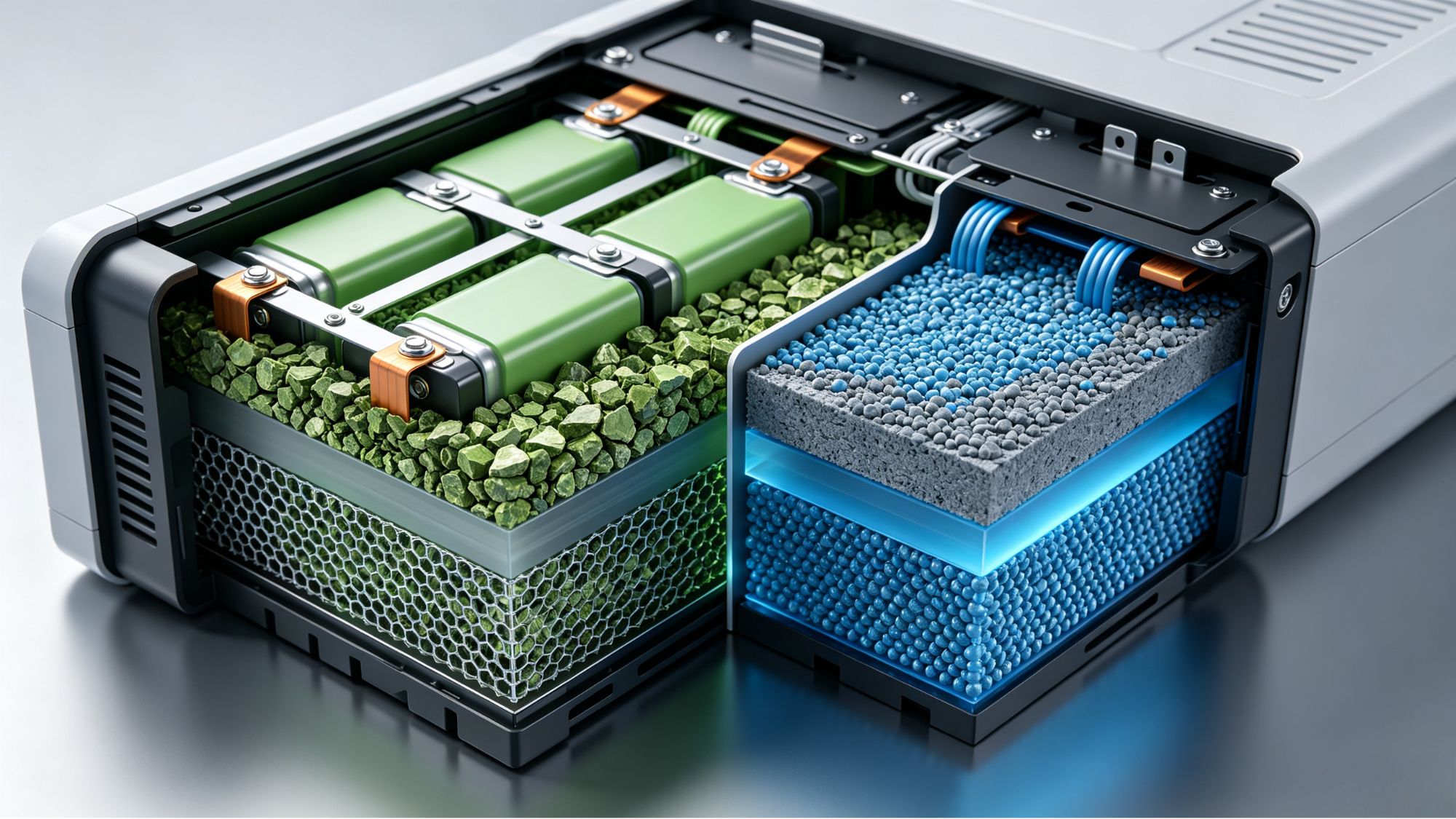
LFP batteries have become one of the most widely used choices for stationary energy storage systems.
One of their main advantages is chemical stability. The phosphate-based structure used in LFP cells provides strong thermal and chemical resistance, making this chemistry suitable for residential environments where safety and reliability are important considerations.
LFP batteries are also known for their long cycle life. Under normal operating conditions, many LFP systems can support several thousand charge and discharge cycles before their storage capacity gradually declines.
This makes them well suited for households that regularly charge and discharge batteries as part of a daily solar energy routine.
NMC batteries offer a different balance of characteristics.
Their main advantage is higher energy density, meaning they can store more energy within a smaller physical space. This can be useful when installation space is limited or when a household needs significant storage capacity in a compact design.
However, NMC systems generally require careful thermal management because their chemistry has different heat characteristics compared with LFP batteries. They may also experience faster capacity degradation under certain high-stress operating conditions.
Choosing between LFP and NMC depends on priorities such as available installation space, expected usage patterns, and long-term reliability goals.
Battery specifications often include capacity ratings measured in kilowatt-hours (kWh), but the actual amount of electricity available to a household depends on how the battery is managed.
Depth of discharge (DoD) refers to how much of a battery’s stored energy can be used before recharging.
A battery rated at a certain capacity does not always provide that entire amount for daily use. Manufacturers may reserve a portion of the battery capacity to protect internal cells and extend operating life.
Modern lithium-based residential batteries often allow a high percentage of their stored energy to be used, while still maintaining protective limits through battery management systems.
These controls help balance two competing goals:
Providing more usable electricity
Maintaining long-term battery health
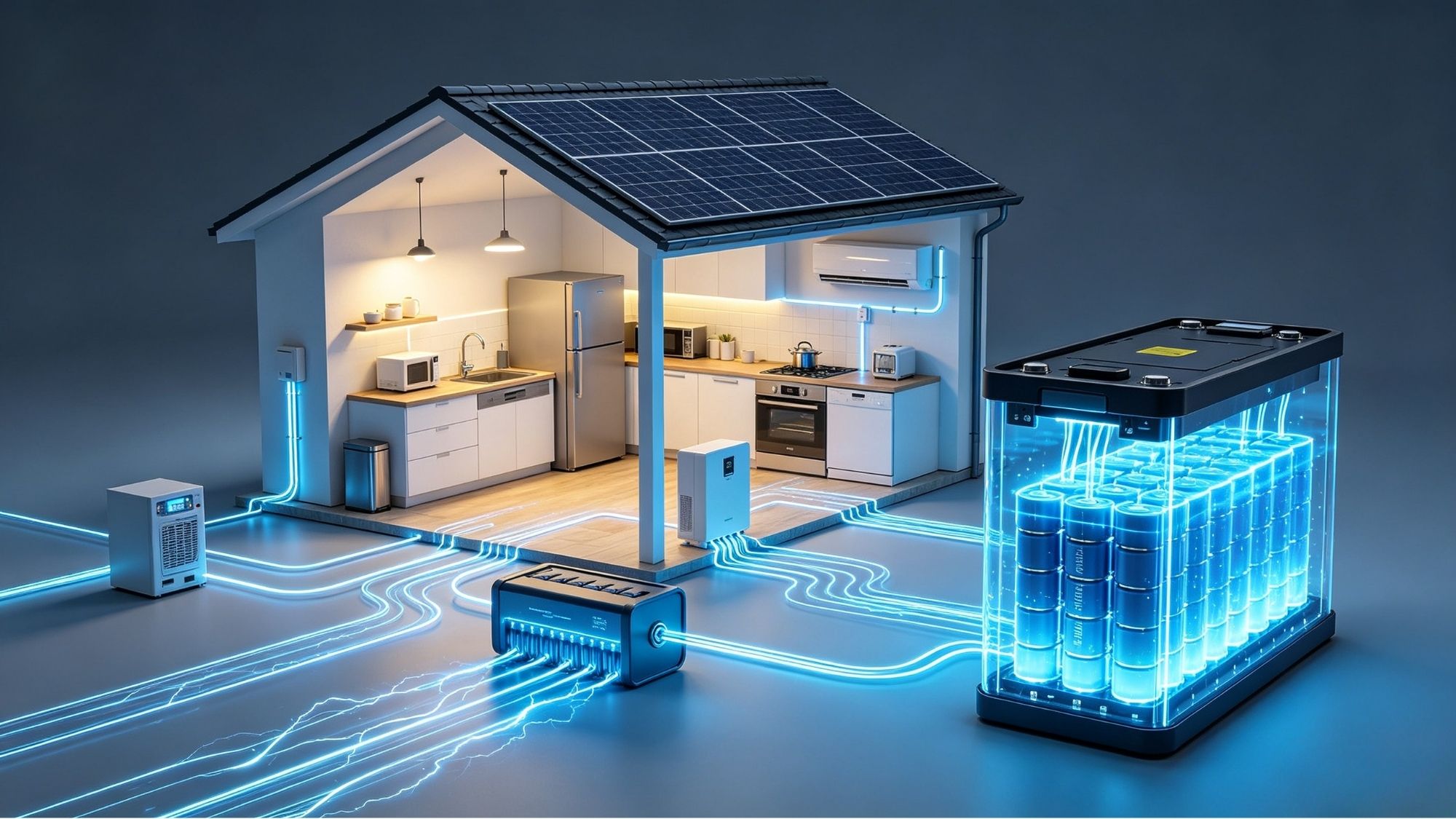
A common misunderstanding in home energy storage is confusing energy capacity with power output.
Energy capacity (kWh) describes how much electricity a battery can store.
Power rating (kW) describes how much electricity the battery can deliver at one moment.
For example, a battery may contain enough stored energy to operate household appliances for many hours, but if its power output is limited, it may not be able to run multiple high-demand devices simultaneously.
This difference is especially important for households that want battery backup during outages, where appliances such as air conditioners, pumps, or electric vehicle chargers may require higher power output.
Beyond the battery itself, the way storage connects with solar panels and the electrical system also affects performance.
This connection method is known as the system architecture or coupling design.
The two primary approaches are AC coupling and DC coupling.
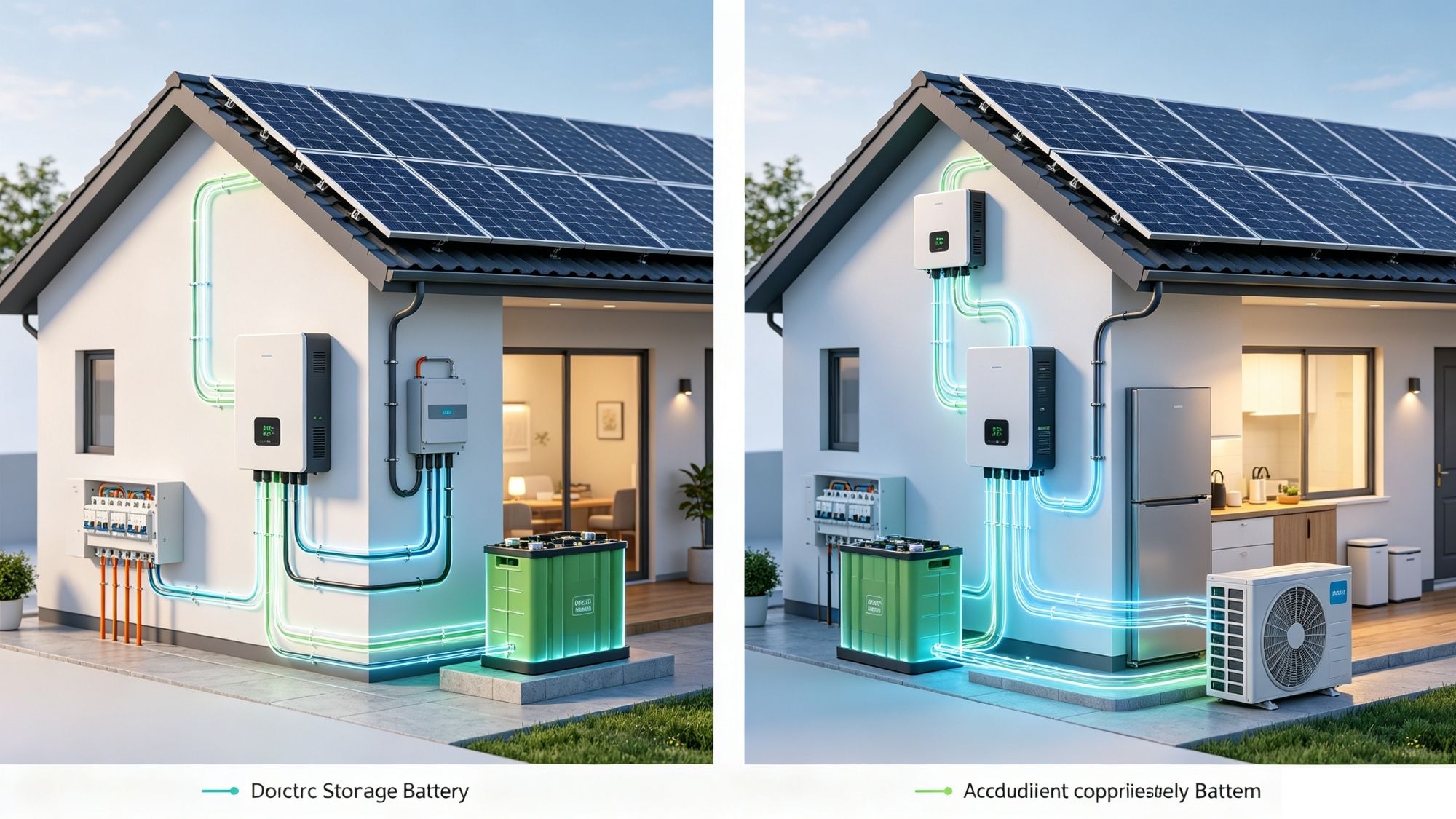
In a DC-coupled system, solar panels and the battery connect through a shared direct current pathway before electricity reaches the inverter.
Because solar panels already produce DC electricity, this design can reduce the number of energy conversions required before electricity is stored.
Fewer conversion steps can improve overall system efficiency because less energy is lost during repeated transitions between DC and AC power.
DC-coupled systems are often attractive for new solar installations where the battery and solar equipment are designed together from the beginning.
AC-coupled systems use separate equipment for solar generation and battery storage.
The solar inverter converts electricity from solar panels into AC power for household use, while the battery system uses its own inverter to manage charging and discharging.
The main advantage of AC coupling is flexibility. It is often useful for homeowners who already have an existing solar installation and want to add battery storage without replacing the original solar inverter.
The trade-off is that electricity may pass through additional conversion stages, which can introduce some efficiency losses compared with a fully integrated DC-coupled design.
There is no single battery architecture that works perfectly for every home. The most suitable system depends on several factors:
Existing solar equipment
Available installation space
Household electricity consumption patterns
Backup power requirements
Long-term maintenance expectations
A household focused on daily solar energy storage may prioritize efficiency and battery lifespan. A home seeking backup power during outages may place greater importance on power output and system flexibility.
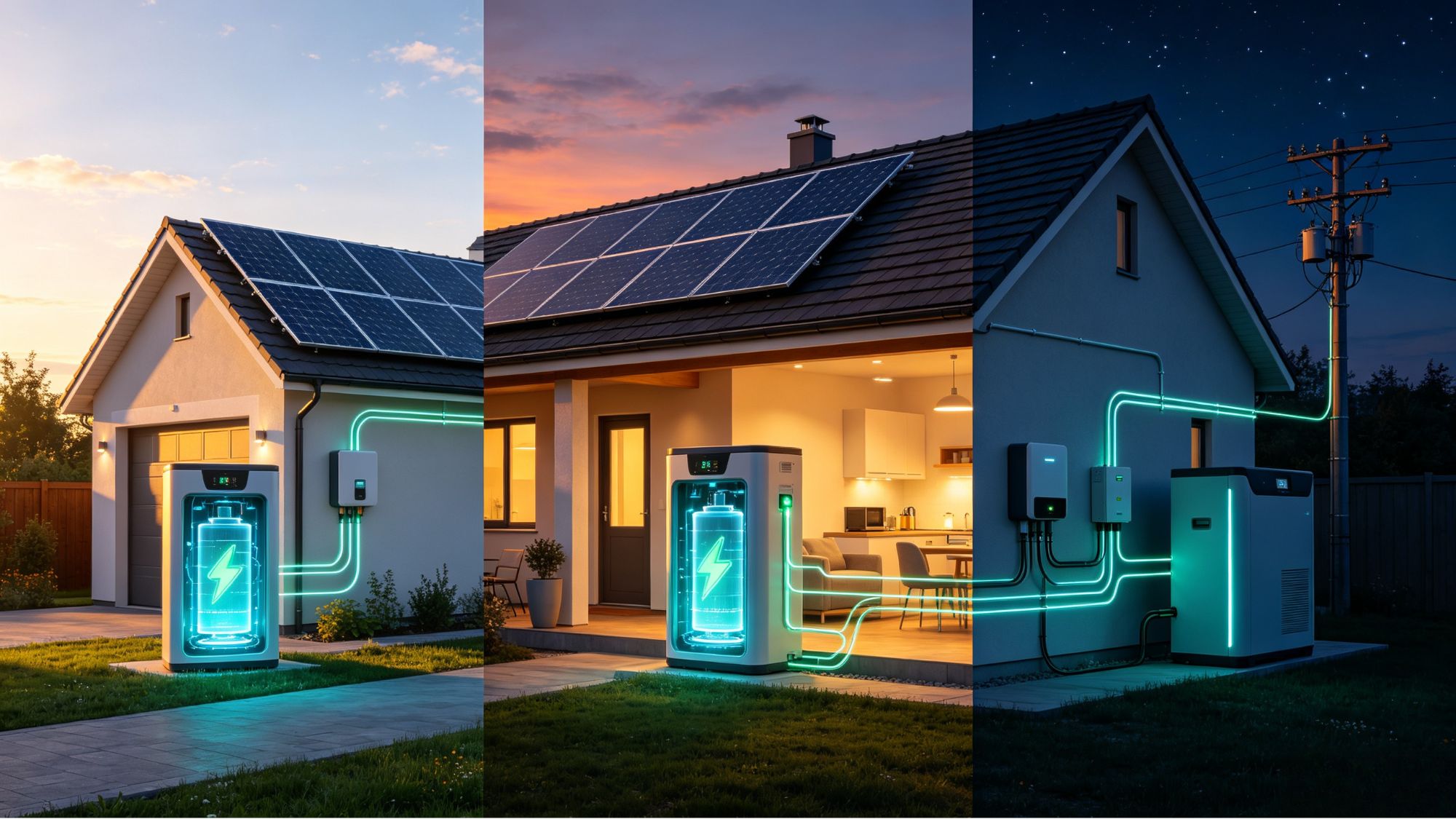
Modern home energy storage systems combine battery chemistry, capacity management, and electrical architecture to transform intermittent renewable energy into a more reliable power source.
Battery chemistry determines important characteristics such as safety, durability, and energy density. Capacity and power ratings determine how much electricity can be stored and how quickly it can be delivered. Coupling architecture influences how efficiently the battery works with solar panels and household electrical systems.
By understanding these engineering principles, homeowners can better evaluate how energy storage systems are designed and why different solutions are suited to different residential needs.
