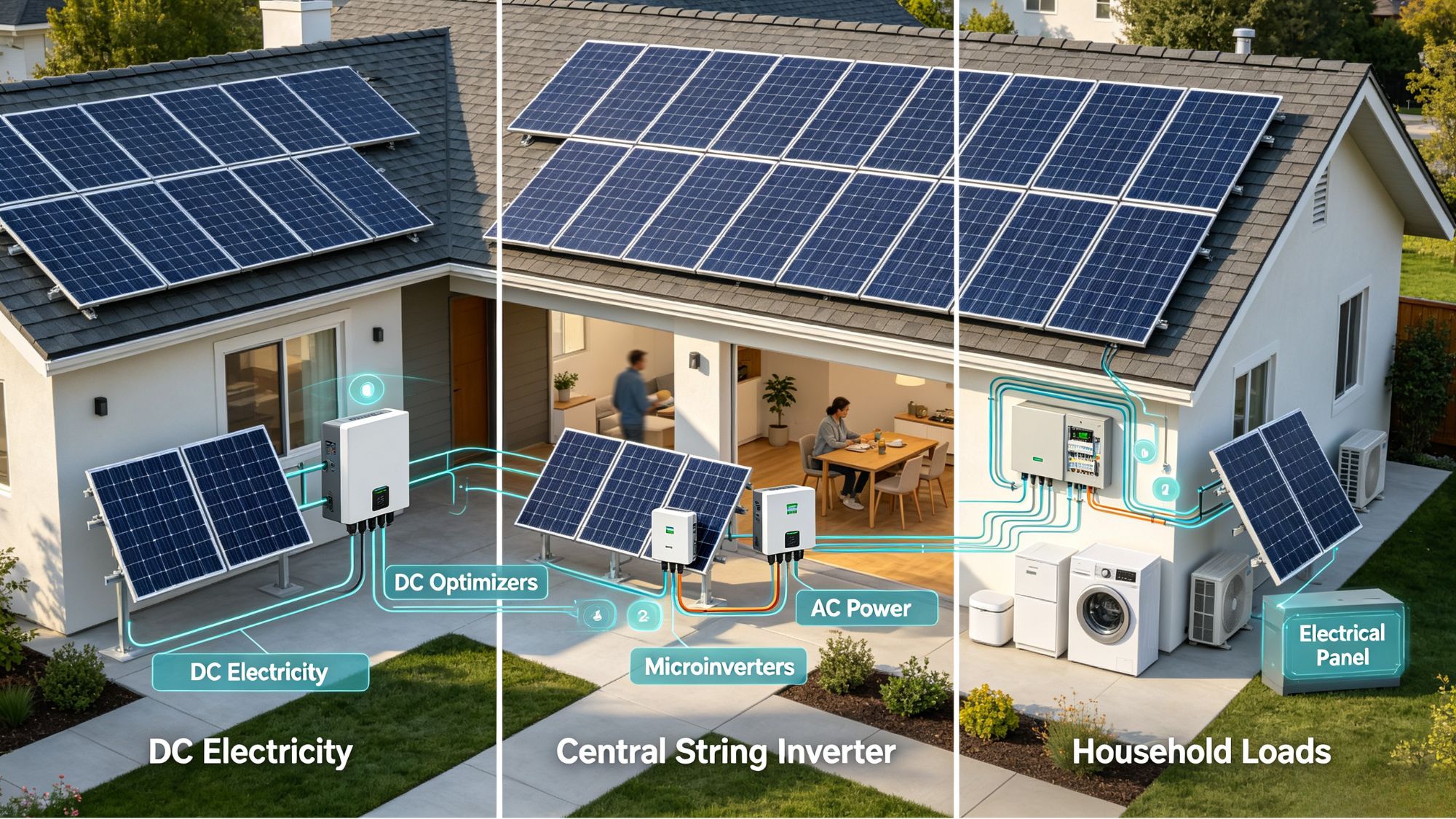
A solar panel does not produce electricity in the same form used by most household appliances. Photovoltaic cells generate direct current (DC), while homes and electrical grids typically rely on alternating current (AC). Converting this raw solar output into stable, usable electricity requires specialized power electronics that manage voltage, current, and energy flow.
The technology used for this conversion plays an important role in how a solar system performs. Different architectures affect how panels respond to shade, how system performance is monitored, and how easily future maintenance can be performed.
Modern residential solar systems generally rely on three major approaches: string inverters, microinverters, and DC optimizers. Each design solves the challenge of converting solar energy in a different way.
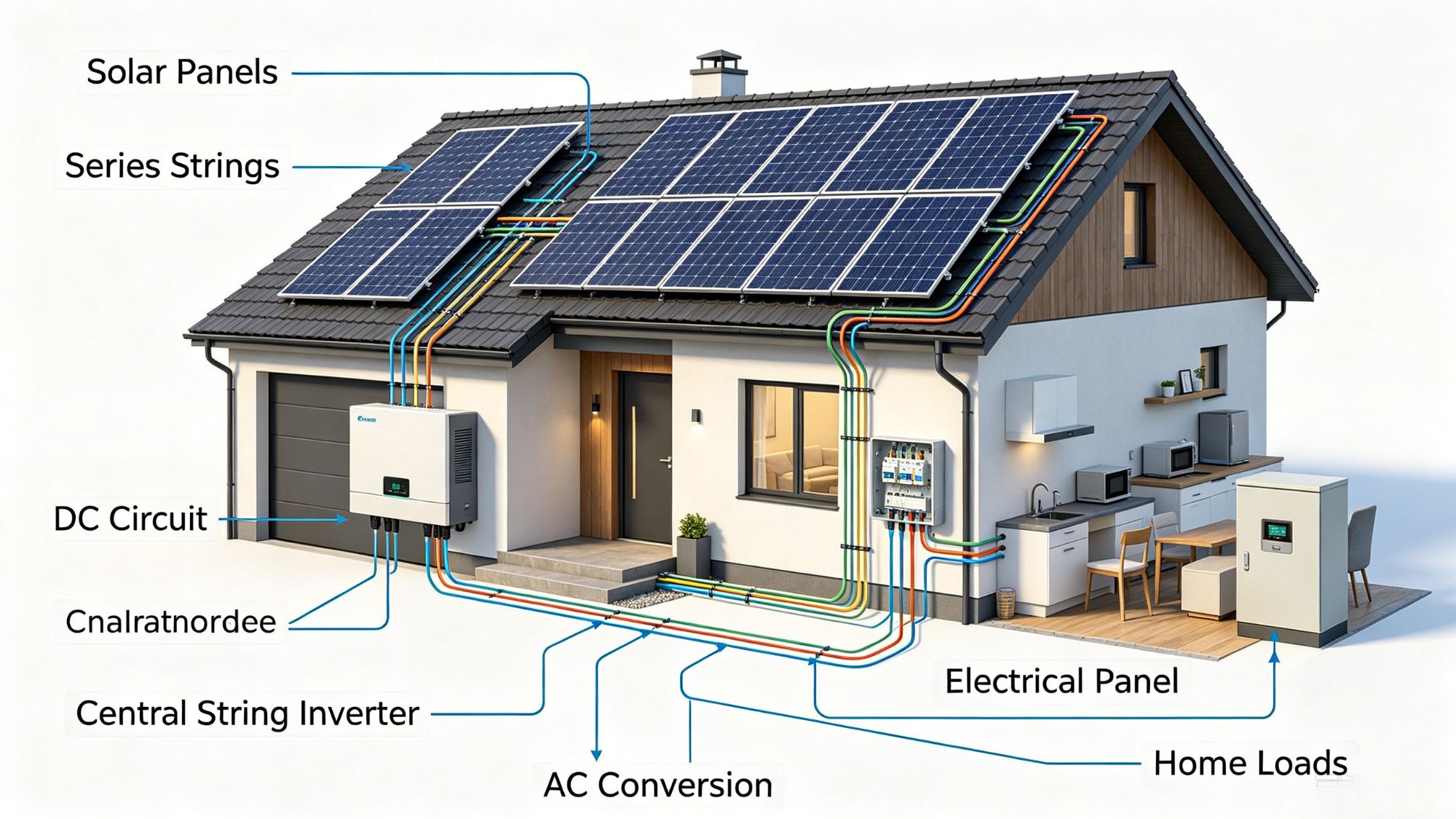
For many years, string inverters have been the most common method for residential solar installations. In this design, multiple solar panels are connected together in a series circuit, creating a group known as a solar string.
When panels are connected in series, their voltage output is combined while the current remains consistent across the circuit. The combined DC electricity travels through cables to a central inverter, which converts the power into AC electricity suitable for household use.
This centralized design has several advantages. Because a single inverter handles the conversion process, the system generally requires fewer electronic components and can be simpler to install and maintain. For homes with a large, unobstructed roof area and consistent sunlight exposure, string inverters can provide an efficient solution.
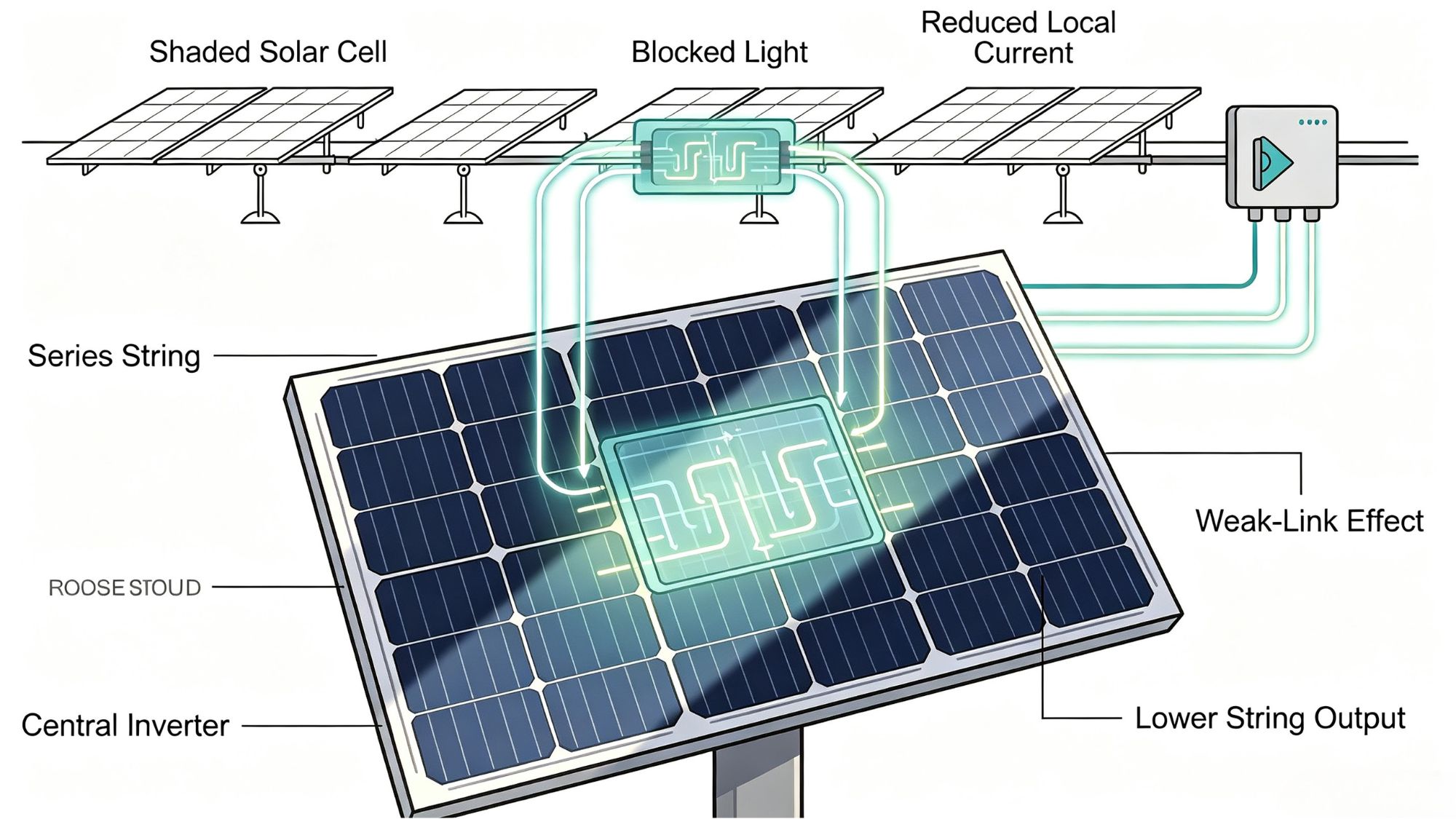
However, the series connection also creates a limitation. The performance of the entire string can be affected when one panel experiences reduced output.
In a series-connected system, all panels within the same string must operate together. If one panel is partially shaded by a tree branch, covered with debris, or experiencing a performance issue, it can restrict the electrical output of the connected panels.
This effect is similar to a weak link in a chain. The other panels may still receive full sunlight, but the overall string output can be reduced because the current passing through the system is limited by the weakest-performing component.
For simple roof designs with minimal shading, this limitation may not be significant. However, homes with complex roof layouts or changing sunlight conditions may require a more flexible approach.
Microinverters were developed to address the limitations of centralized string processing by moving the conversion process directly to each individual solar panel.
Instead of sending DC electricity from multiple panels to one central inverter, each panel receives its own small inverter. The DC electricity generated by that panel is immediately converted into AC power before being combined with the output from other panels.
This panel-level approach allows each solar module to operate independently.
One of the biggest advantages of microinverters is improved performance in situations where panels receive different amounts of sunlight.
For example, if a chimney creates a shadow over one panel during part of the day, only that panel's output is affected. Neighboring panels continue operating normally because they are no longer dependent on the performance of a shared electrical string.
Microinverter systems also provide detailed monitoring capabilities. Because each panel has its own conversion equipment, homeowners and technicians can track the performance of individual modules and identify potential problems more easily.
The trade-off is that microinverters require more electronic components throughout the solar array, which can increase installation complexity and equipment costs.
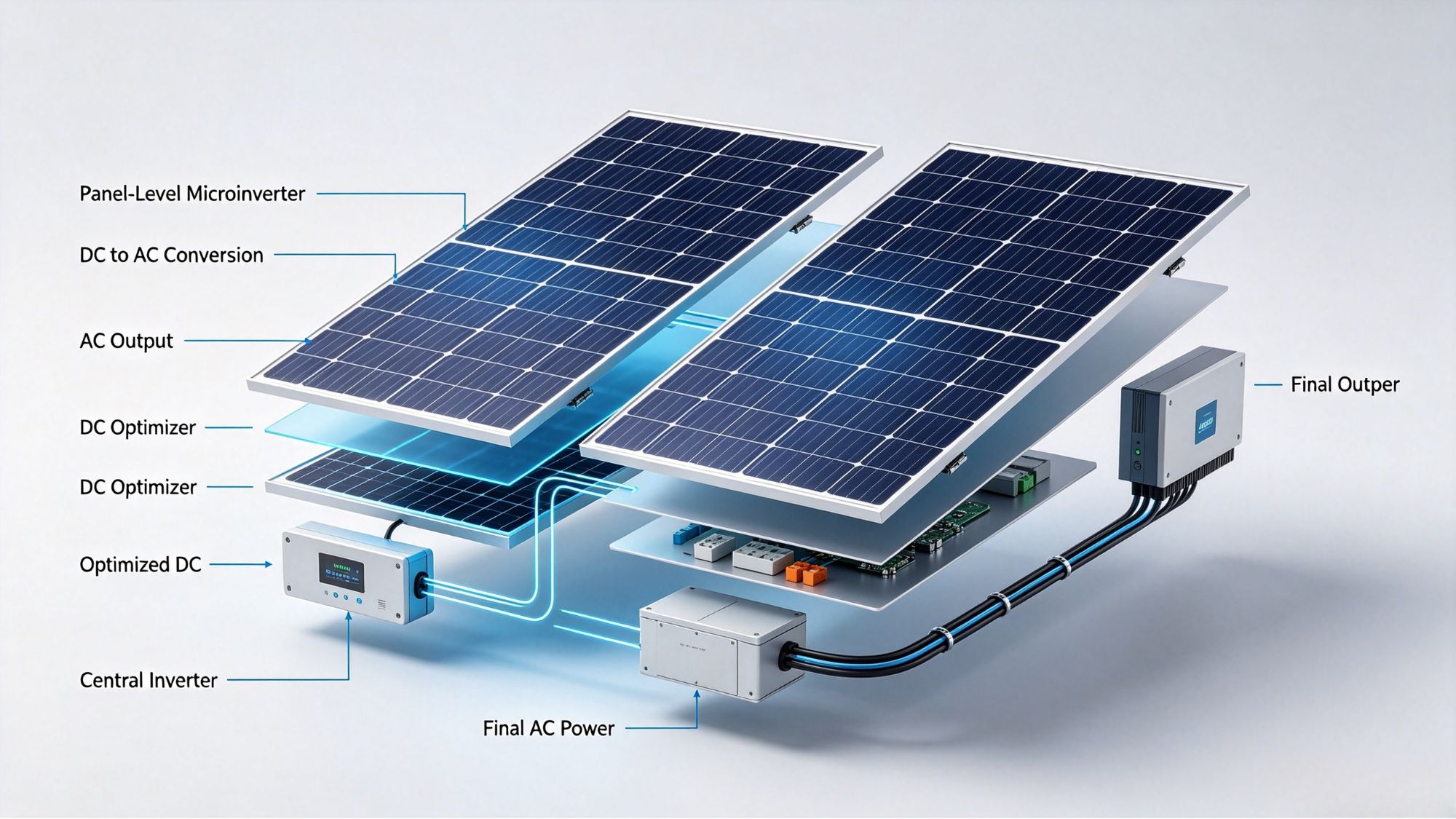
DC optimizers offer a middle approach between traditional string inverters and microinverter systems.
Like microinverters, DC optimizers are installed at the individual panel level. However, they do not convert DC electricity into AC power. Instead, they adjust and regulate the DC output from each solar module before sending the optimized power to a central inverter.
This allows the system to manage differences between panels while keeping the main conversion process centralized.
When one panel experiences shading or reduced output, the optimizer can adjust electrical conditions to reduce the impact on the rest of the system.
The central inverter then converts the combined DC electricity into AC power for household use.
This design provides many of the performance benefits of module-level control while maintaining a single main conversion unit that is easier to access for maintenance.
The best system design depends on the characteristics of the property, the expected operating conditions, and long-term maintenance considerations.
Homes with simple roof structures and consistent sunlight exposure may work well with traditional string inverter systems.
Properties affected by:
Partial shading
Multiple roof angles
Different panel orientations
may benefit from microinverters or DC optimizers because they allow individual panels to operate more independently.
String inverter systems concentrate electronic components in one location, making replacement or inspection relatively straightforward.
Microinverters and DC optimizers provide more detailed performance information because they monitor individual panels, but repairs may require accessing equipment installed across the solar array.
For homeowners planning future solar expansion, module-level technologies can provide additional flexibility because new panels can often operate more independently from existing ones.
However, every installation requires balancing equipment costs, roof conditions, energy goals, and maintenance expectations.
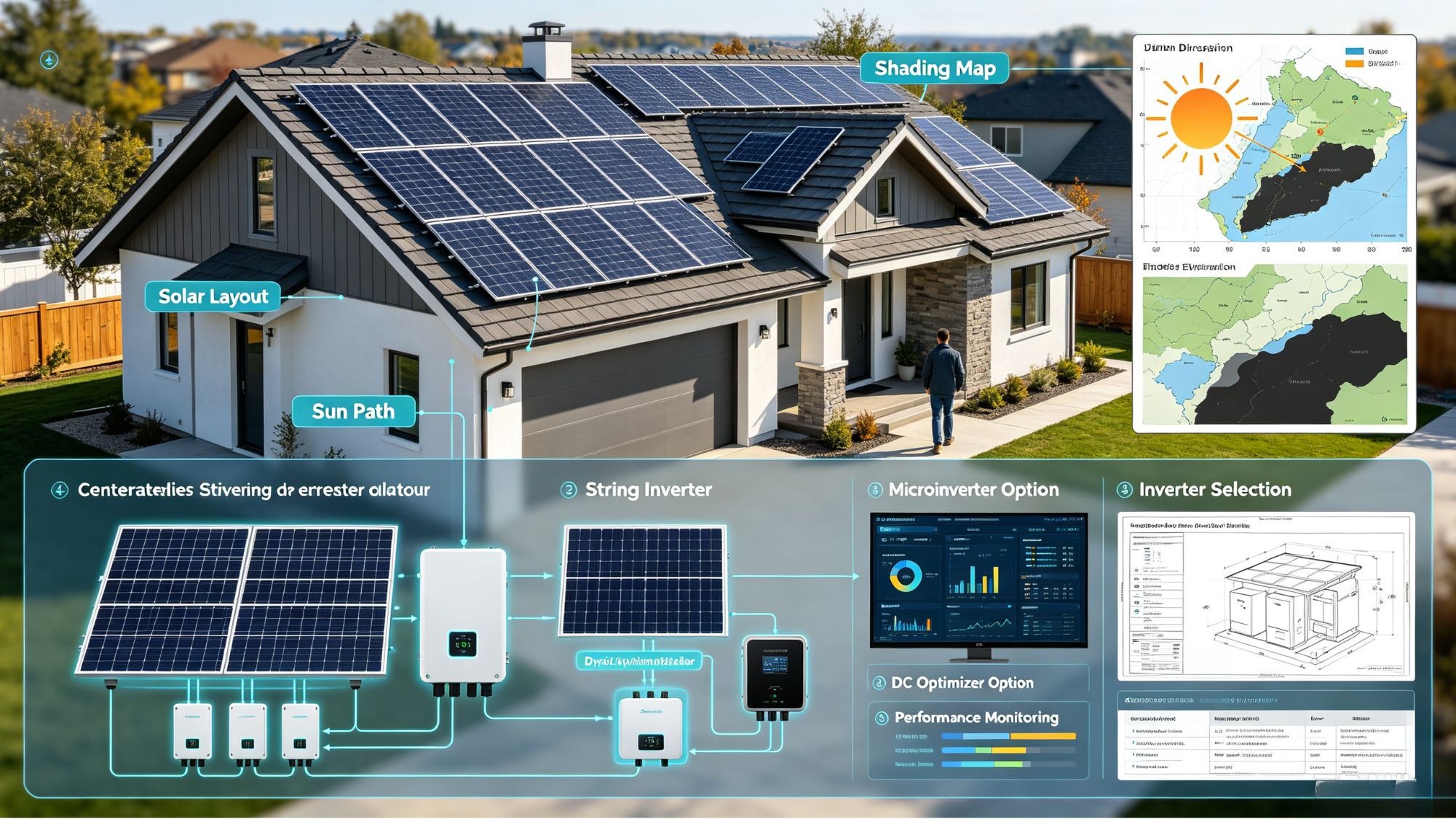
Solar power systems rely on more than photovoltaic panels to deliver usable electricity. The conversion technology behind the array determines how effectively solar energy is managed from generation to household consumption.
String inverters provide a simple and established centralized solution. Microinverters improve flexibility by converting power at each individual panel, while DC optimizers combine module-level control with centralized conversion.
Understanding these different architectures helps explain why modern solar systems are designed in multiple ways. The right approach depends not only on the amount of sunlight available, but also on the physical characteristics of the property and the long-term goals of the energy system.
