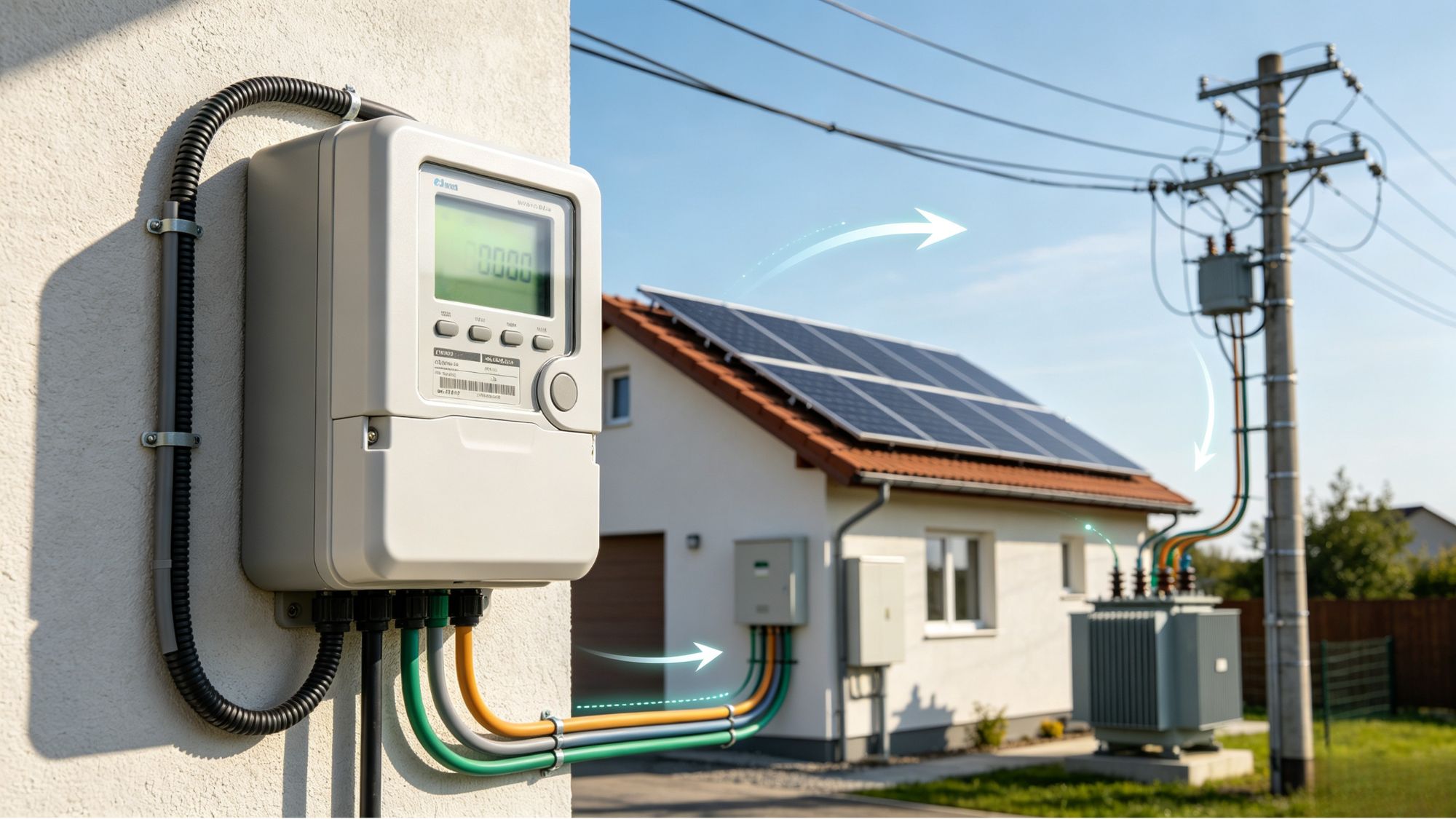
A home with rooftop solar no longer behaves like a simple electricity consumer. During sunny periods, a residential solar system may generate more electricity than the household immediately needs and send the surplus back into the utility network. Later, when solar production decreases, the same home may return to drawing electricity from the grid.
This two-way relationship creates a measurement challenge. Traditional electrical systems were designed around one-directional energy delivery: power moved from centralized generators through transmission networks and finally into homes. Modern residential generation systems require a different approach—one that can accurately track both electricity imported from the grid and electricity exported back to it.
Smart meters and energy monitoring equipment make this possible by measuring the changing flow of electricity between homes and the wider electrical network.
For much of the history of residential electricity, utility meters only needed to answer one basic question: how much electricity did a household consume?
Traditional electromechanical meters used rotating aluminum discs controlled by electromagnetic fields. The speed of the disc corresponded to the amount of alternating current flowing into the home. The more electricity a household used, the faster the disc rotated.
However, rooftop solar and other residential generation technologies changed this relationship.
A home can now move between two operating conditions:
Energy consumption: When household demand is higher than local generation, electricity flows from the utility grid into the home.
Energy export: When solar production exceeds household demand, excess electricity flows from the home back toward the utility network.
For example, a solar system producing 5 kilowatts while a home consumes 3 kilowatts creates a 2-kilowatt surplus that can flow outward to the grid.
Older mechanical meters were not designed for this type of interaction. Some could physically rotate backward when electricity moved in the opposite direction, creating measurement challenges as residential generation became more common.
Modern digital meters replaced mechanical systems with electronic sensors and processing systems designed specifically to monitor energy moving in both directions.
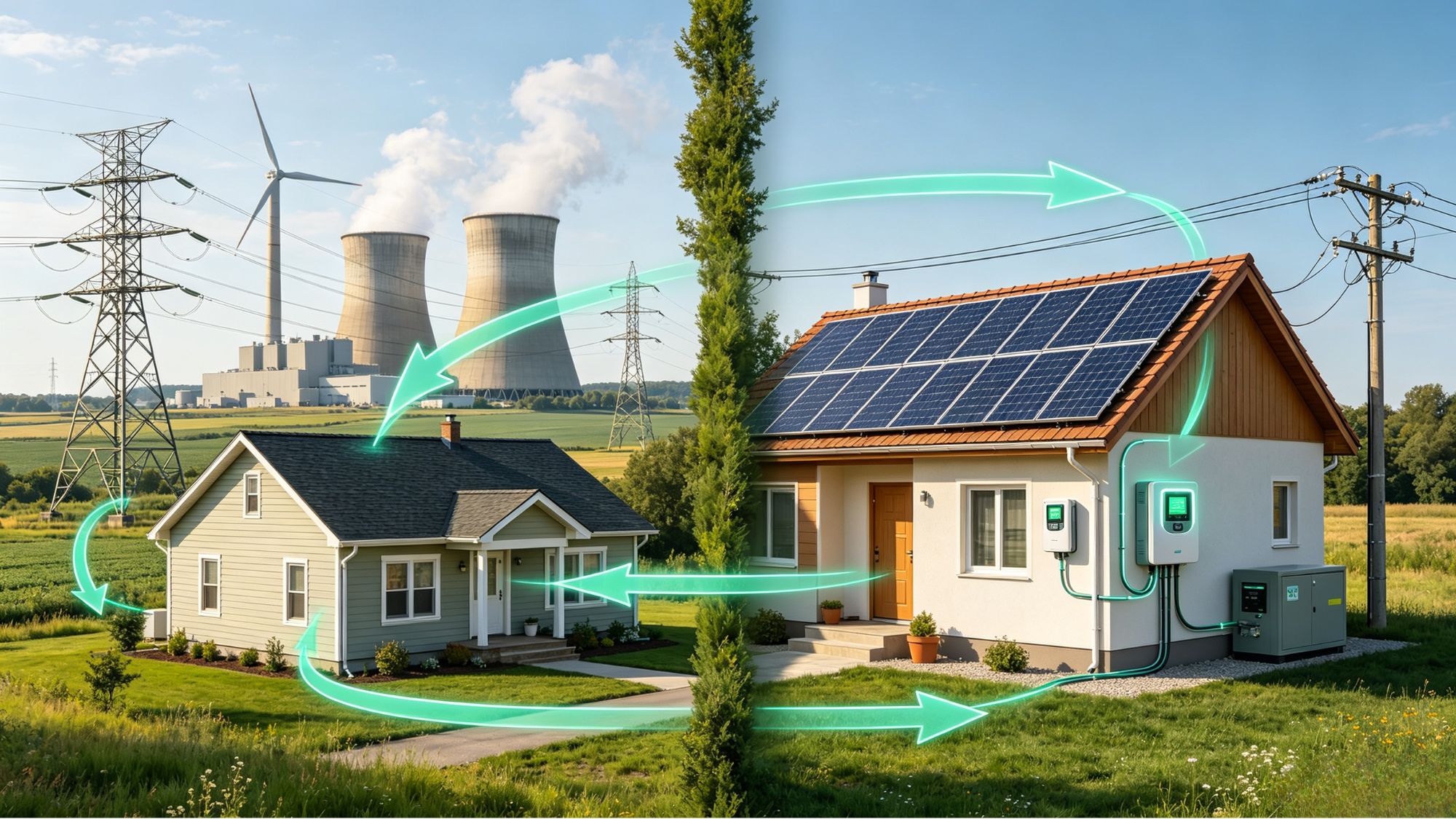
Modern smart meters use solid-state electronics, current sensors, voltage measurements, and internal processing systems to calculate electricity flow.
Unlike traditional meters that simply recorded total consumption, smart meters can distinguish between electricity entering and leaving a property.
A bidirectional smart meter typically maintains separate measurements for two types of energy movement:
Imported electricity:
This records electricity supplied from the utility grid to the home when household demand exceeds local generation.
Exported electricity:
This records electricity sent from the home back into the grid when solar or other generation exceeds immediate consumption.
At the end of a billing period, utilities use these measurements according to local regulations and rate structures. In areas that support net metering programs, exported electricity may offset imported electricity. Other regions may use different compensation models based on factors such as export timing and electricity market conditions.
This distinction allows utilities to accurately calculate the relationship between household generation and grid consumption.
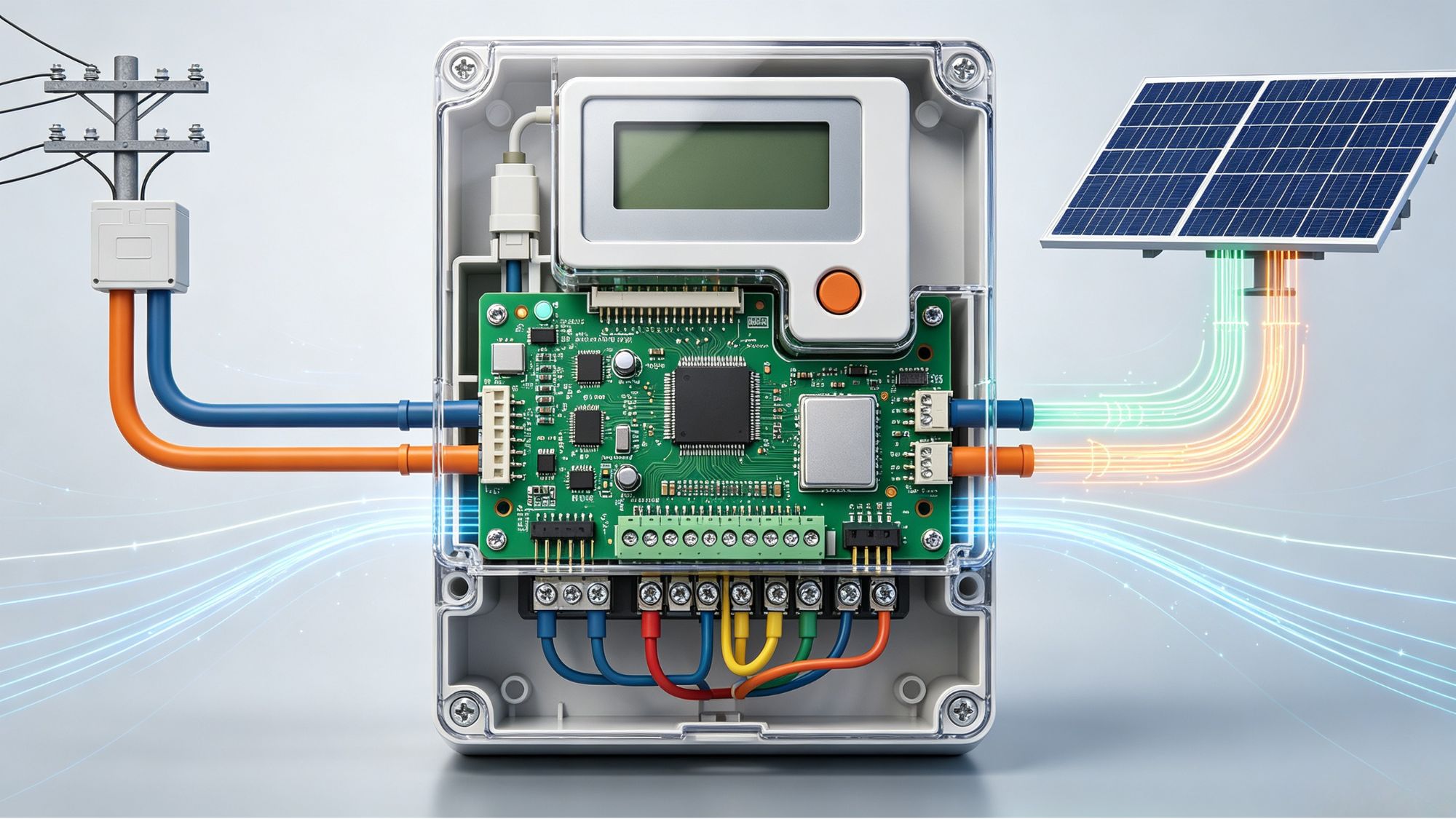
While utility smart meters measure energy exchange at the connection point between a home and the grid, homeowners and energy management systems often need more detailed information about what happens inside the property.
This is where current transformers (CTs) become useful.
A current transformer is a sensor that measures electrical current by detecting the magnetic field created around a conductor. Unlike traditional measurement devices that require direct electrical connections, many CT sensors can be installed around existing wires to monitor current flow.
By placing CT sensors at important points in a residential electrical system, an energy monitoring platform can estimate:
How much electricity solar panels are producing
How much power the home is consuming
Whether electricity is being exported to or imported from the grid
This real-time information helps households understand their energy patterns and make better use of locally generated electricity.
For example, homeowners may schedule energy-intensive activities—such as charging electric vehicles or operating large appliances—during periods of high solar production to increase direct solar consumption.
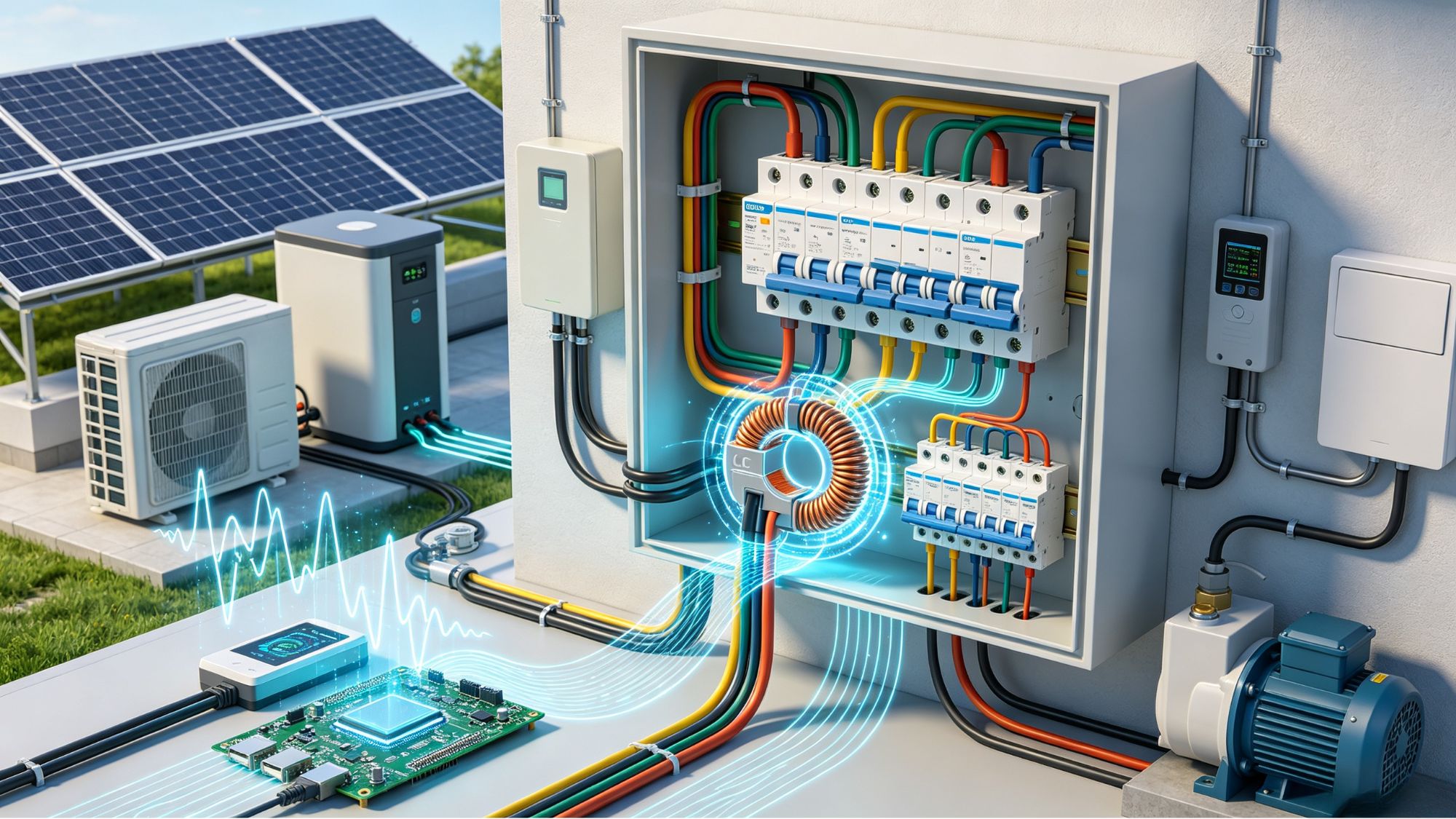
Modern electricity measurement is not limited to total kilowatt-hour counts. Many smart meters also record interval data, allowing utilities and energy systems to analyze electricity usage over specific time periods.
Depending on the utility system, measurements may be collected in intervals such as every 15 minutes or hourly.
This information helps identify:
Household demand patterns
Solar production trends
Peak electricity usage periods
Changes in grid demand caused by distributed energy resources
Timing has become increasingly important because electricity value is no longer always constant throughout the day. In some regions, exported electricity may be compensated differently depending on when it is delivered to the grid.
Accurate time-based measurement allows utilities to manage these changing energy flows more effectively.
Measuring bidirectional electricity flow is not only a technical challenge; it is also connected to local energy policies.
Different regions use different approaches to compensate homeowners who export electricity.
Under traditional net metering arrangements, exported electricity may offset electricity purchased from the grid at a rate linked to retail electricity prices.
For example, a household that exports electricity during the day and consumes electricity at night may receive credits that reduce its overall electricity bill, depending on local rules.
Some regions have moved toward alternative approaches where exported electricity is compensated based on factors such as wholesale energy prices, grid conditions, or the time electricity is delivered.
In these systems, accurately recording when electricity is exported becomes increasingly important because the value of exported energy may change throughout the day.
Smart meters provide the measurement foundation required for these more complex pricing structures.
As more homes adopt solar panels, batteries, electric vehicles, and other distributed energy technologies, residential properties are becoming more active participants in the electricity network.
Future energy systems will rely increasingly on accurate measurement, automated controls, and real-time communication between homes and utilities.
Smart meters are no longer just devices that record electricity consumption. They have become important components of a more flexible energy system where households can both use and provide electricity.
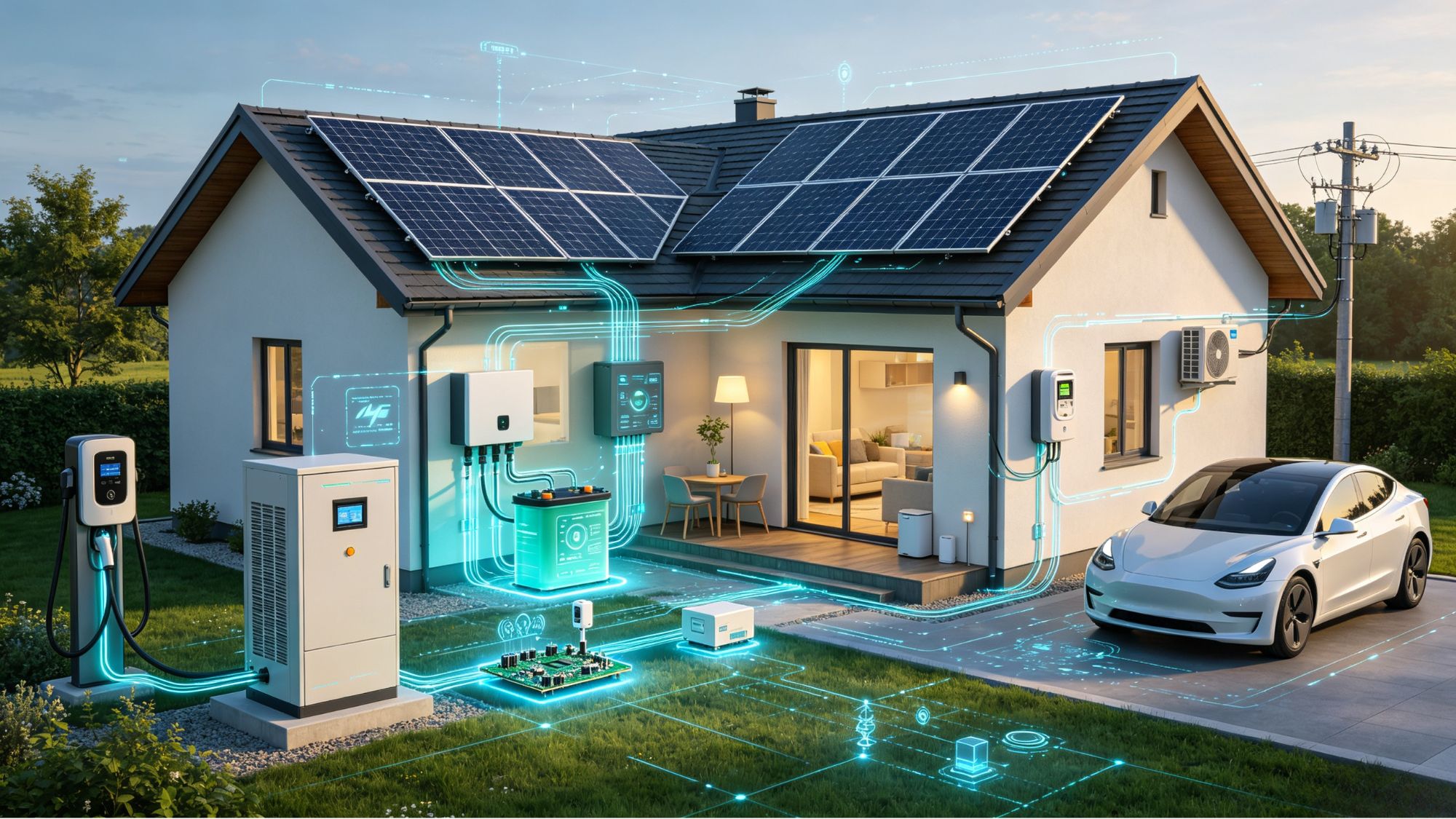
The growth of residential energy generation has transformed the relationship between homes and the electrical grid. Instead of measuring only electricity consumption, modern systems must track energy moving in both directions.
Smart meters, current transformers, and digital monitoring technologies provide the measurement infrastructure needed to manage this new energy model. By accurately recording electricity imports and exports, these technologies support fair billing, improve grid management, and help households better understand how their energy systems operate.
