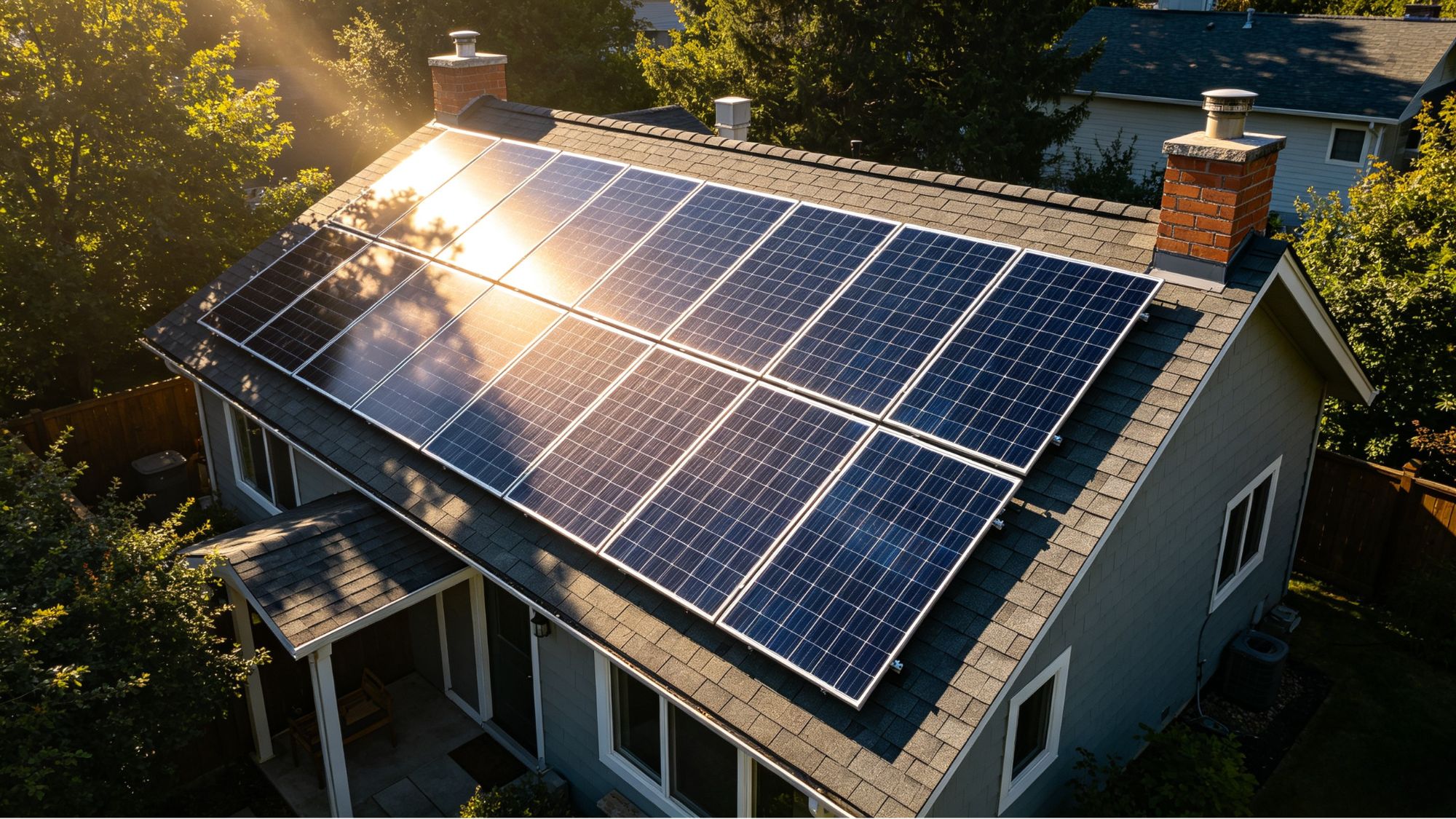
A residential solar installation is influenced by far more than the number of panels placed on a roof. Two homes with identical photovoltaic modules can produce noticeably different amounts of electricity throughout the year because solar performance depends on how effectively each system captures available sunlight.
The energy output of a photovoltaic array is shaped by several environmental and design factors, including solar irradiance, panel orientation, tilt angle, and shading conditions. These elements determine how much sunlight reaches the solar cells and how efficiently that available energy can be converted into electricity.
Understanding these factors helps explain why proper system design is essential for achieving reliable solar performance.
Solar irradiance refers to the amount of solar power reaching a surface from the sun. It is commonly measured in watts per square meter and represents the available energy source that photovoltaic panels convert into electricity.
However, sunlight conditions are not constant. The amount of solar energy reaching a roof changes depending on:
Geographic location
Time of day
Season
Weather conditions
Atmospheric conditions
A location with strong sunlight throughout the year naturally provides more solar potential than an area with frequent cloud cover. However, even in the same region, differences in roof design and panel placement can significantly affect the final energy output.
Solar radiation reaching a photovoltaic panel comes from different sources.
Direct sunlight travels straight from the sun to the panel surface, while diffuse sunlight is scattered by clouds, dust, and atmospheric particles before reaching the array.
Solar designers consider both types of radiation when estimating expected energy production. A system that receives strong direct sunlight generally produces more electricity, but diffuse light can still contribute to overall generation, especially in areas with variable weather.
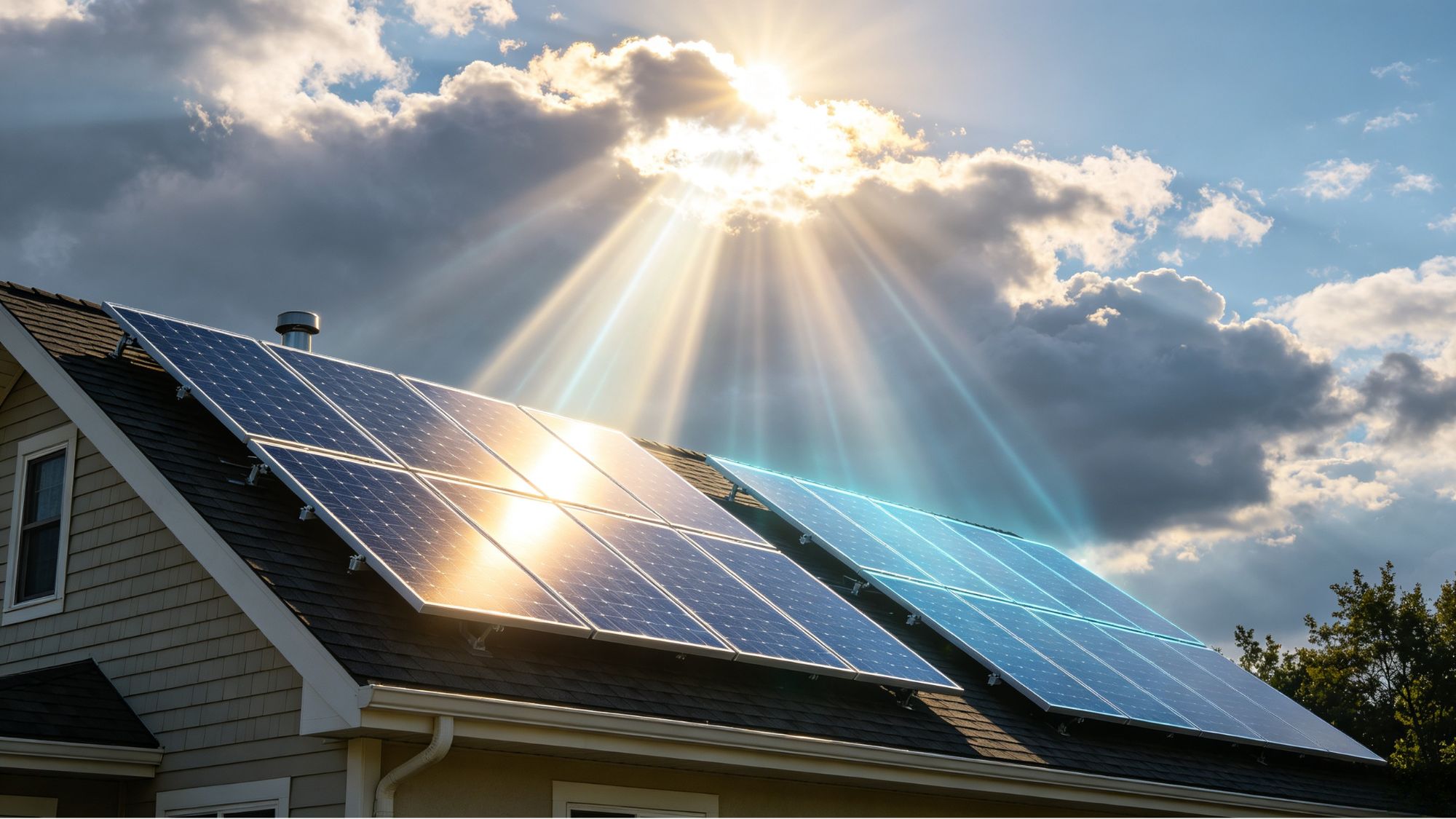
The direction a solar array faces plays an important role in determining how much sunlight reaches the panels.
In the Northern Hemisphere, the sun generally moves across the southern portion of the sky, which is why south-facing solar panels often achieve strong annual energy production.
However, the ideal direction depends on the location, roof structure, and energy usage patterns of the household.
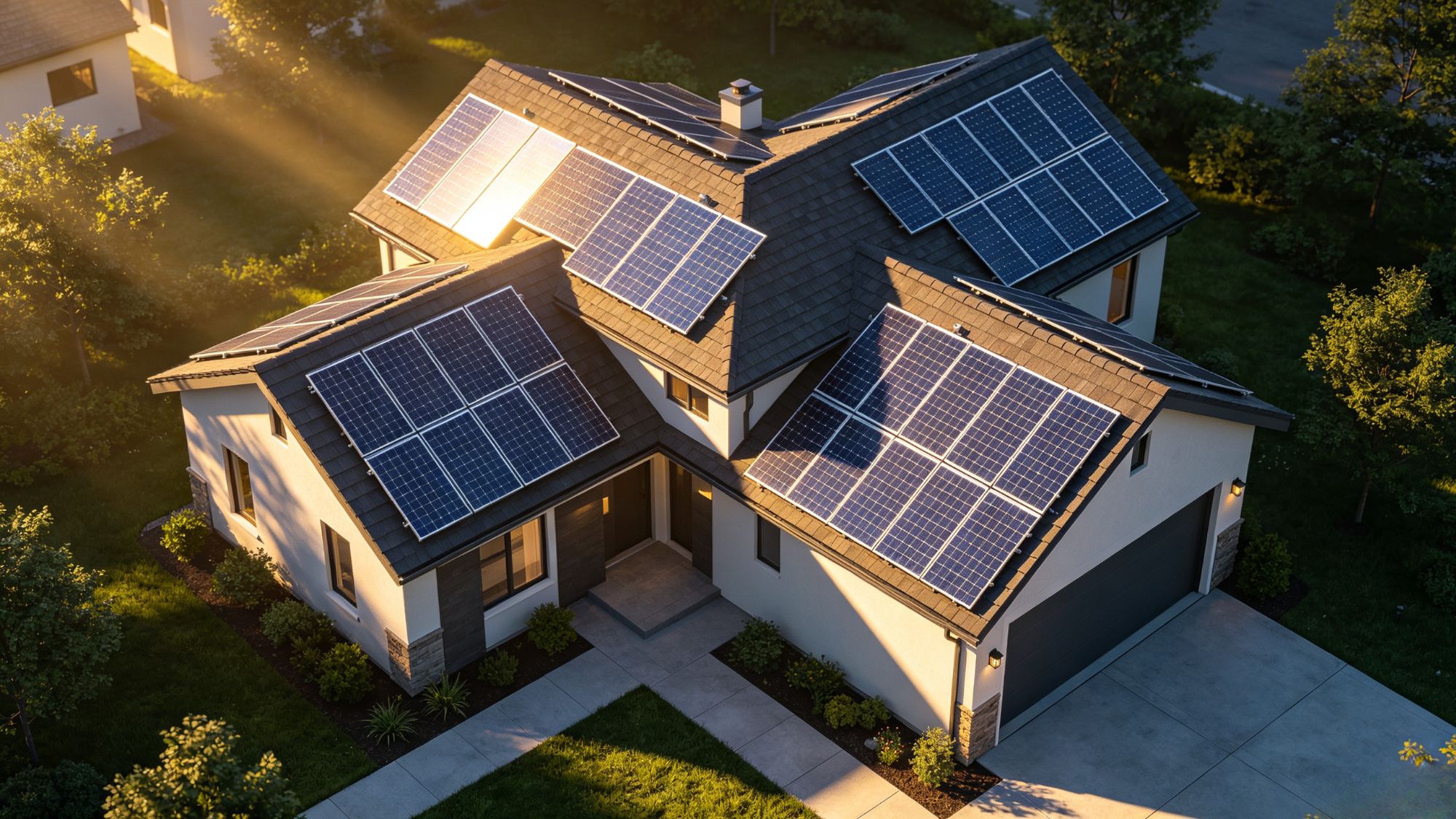
Not every home has a south-facing roof, and many residential properties use east- or west-facing surfaces.
East-facing panels receive more sunlight during the morning, while west-facing panels generate more electricity later in the afternoon. Although these orientations may produce less annual energy than an optimally positioned south-facing system in some locations, they can better match household electricity demand patterns.
For example, west-facing panels may produce more energy during late afternoon hours when residential electricity consumption often increases.
Solar installations must work with existing buildings rather than ideal laboratory conditions.
Factors such as:
Roof shape
Available installation area
Nearby structures
Local building design
all influence the final panel arrangement.
A slightly less optimal orientation may still provide strong performance if it allows better use of available roof space.
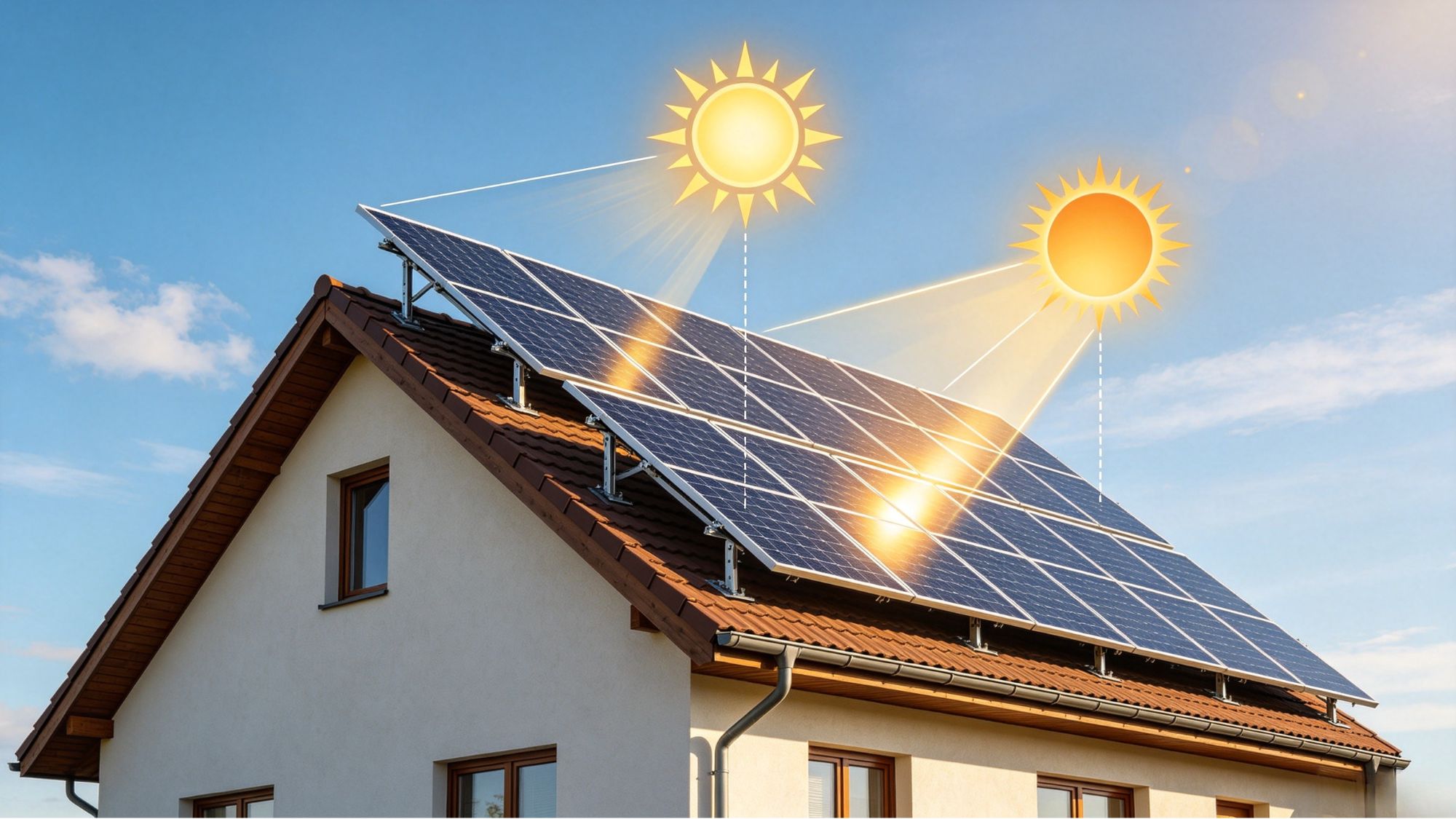
The tilt angle describes how steeply solar panels are installed compared with a flat horizontal surface.
Because the sun’s position changes throughout the year, the angle at which sunlight reaches a panel also changes. A properly selected tilt angle helps the solar cells capture more available sunlight over different seasons.
A common design principle is to choose a panel tilt that is related to the installation site’s latitude.
This approach creates a balance between summer and winter sunlight conditions. In some regions, installers may adjust the angle slightly depending on whether the goal is to maximize summer production, improve winter output, or better match local electricity demand patterns.
For most residential systems, a fixed tilt angle provides a practical balance between energy production, installation cost, and maintenance requirements.
Even when a solar array has good sunlight exposure and an appropriate orientation, shading can significantly reduce electricity production.
Shadows from trees, buildings, chimneys, or nearby structures block sunlight from reaching photovoltaic cells. Because solar panels rely on incoming light to generate electricity, even partial shading can reduce the amount of energy produced.
Solar designers typically evaluate two major types of shading.
Permanent shading comes from fixed obstacles such as:
Nearby buildings
Utility structures
Large trees
These shadows can change throughout the year as the sun’s position shifts, so professional solar assessments often analyze seasonal shadow patterns.
Temporary shading results from conditions such as:
Dust accumulation
Leaves
Bird debris
Other surface contamination
Although these issues may appear minor, repeated or uneven shading can reduce system performance over time.
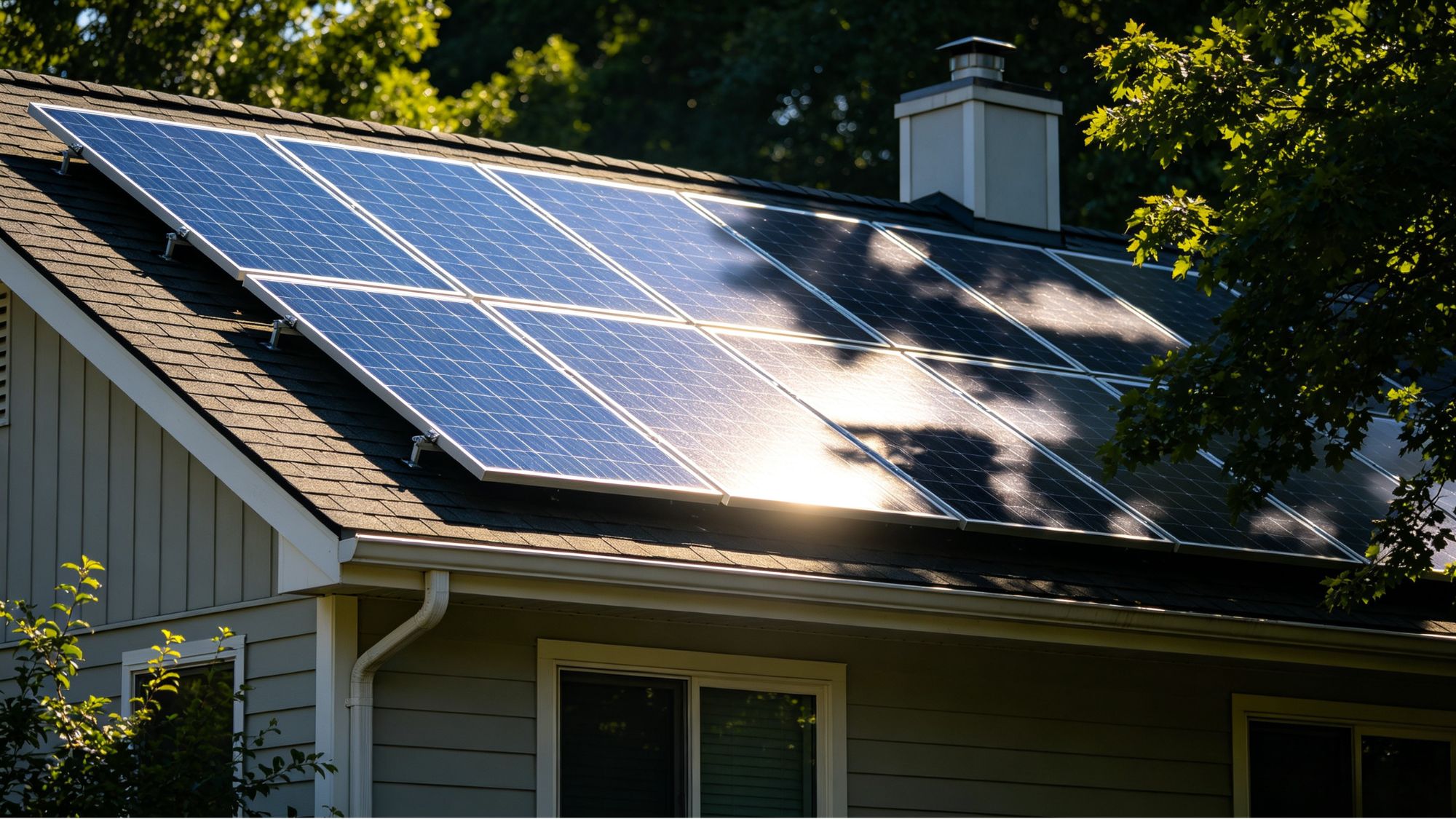
The impact of shading also depends on the type of electrical architecture used in the solar system.
Traditional string inverter systems connect multiple panels together, meaning reduced output from one panel can affect the performance of the connected group.
Modern technologies such as microinverters and DC optimizers allow individual panels to operate more independently. This can reduce the impact of localized shading and provide more detailed performance monitoring.
Choosing the right system design depends on the property’s specific conditions, including roof complexity and expected shading patterns.
Residential solar performance is determined by a combination of natural conditions and engineering decisions. Solar irradiance provides the available energy source, while panel orientation, tilt angle, and shading management determine how effectively that energy can be captured.
A well-designed photovoltaic system does not simply rely on installing more panels. It requires understanding how sunlight interacts with the physical environment and selecting an arrangement that matches the characteristics of the property.
By considering these factors before installation, homeowners can better estimate expected energy production and create solar systems that perform reliably over the long term.
