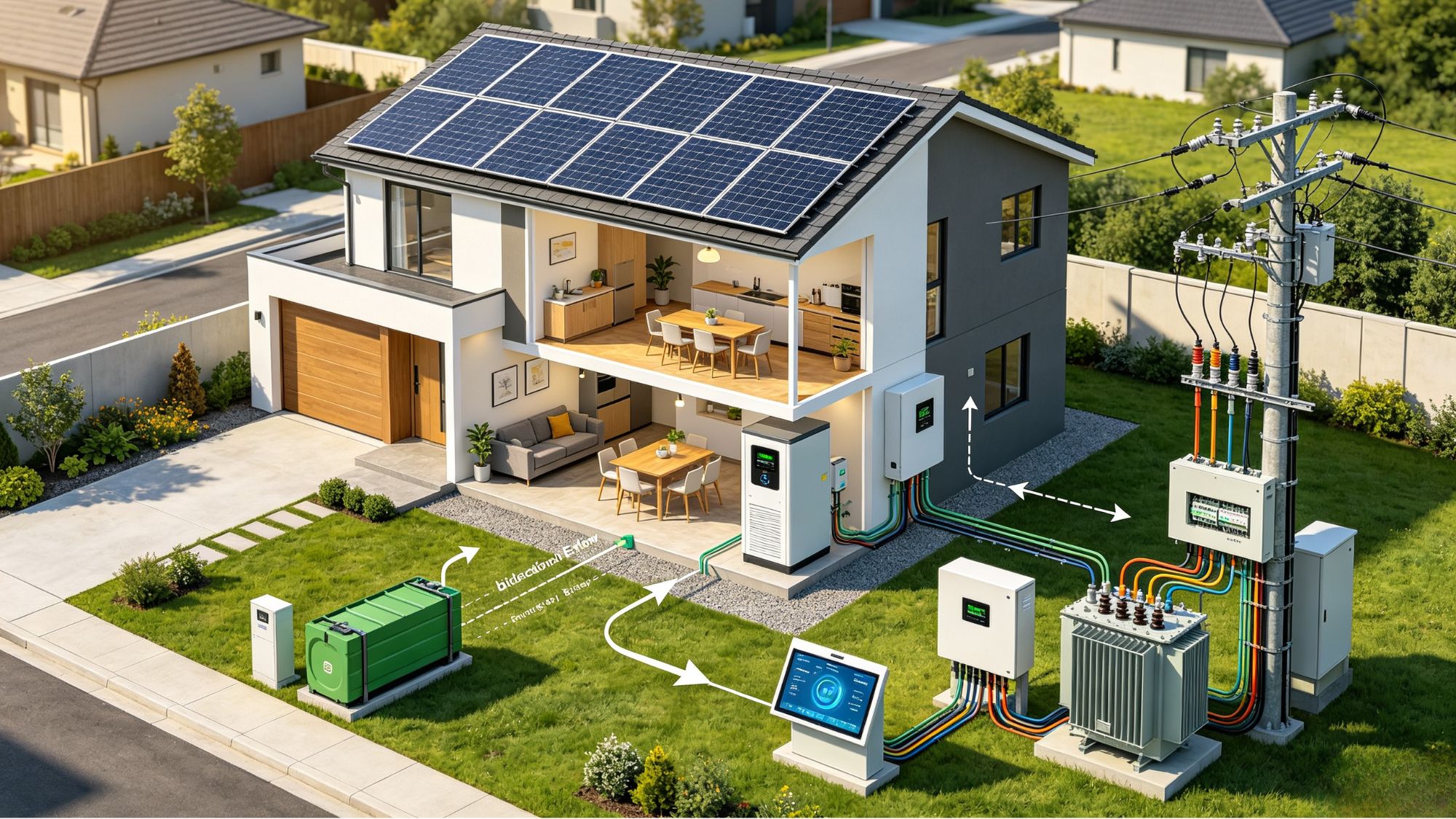
As extreme weather events, grid reliability concerns, and the growth of renewable energy continue to reshape the electricity landscape, some homeowners are exploring ways to make their properties more resilient. One approach is the residential microgrid—a coordinated energy system that combines local power generation, battery storage, automated switching equipment, and intelligent controls.
Unlike a traditional home that simply consumes electricity from the utility network, a residential microgrid can actively manage how electricity is produced, stored, and distributed. When grid power is available, it can operate alongside the utility network. During outages, it can isolate from the grid and continue supplying selected household loads through local energy resources.
Building a functional residential microgrid requires several interconnected components working together. Local generation provides electricity, batteries balance supply and demand, transfer equipment manages grid separation, and control systems coordinate the entire process.
The first component of a residential microgrid is its local generation system. Unlike conventional homes that depend entirely on utility electricity, microgrids use distributed energy resources to produce power closer to where it is consumed.
For most residential applications, rooftop solar panels provide the primary source of local electricity.
Photovoltaic modules convert sunlight into direct current (DC) electricity during daylight hours. An inverter then converts this DC electricity into alternating current (AC) power that household appliances can use.
When solar production exceeds household demand, the excess electricity can be directed toward battery storage or, depending on the system design and local regulations, exported to the utility grid.
Although solar is the dominant residential generation technology, some microgrids may incorporate additional resources depending on location.
Examples include:
Small-scale wind turbines in areas with consistent wind conditions;
Micro-hydro systems where suitable water resources exist;
Backup generators used alongside renewable sources.
Using multiple generation sources can improve energy availability when one resource becomes temporarily unavailable.
However, the effectiveness of a residential microgrid depends not only on generation capacity but also on how well energy production is balanced with household consumption.
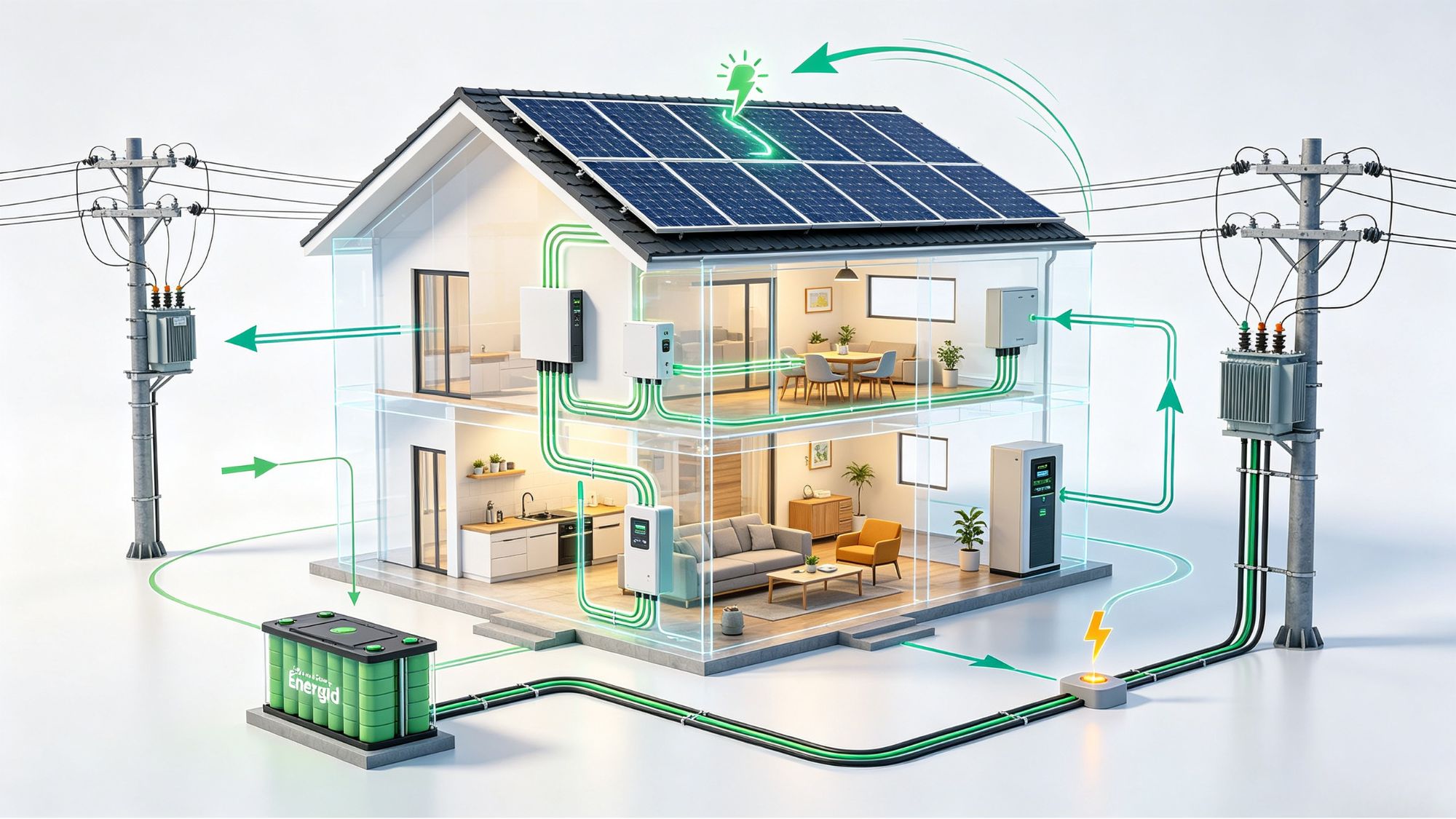
Renewable energy production does not always match household electricity usage. Solar panels generate the most power during daylight hours, while many homes consume significant electricity in the evening when solar production has stopped.
Battery storage helps solve this timing mismatch by storing excess electricity when generation is high and releasing it when demand increases.
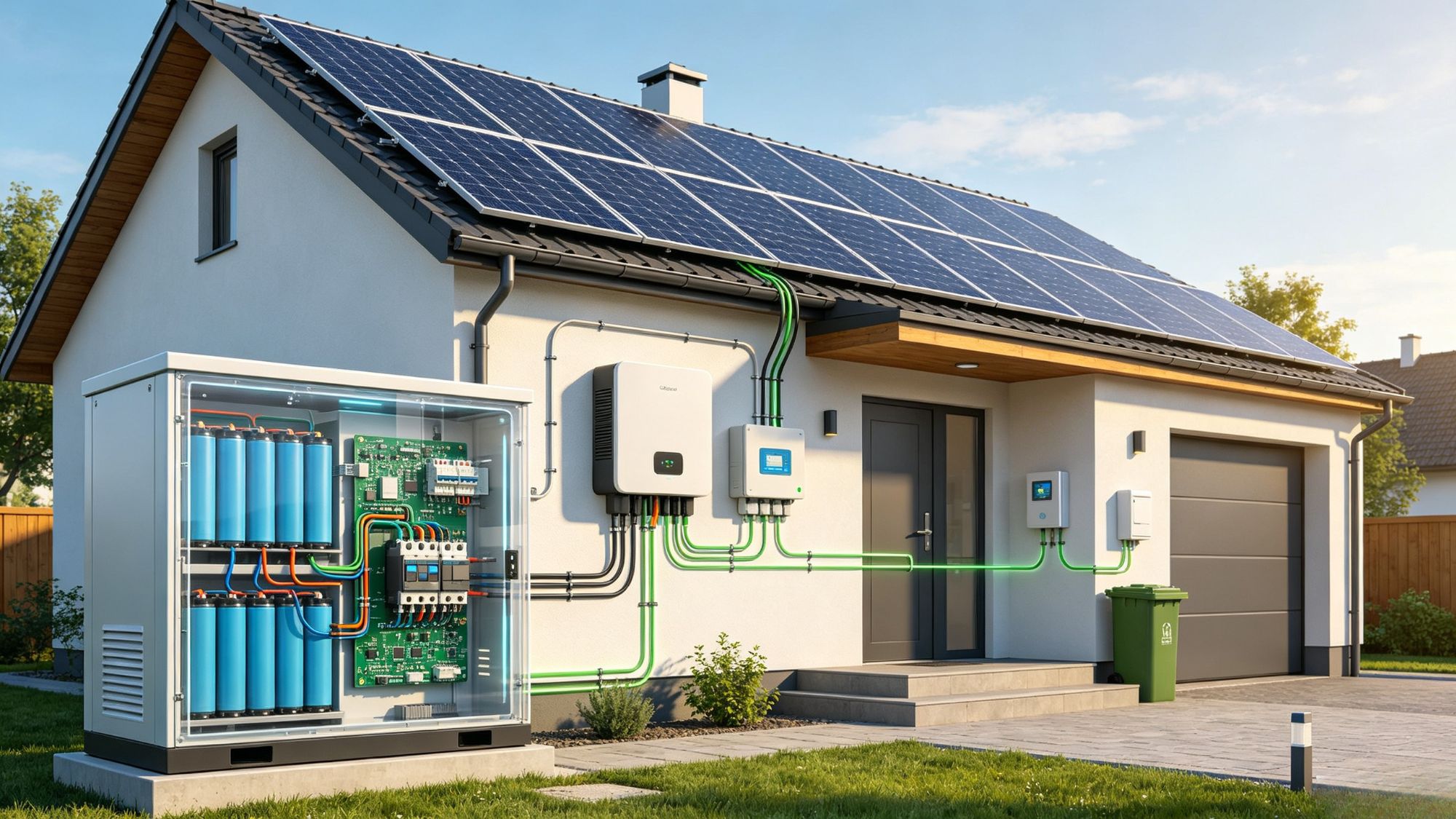
Modern residential energy storage systems commonly use lithium-ion battery technologies, particularly lithium iron phosphate (LFP) and nickel manganese cobalt (NMC).
LFP batteries are widely used in stationary applications because they offer:
Strong thermal stability;
Long cycle life;
Reliable performance for frequent charging and discharging.
NMC batteries provide higher energy density, allowing more stored energy in a smaller physical package, although they typically require more careful thermal management.
The choice of battery chemistry depends on factors such as available installation space, expected usage patterns, and system design requirements.
Battery capacity is only one part of storage system performance. A complete system must also manage:
How much energy is available;
How quickly electricity can be delivered;
When charging and discharging should occur.
Smart energy management systems monitor battery status and household demand to determine when stored energy should be used most effectively.
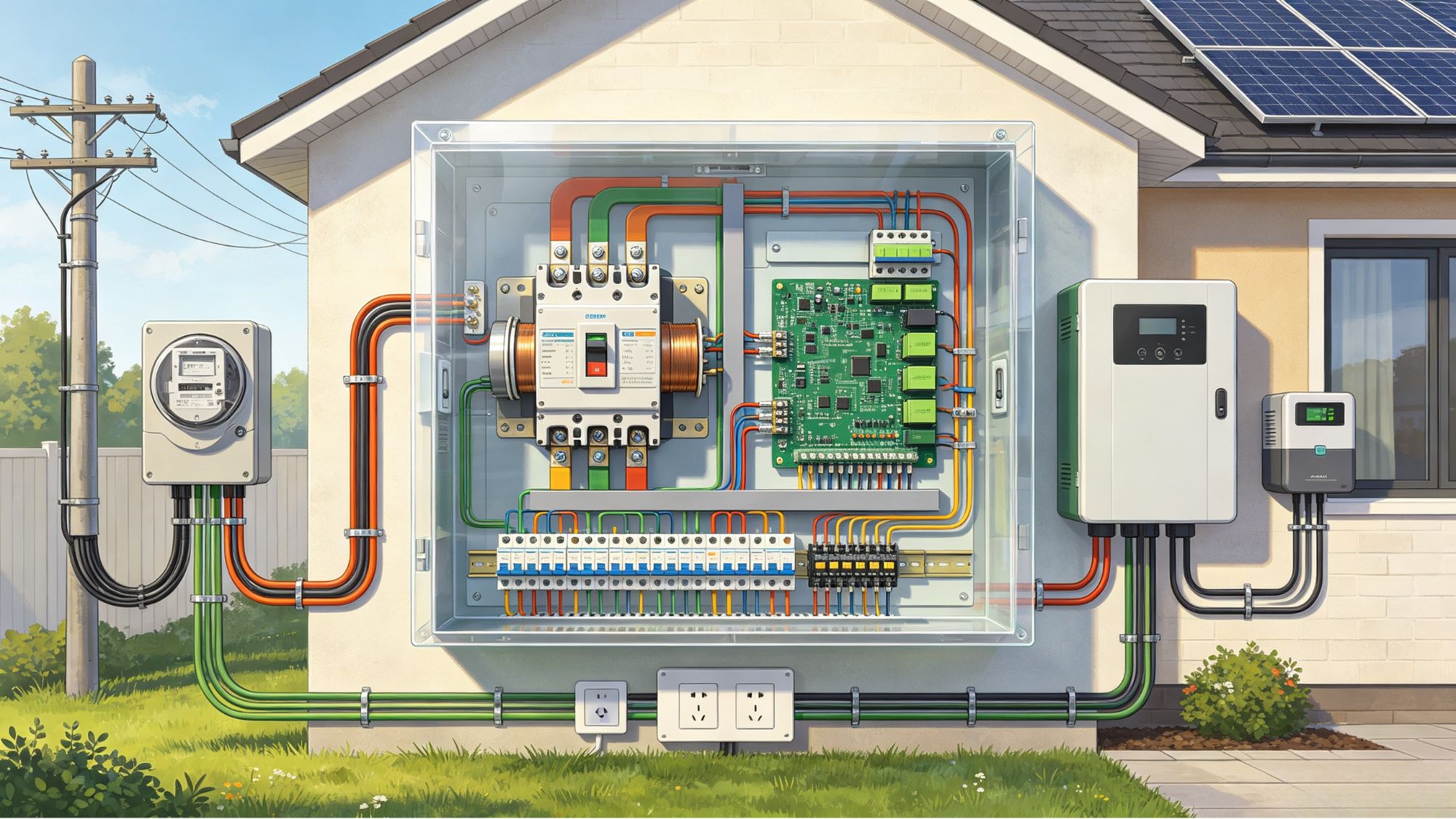
One of the most important functions of a residential microgrid is managing the connection between the home and the utility network.
A standard grid-connected solar system must shut down during a utility outage to prevent electricity from flowing back into damaged power lines. This safety feature protects utility workers repairing the electrical network.
A residential microgrid designed for backup operation requires additional equipment that can safely separate the home from the grid.
An automatic transfer switch (ATS) acts as the connection point between the home's electrical system and the utility supply.
When the system detects a grid failure, the transfer switch disconnects the property from the external network. Once isolated, local generation and battery storage can provide electricity to selected household circuits.
This transition allows the home to operate in what is known as "island mode," where the microgrid functions independently from the larger utility network.
Because residential batteries have limited capacity, many microgrid systems do not attempt to power every household appliance indefinitely.
Instead, they often prioritize essential loads such as:
Refrigerators;
Lighting;
Communication equipment;
Heating or cooling systems where required.
Non-essential equipment may be temporarily reduced or disconnected to extend available backup time.
The complexity of a residential microgrid requires software-based control systems that continuously monitor and adjust energy movement.
An Energy Management System (EMS) acts as the coordination layer between generation, storage, household demand, and grid interaction.
The EMS evaluates information such as:
Solar production levels;
Battery state of charge;
Household electricity consumption;
Weather conditions;
Utility pricing structures.
Based on this information, the system can decide whether electricity should be used immediately, stored for later, or exported to the grid.
During extended grid interruptions, energy management becomes especially important.
If battery reserves begin to decline, the control system can reduce power consumption from lower-priority devices while preserving electricity for essential household functions.
This approach helps maximize the available energy supply without requiring oversized battery systems.
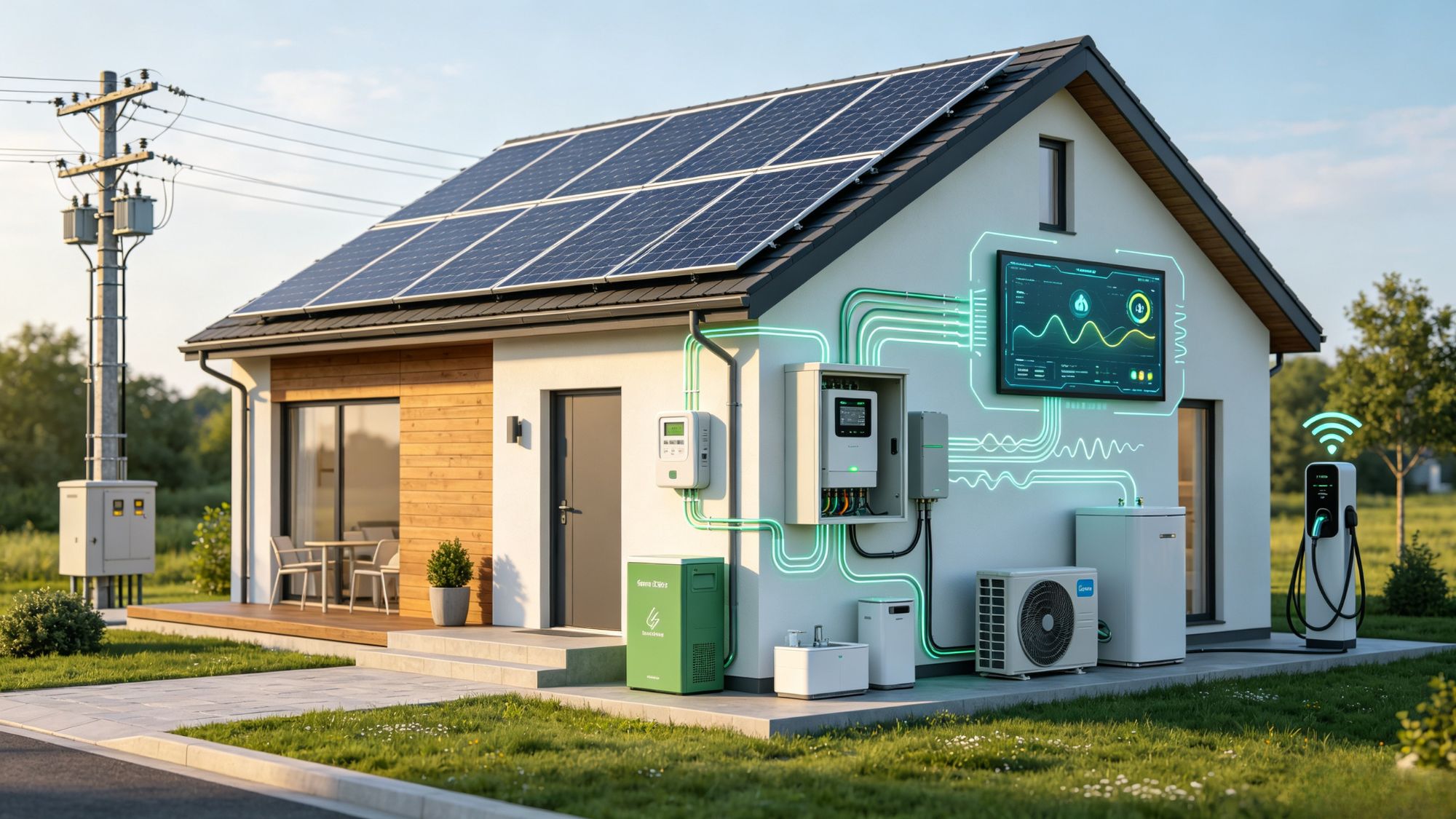
A residential microgrid is not simply a collection of solar panels and batteries. It is an integrated system where generation, storage, electrical switching, and software controls work together.
Solar and other local resources provide electricity production, batteries help balance supply and demand, transfer equipment maintains electrical safety, and intelligent controls optimize system operation.
By combining these technologies, residential microgrids can improve energy resilience and provide additional flexibility during grid disruptions. As distributed energy systems continue to develop, more homes may adopt these architectures as part of a broader transition toward smarter and more adaptable electricity networks.
Residential microgrids represent a shift from passive electricity consumption toward active energy management. Through the coordination of local generation, battery storage, transfer equipment, and intelligent control systems, homes can better manage renewable energy production and maintain essential operations during power interruptions.
The success of a microgrid depends not on a single component, but on how effectively all parts operate together as a complete energy system.
