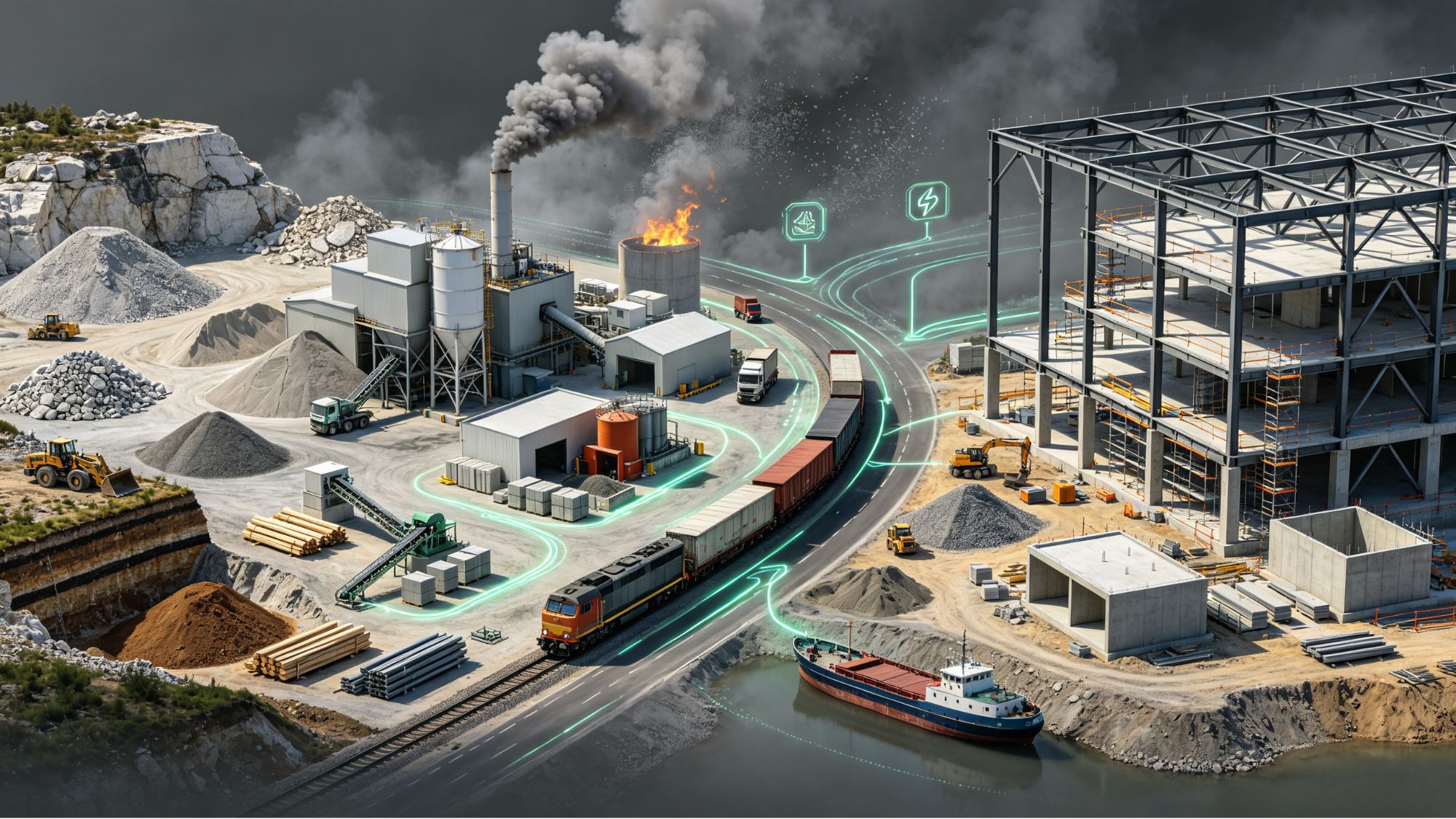
A building’s carbon footprint is not created only after it begins operation. Long before occupants turn on lights or use heating and cooling systems, emissions have already been generated through extracting raw materials, manufacturing products, transporting supplies, and constructing the structure.
These upfront emissions are known as embodied carbon. Measuring embodied carbon requires detailed accounting methods that track emissions throughout the supply chain, from material production to construction activities.
Through life cycle assessment (LCA) frameworks and environmental data systems, architects, engineers, and developers can better understand where emissions originate and identify opportunities for reduction.
To measure building-related emissions consistently, the construction industry relies on standardized life cycle assessment methodologies. Frameworks such as ISO 14040, ISO 14044, and regional standards including EN 15804 divide a building’s life cycle into separate stages.
This modular approach allows analysts to identify where carbon emissions occur and evaluate the environmental impact of different materials and construction methods.
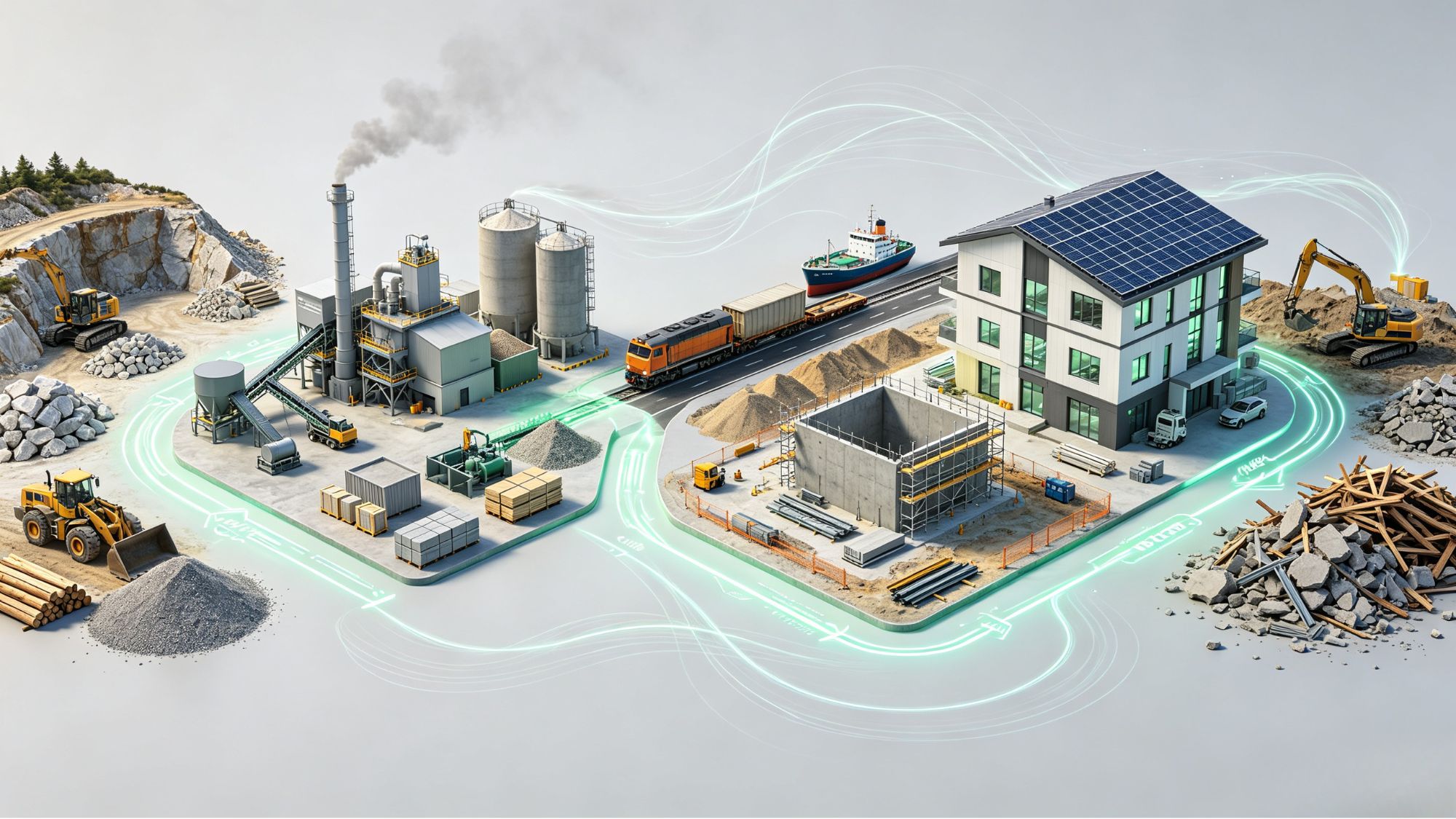
The largest portion of embodied carbon often comes from the production of building materials. Before a material reaches a construction site, emissions have already been generated through resource extraction, transportation, and industrial processing.
The first stage considers emissions created when natural resources are collected and prepared for manufacturing.
Examples include:
Mining iron ore for steel production
Extracting limestone for cement manufacturing
Harvesting timber for structural applications
Producing petroleum-based materials such as plastics and insulation products
Energy used by mining equipment, transportation vehicles, and extraction processes contributes to the material’s initial carbon footprint.
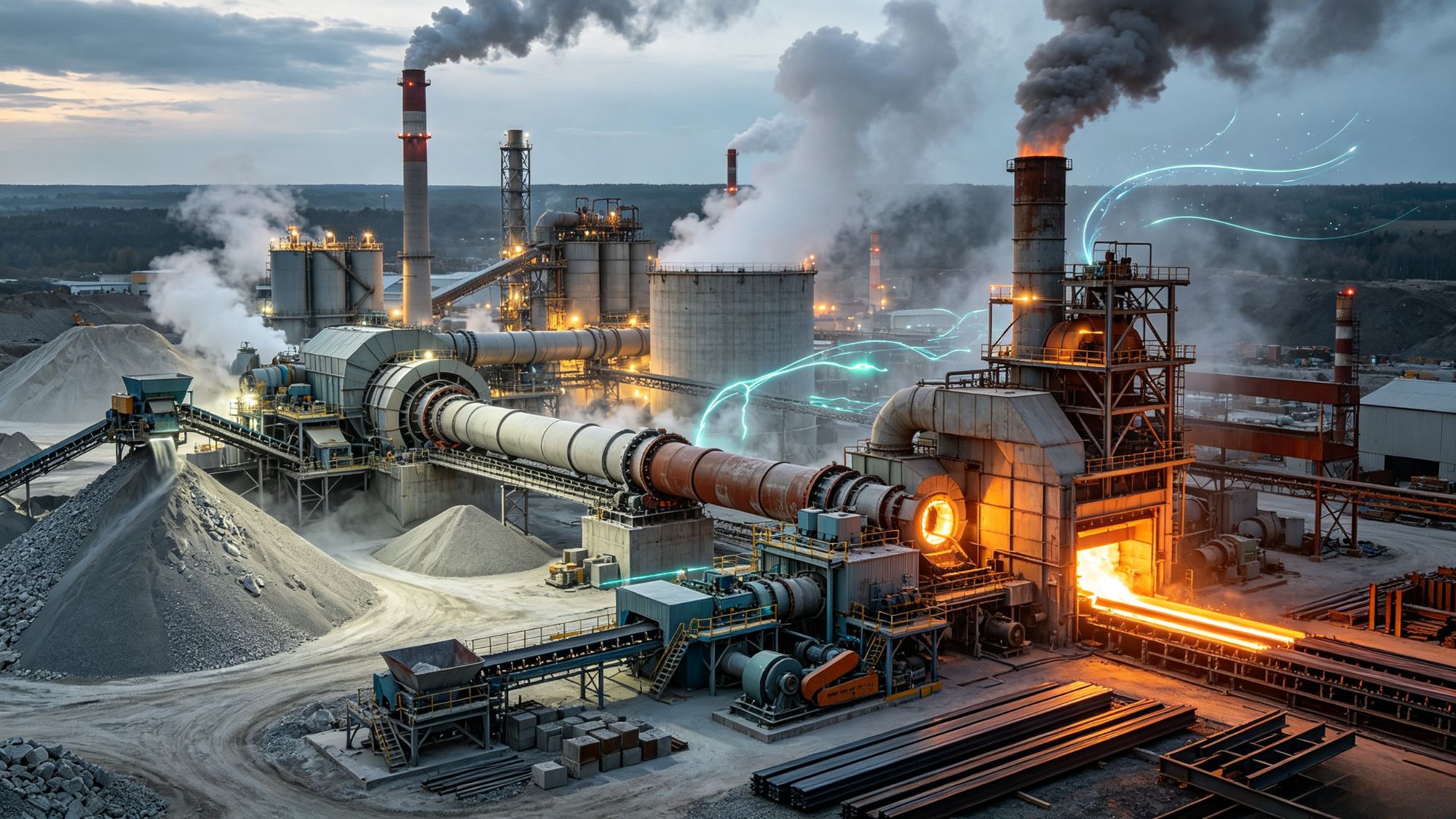
The manufacturing stage is often a major emissions source because many construction materials require energy-intensive industrial processes.
For example, cement production releases carbon dioxide not only from fuel consumption but also from the chemical transformation of limestone into clinker. Steel production can require significant energy input, although recycled steel production generally reduces emissions compared with producing new steel from raw materials.
To measure these impacts, manufacturers collect detailed information about:
Electricity and fuel consumption
Direct process emissions
Production efficiency
Raw material inputs
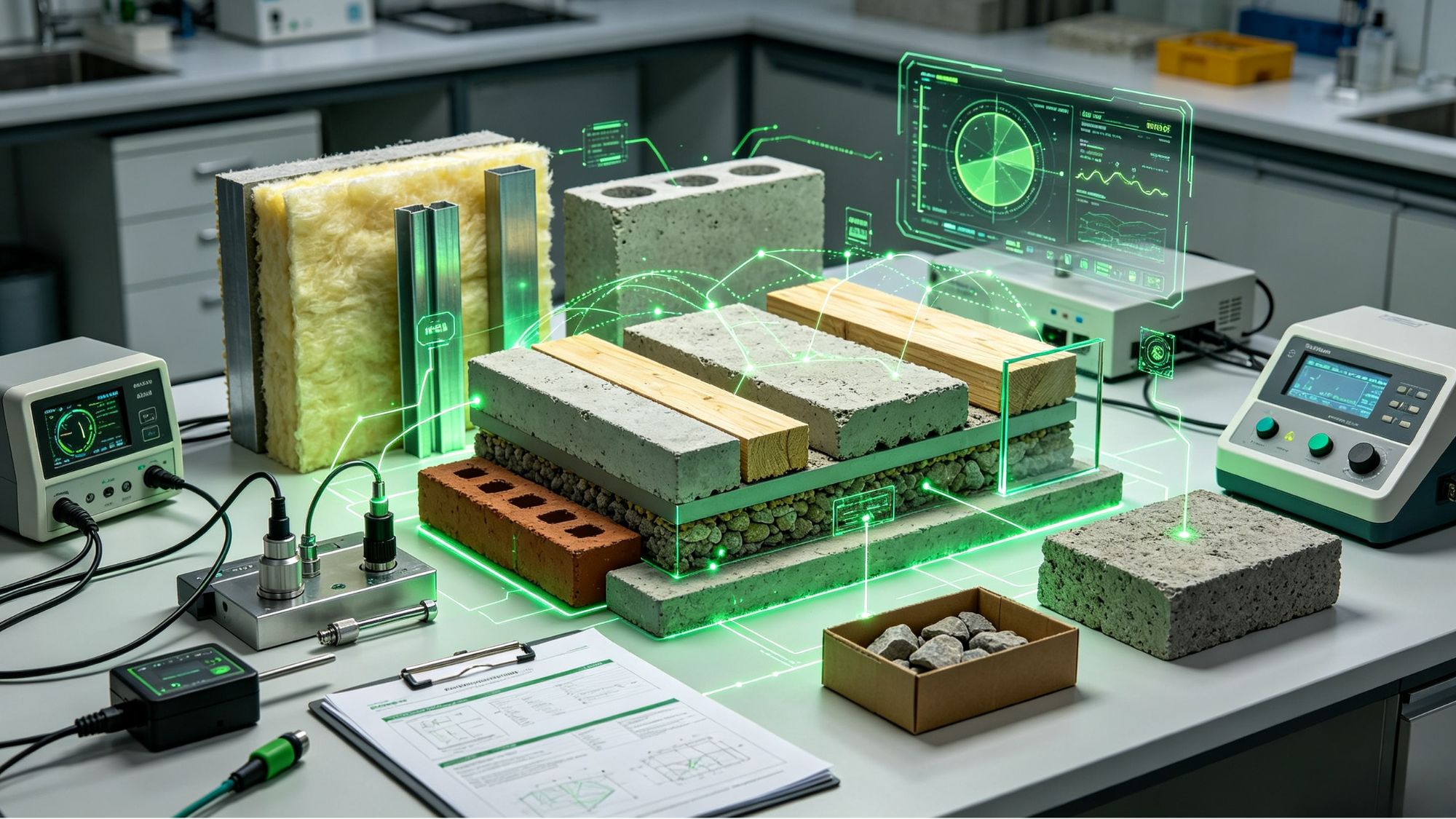
One of the most important tools for measuring material emissions is the Environmental Product Declaration (EPD).
An EPD provides verified environmental information about a specific building product, similar to how a nutrition label provides information about food. Instead of calories and ingredients, an EPD reports environmental indicators such as greenhouse gas emissions, energy consumption, and resource use.
Creating an EPD requires a detailed life cycle inventory. Manufacturers analyze the complete production process by tracking:
Energy used during manufacturing
Raw materials entering the facility
Waste generated during production
Transportation requirements
Emissions released during processing
Because many factories produce multiple products, analysts must also determine how emissions are distributed between different outputs. These allocation methods ensure that each product receives an appropriate share of the total production impact.
Different materials cannot always be compared simply by weight.
For example, comparing insulation products only by kilograms may produce misleading results because insulation performance depends on thermal resistance rather than mass.
Carbon assessments therefore use functional units that consider the actual purpose of a material, such as:
Thermal performance over a defined area
Structural capacity
Service life expectancy
This allows designers to compare materials based on real-world performance rather than only physical quantity.
The carbon footprint of a building continues after materials leave the factory. Construction activities introduce additional emissions through transportation, equipment operation, and material waste.
Moving materials from manufacturing facilities to construction sites requires fuel and energy.
Carbon calculations consider factors such as:
Shipping distance
Transportation method
Material weight
Vehicle efficiency
Heavy materials like concrete and steel often create larger transportation impacts because of their high mass.
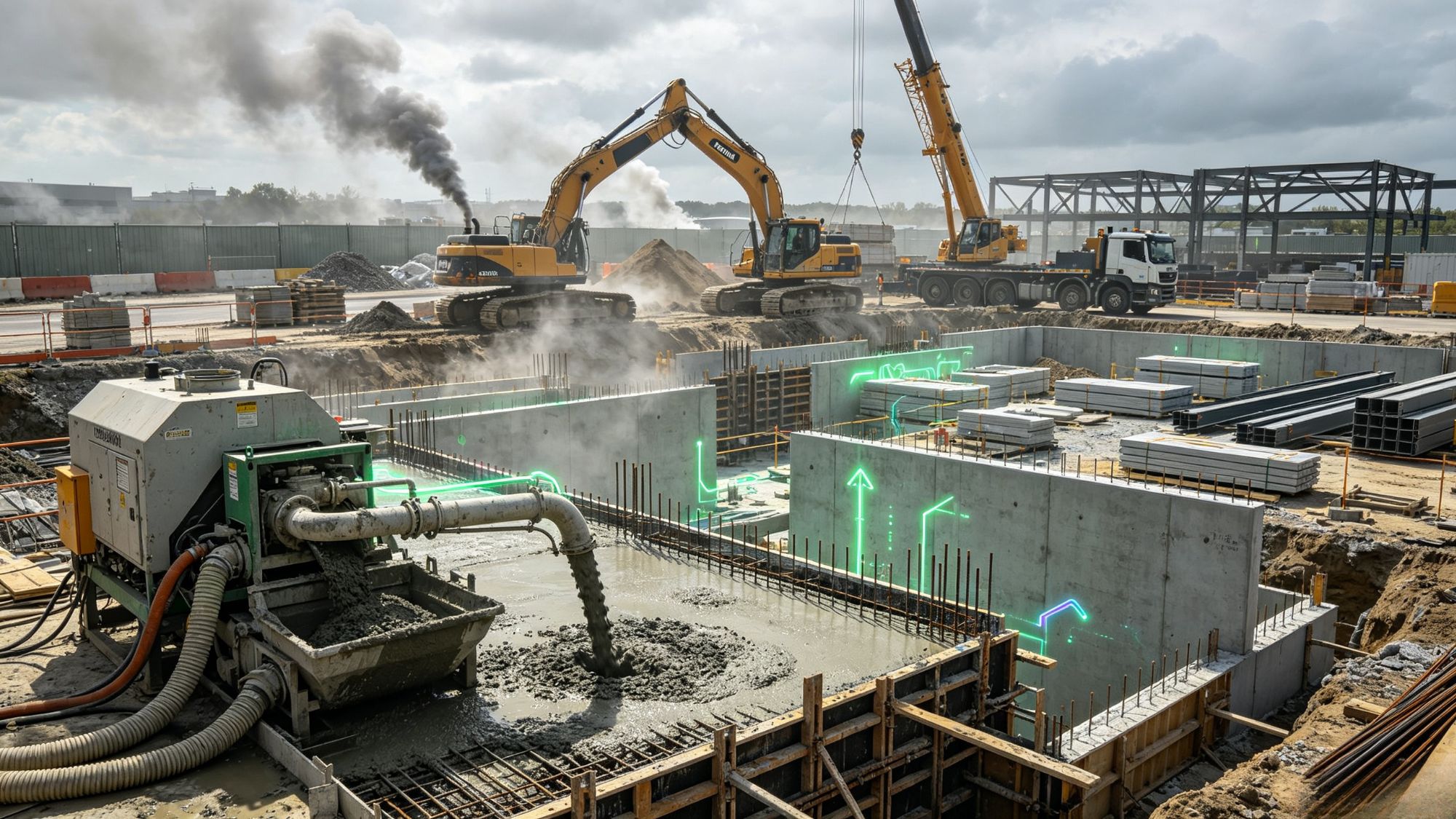
Construction sites rely on equipment such as cranes, excavators, generators, and concrete pumps. Fuel consumption from these machines contributes directly to project emissions.
Material waste is another important factor. Cutting, damaged products, and unused materials create additional embodied carbon because the emissions from manufacturing those materials have already occurred.
Carbon models therefore account for:
Waste generation rates
Disposal methods
Recycling opportunities
Additional transportation requirements
Reducing construction waste can significantly lower the total carbon footprint of a project.
Although carbon accounting methods continue to improve, several challenges remain.
The carbon intensity of electricity varies greatly between regions.
A factory powered primarily by renewable electricity may produce materials with a significantly lower carbon footprint than an identical factory operating in a region dependent on fossil fuels.
Accurate carbon calculations therefore require location-specific energy data whenever possible.
Some widely used materials, such as steel and cement, have extensive environmental databases. However, specialized finishes, composite materials, and newer products may have limited publicly available lifecycle information.
When detailed data is unavailable, analysts often rely on industry averages, which may not fully represent the environmental performance of newer manufacturing technologies.
Measuring embodied carbon turns building sustainability into a data-driven process. By tracking emissions from raw material extraction, manufacturing, transportation, and construction activities, professionals can identify where carbon impacts are created and where improvements are possible.
Life cycle assessment methods and Environmental Product Declarations provide the foundation for more accurate carbon accounting, helping the construction industry move toward lower-emission materials and more efficient building practices.
