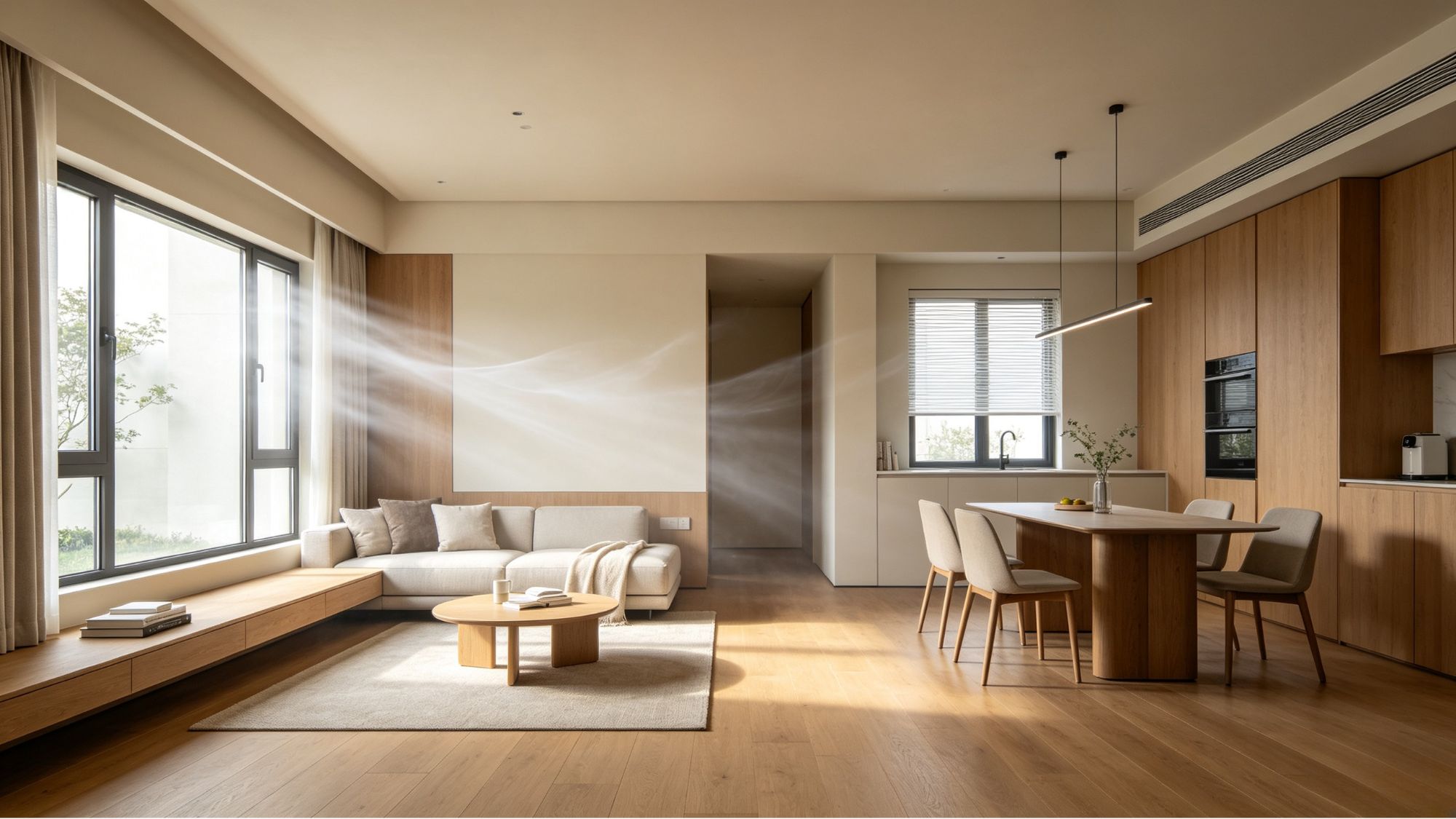
Building materials influence indoor environments in more ways than appearance, durability, and structural performance. Many products used in homes and commercial buildings contain chemical components that can gradually release compounds into surrounding air after installation. This process, commonly known as off-gassing, plays an important role in indoor air quality.
From flooring and furniture to paints, adhesives, and engineered wood products, the chemical composition of building materials determines how they interact with indoor spaces over time. Understanding volatile organic compounds (VOCs), formaldehyde emissions, and binder chemistry helps explain why material selection has become an important part of modern building design.
Off-gassing describes the release of chemical compounds from solid or liquid products into indoor air. The process occurs because certain molecules within a material can gradually migrate toward the surface and evaporate under normal indoor conditions.
The rate and duration of emissions depend on several factors, including the type of material, manufacturing process, temperature, humidity, and ventilation conditions.
Volatile organic compounds (VOCs) are carbon-containing chemicals that can evaporate relatively easily at typical indoor temperatures. Although regulatory definitions differ between regions, VOCs generally include a broad group of compounds found in many manufactured products.
Common sources of VOC emissions include:
Paints and coatings
Adhesives and sealants
Synthetic flooring materials
Furniture finishes
Composite wood products
Newly installed materials often release higher concentrations of VOCs because unused chemical residues remain closer to the material surface. Over time, emission levels usually decline as volatile compounds dissipate, although some materials may continue releasing low levels of chemicals for extended periods.
Indoor environmental conditions can significantly affect emission rates.
Higher temperatures generally increase molecular activity, allowing certain compounds to escape more quickly from materials. Increased humidity can also influence chemical reactions within some products, potentially accelerating the release of specific compounds.
Because of this relationship, building ventilation, temperature control, and humidity management are important factors in maintaining indoor air quality after construction or renovation.
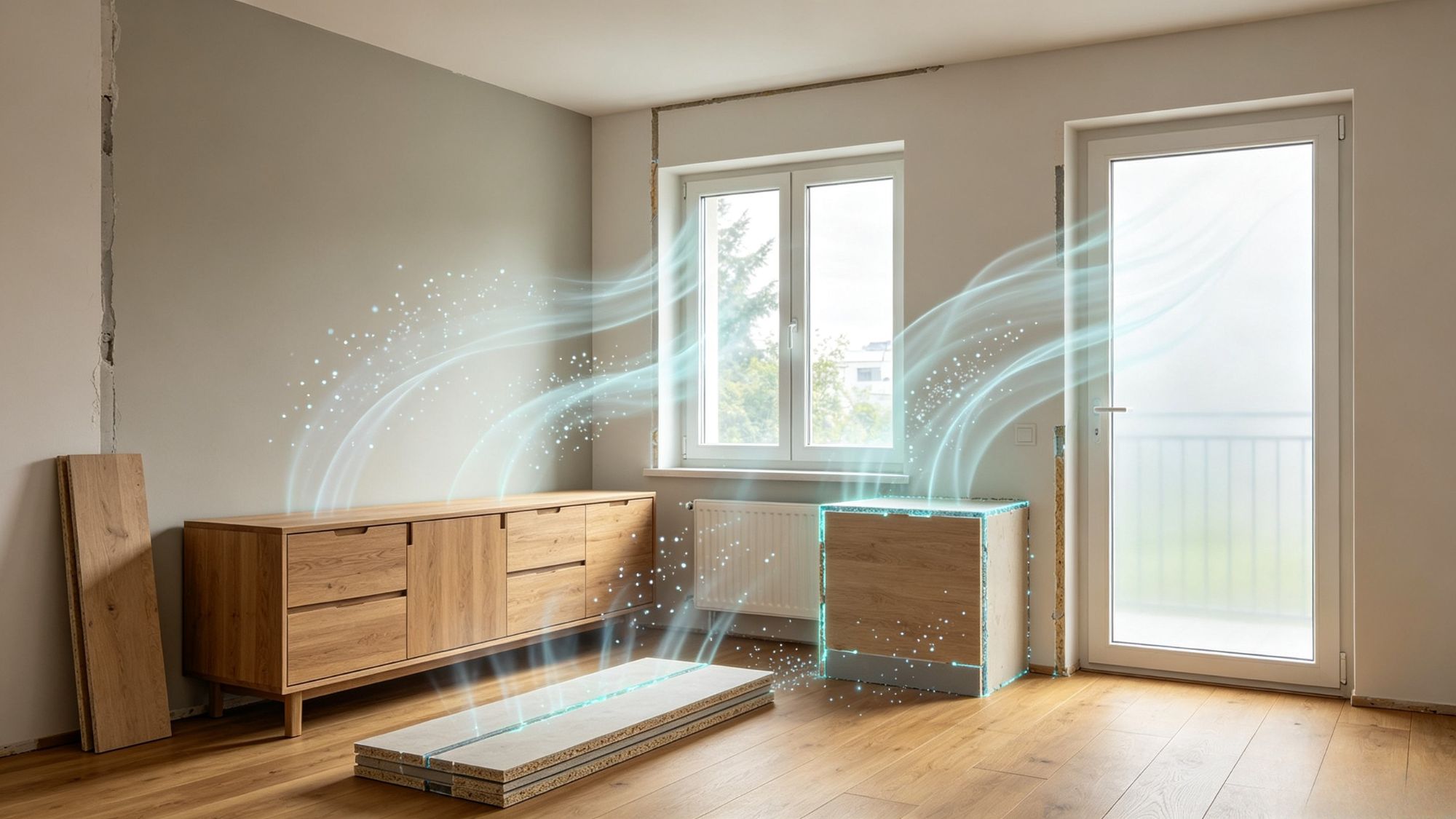
Among indoor chemical emissions, formaldehyde remains one of the most widely studied compounds because of its frequent use in industrial manufacturing and its presence in many composite wood products.
Formaldehyde is a colorless gas used in the production of certain adhesives and resins. Its strong bonding properties and relatively low production cost have made it valuable in manufacturing, particularly for engineered wood materials.
Products such as medium-density fiberboard (MDF), particleboard, plywood, and oriented strand board (OSB) are commonly manufactured by combining wood particles or fibers with adhesive resins.
Historically, many of these products relied heavily on urea-formaldehyde (UF) resins. While effective for bonding wood materials, UF-based adhesives can release residual or chemically generated formaldehyde over time, especially under warmer and more humid conditions.
Modern manufacturing has introduced alternative resin technologies designed to reduce emissions:
Phenol-formaldehyde (PF) resins: Often used in exterior-grade wood products because of their moisture resistance and relatively low formaldehyde release after curing.
Melamine-urea-formaldehyde (MUF) resins: Used where improved moisture resistance and reduced emissions are required.
No-added-formaldehyde (NAF) systems: These use alternative bonding technologies, such as soy-based adhesives or polymeric methylene diphenyl diisocyanate (pMDI), to avoid intentionally adding formaldehyde during production.
The final emission profile depends not only on resin chemistry but also on manufacturing controls, curing conditions, and product testing standards.
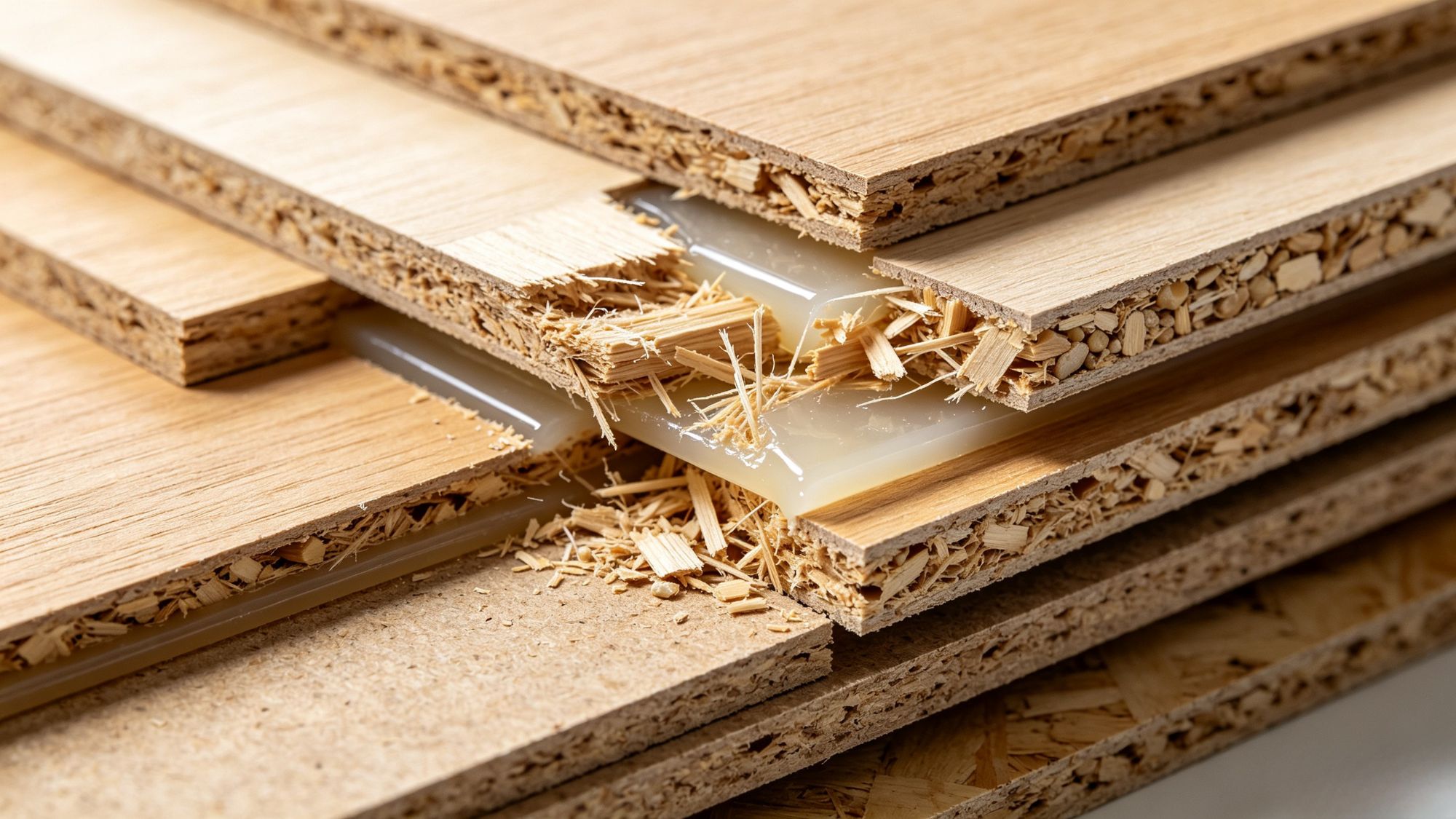
Binders act as the internal bonding system that holds composite materials together. They are found in products ranging from wood panels and insulation materials to flooring and synthetic surfaces.
The chemical structure of a binder influences how stable a material remains after installation and whether unused compounds can migrate into indoor air.
Thermosetting materials undergo an irreversible chemical curing process that creates a rigid molecular network.
Examples include:
Epoxy resins
Phenolic resins
Polyurethane systems
When properly cured, these materials can provide strong chemical stability. However, incomplete curing or manufacturing inconsistencies may leave behind unreacted components that can contribute to emissions.
Thermoplastics behave differently because they soften when heated and harden when cooled without forming the same type of permanent chemical network.
Materials such as vinyl flooring and plastic composite products often contain additives that improve flexibility or durability. Some additives, including certain plasticizers, are not chemically bonded to the polymer structure and may gradually migrate from the material over time.
This migration can contribute to indoor dust contamination and chemical exposure pathways, making material formulation and testing important considerations.
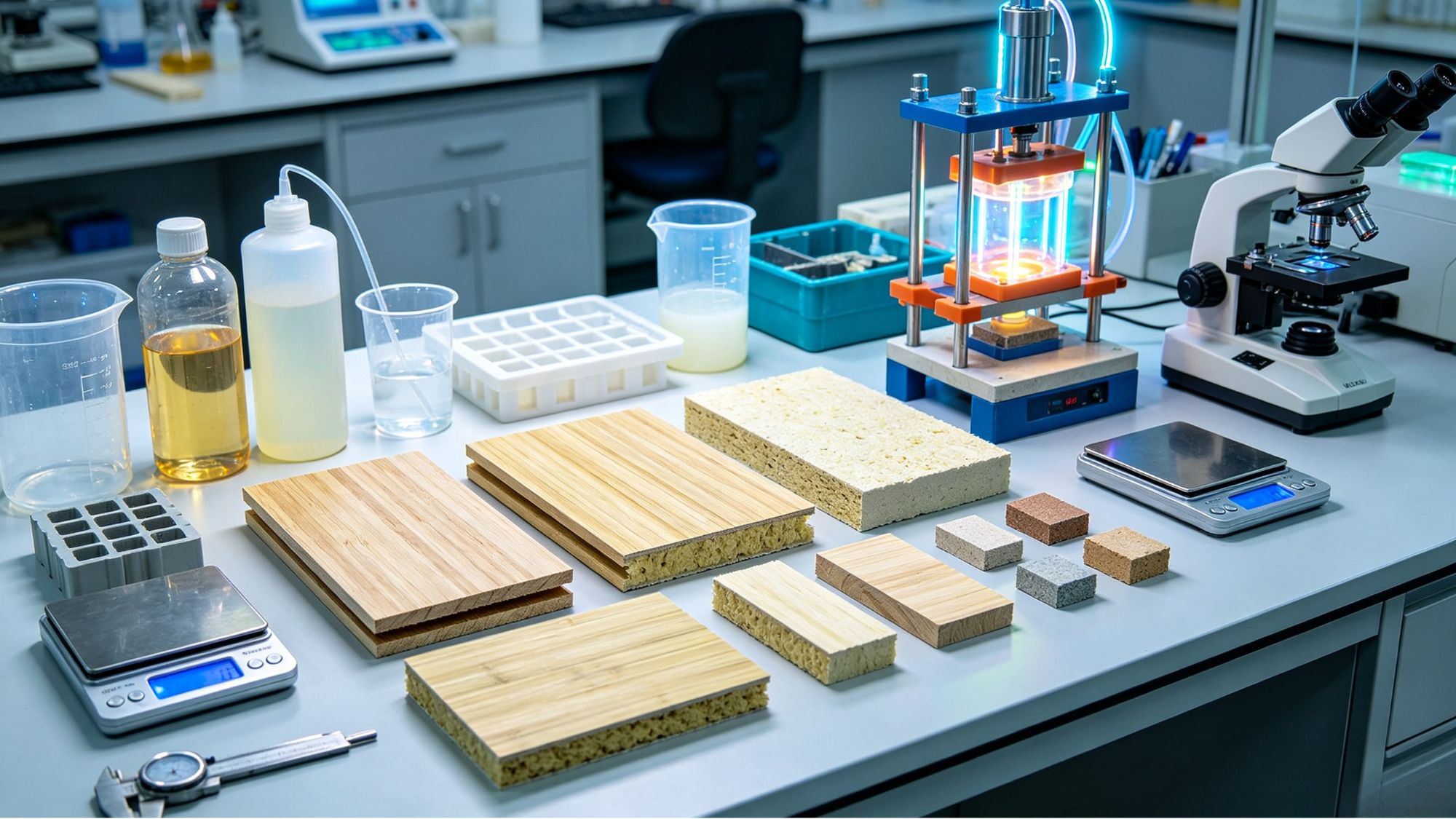
Because chemical emissions vary significantly between products, standardized testing methods help evaluate material performance.
Manufacturers and building professionals often rely on third-party testing programs that measure emission rates under controlled laboratory conditions.
Examples include:
VOC emission testing
Formaldehyde emission testing
Chamber-based evaluations of finished products
Programs such as GREENGUARD and FloorScore provide certification frameworks for certain interior products, including flooring, furniture, and building materials, based on established emission limits.
Reducing indoor emissions requires combining better material choices with effective building operation.
Common strategies include:
Selecting products with low-emission certifications
Choosing materials with reduced formaldehyde content
Allowing adequate ventilation after installation
Using mechanical ventilation systems such as energy recovery ventilators (ERVs)
No single approach eliminates every indoor pollutant source. Instead, effective indoor air quality management depends on reducing unnecessary emissions while maintaining continuous air exchange.
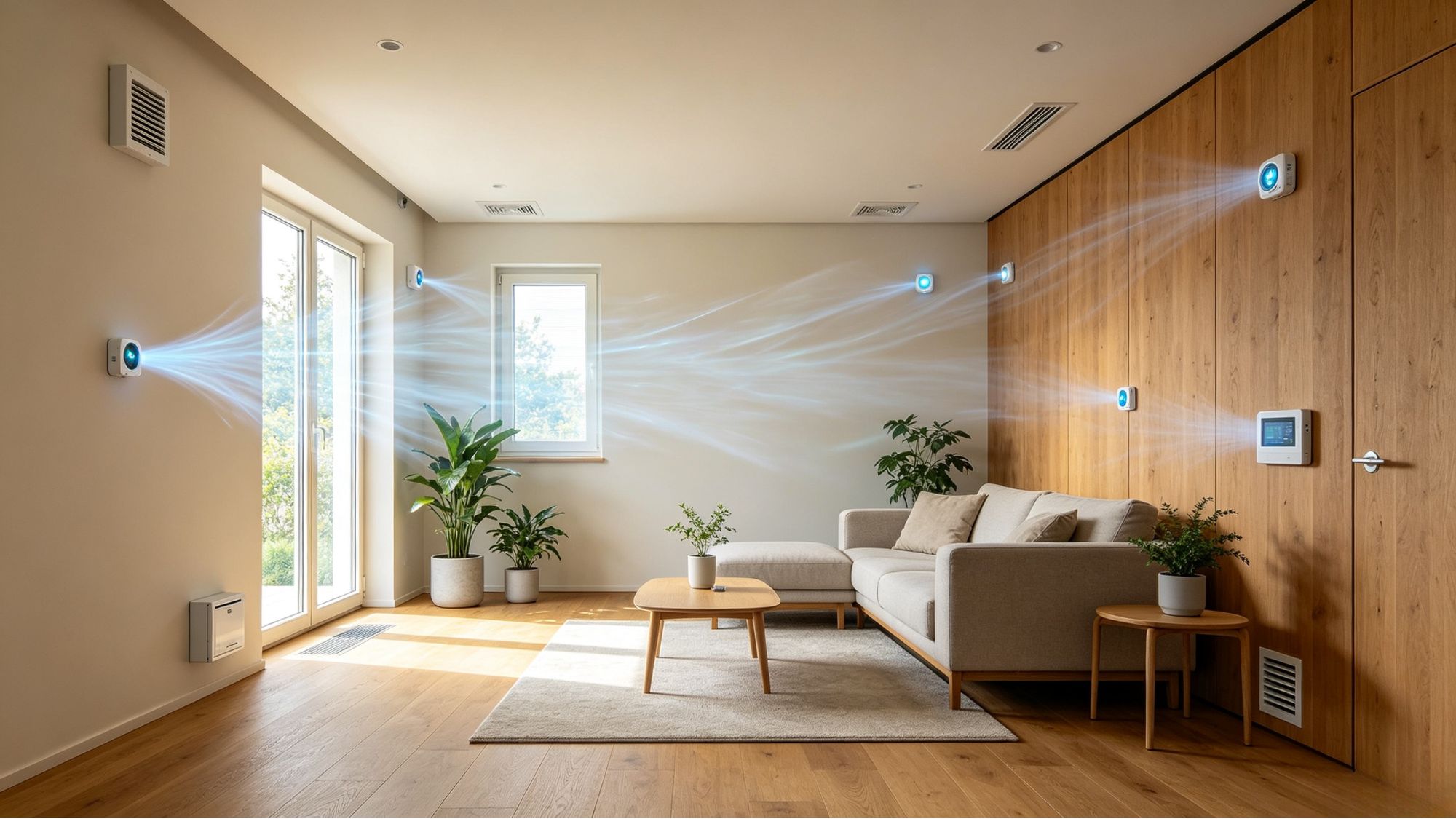
The chemical behavior of building materials plays an important role in shaping indoor environments long after construction is complete. VOCs, formaldehyde, and binder chemistry influence how products release compounds into surrounding air and how long those emissions continue.
By understanding the relationship between material composition, manufacturing processes, and indoor conditions, architects, builders, and homeowners can make more informed decisions when selecting products. Careful material evaluation combined with proper ventilation design provides a practical approach to creating healthier and more comfortable indoor spaces.
